Piha Beach Helicopter Rescue Auckland: Key Incidents
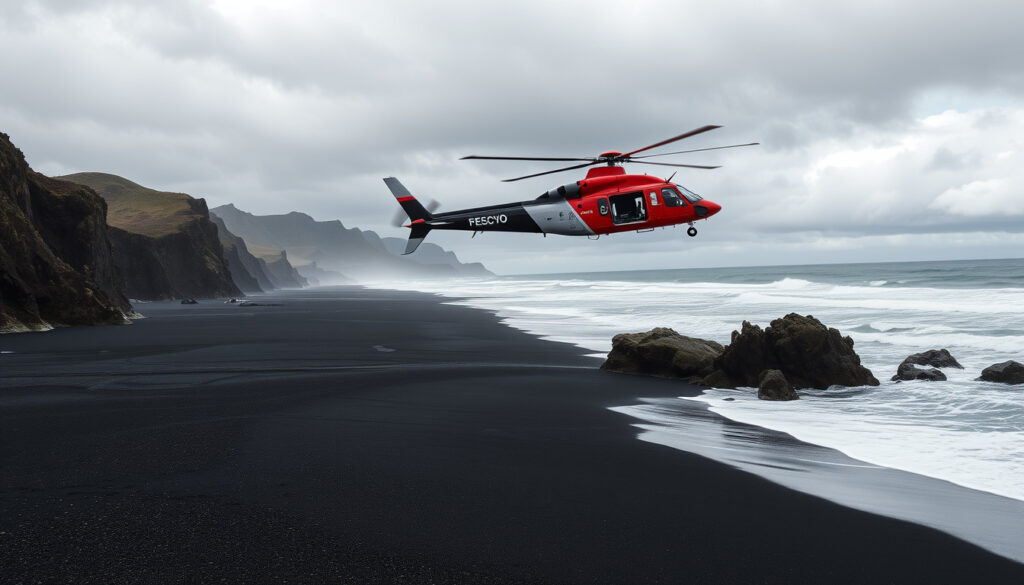
Auckland’s Piha Beach draws visitors with its dramatic black-sand coastline, but the same conditions that make it beautiful also make it dangerous. Strong rips, sudden swell changes, and rocky shorelines have turned this west-coast stretch into one of New Zealand’s most active rescue zones. In 2025 alone, the Police Eagle helicopter has been dispatched to multiple water emergencies here—including at least one that ended in tragedy and several that ended in survival. What separates those outcomes often comes down to seconds, equipment, and the coordination between aircraft and beach teams.
Location: Piha Beach, Auckland · Key Rescue Asset: Police Eagle helicopter · Involved Organizations: Piha Surf Life Saving, Hato Hone St John · Recent Incidents: 2025: Oct 24, Nov 27, May 22
Quick snapshot
- Multiple helicopter-involved rescues in 2025 (New Zealand Police)
- Piha Surf Life Saving key coordinating role (Surf Lifesaving NZ)
- Patient outcomes beyond initial airlift
- Exact cause of some near-fatal incidents
- Rock fisherman rescue: 7:43am call, lifejacket saved life (New Zealand Police)
- Night surfer rescue: 8pm call, hospital by 10:30pm (1News)
- Ongoing inter-agency training between Eagle crew, IRBs, and surf lifesavers
- Surf Lifesaving NZ campaign pushing for faster lifeguard response times
These records capture the range of outcomes at Piha Beach through 2025—successful extractions alongside a confirmed fatality.
| Label | Value |
|---|---|
| Primary Location | Piha Beach, Auckland, NZ |
| Frequent Hazard | Strong rips and surf |
| Main Responder | Piha Surf Life Saving Club |
| Helicopter Role | Patient location and airlift |
What was the Piha beach helicopter rescue Auckland?
On a Wednesday morning in 2025, police received a call at 7:43am from a rock fisherman who had fallen at South Piha, near The Gap. The man was wearing a lifejacket and managed to contact authorities directly. When officers arrived, they threw an emergency life ring to him while the Police Eagle helicopter circled overhead, maintaining visual contact from above. An IRB (inflatable rescue boat) from Surf Life Saving NZ approached as the helicopter kept watch, and crews successfully brought the fisherman ashore. The man was unharmed, and officials later credited the lifejacket with preventing what could have easily become a fatal drowning.
Serious water incident details
The successful outcome at South Piha The Gap was no accident. Acting Senior Sergeant Mark Jamieson noted the fisherman had clearly prepared for the environment, having his lifejacket secured before the incident occurred. The Eagle helicopter’s overhead presence meant the IRB team could approach with confidence, knowing ground crews had an additional layer of situational awareness. The collaboration between the Police Eagle, Maritime Unit, and Surf Life Saving NZ demonstrated how coordinated response reduces risk in Piha’s unpredictable waters.
A lifejacket and a single emergency call at 7:43am separated a near-fatality from a rescue story. Without that equipment, the outcome at The Gap would likely have required body recovery rather than patient airlift.
Airlift to hospital
While the rock fisherman was brought directly to shore, not all Piha rescues end on the beach. In separate incidents throughout 2025, patients swept offshore were stabilized by paramedics before being transported by helicopter to Auckland hospitals. The Hato Hone St John ambulance service has been repeatedly involved, with crews meeting surf lifesavers at the water’s edge or loading patients aboard aircraft for rapid transport. These airlifts typically happen when the patient is hypothermic, unconscious, or requires immediate advanced care beyond what shore-based teams can provide.
When patients require hospital-level care, the Eagle helicopter’s ability to reach Auckland medical facilities quickly proves critical for those in serious condition.
What is Piha Rescue today?
Piha Rescue today means coordinated operations between multiple agencies responding to a beach that claims lives despite—or sometimes because of—its popularity. Surf Life Saving NZ operates paid lifeguards at Piha Beach, supplemented by volunteer patrols during peak seasons. Their IRB fleet and rescue tubes represent the frontline, but the real force multiplier has been aerial support from the Police Eagle helicopter, which can locate victims in seconds that would take lifeguards minutes to find visually. The November 2025 night rescue demonstrated this exactly: the Eagle spotted a surfer 1.5 kilometers offshore in darkness, guiding two IRBs to the exact position.
Recent operations
In May 2025, off-duty lifeguards spotted a 26-year-old swimmer in distress offshore and pulled him from the water. The swimmer was flown to hospital after the dramatic save, though official details about his condition after discharge are limited. The Boxing Day 2025 incident proved more tragic: a person swept from Fisherman’s Ledge at 12:30pm could not be revived despite efforts from Piha lifeguards and St John paramedics. The Eagle helicopter was deployed for the search, but resuscitation attempts failed. That incident has been referred to the coroner for investigation.
“Being prepared almost certainly saved a rock fisherman’s life at Piha.”
— Acting Senior Sergeant Mark Jamieson, New Zealand Police
Surf lifesaving response
The Piha Surf Life Saving Club’s paid lifeguards train specifically for helicopter-coordinated operations. Larsen’s team—named in reports from the night surfer rescue—deployed two IRBs while the Eagle helicopter provided overhead lighting and location guidance. This choreography requires practice, and Surf Lifesaving NZ has publicly stated that faster lifeguard response times remain a priority. Their “Help Our Lifeguards Get There In Time” campaign explicitly ties response speed to outcomes, noting that every minute without aerial location support increases the risk profile for victims caught in Piha’s notorious rip currents.
When the Eagle helicopter was rerouted from another incident to assist with the November surfer rescue, Piha’s remote location became an asset rather than a liability—ground teams could focus on extraction while the aircraft handled the search.
The Eagle’s thermal imaging capability fundamentally changes what is possible during low-visibility operations at Piha.
Details on Piha drowning yesterday?
The Boxing Day 2025 fatality at Piha Beach represents the darker side of what these rescues aim to prevent. Emergency services received a report at 12:30pm that a person had been swept from rocks at Fisherman’s Ledge, south of Piha. The Police Eagle helicopter joined the search operation, scanning waters that were churned by a heavy swell. Lifeguards located the body at 1:20pm, nearly an hour after the initial report. CPR was attempted by both Piha lifeguards and St John crews, but the victim was declared deceased at the scene.
Incident response
The immediate response involved multiple agencies working simultaneously. Police coordinated the aerial search via the Eagle helicopter, while Piha Surf Life Saving Club’s paid lifeguards paddled out from shore. St John paramedics staged at the beach access point, ready to provide advanced life support once the patient was located. The Indian Weekender reported that resuscitation efforts continued for a brief period after the body was found, but the individual had been in the water too long for survival. The Otago Daily Times confirmed the 1:20pm death time and noted the case had been referred to the coroner.
CPR efforts
Despite coordinated effort, the outcome reflects a grim reality of Piha Beach: some rescues fail even when everything goes right procedurally. Lifeguards performed chest compressions while the Eagle helicopter maintained its overhead position, apparently ready to assist if resuscitation succeeded and the patient required evacuation. St John paramedics administered advanced cardiac life support, but the victim showed no signs of recovery. Officials have not released details on the individual’s identity pending family notification and coroner review.
The implication: even with all resources deployed correctly, survival windows at Piha remain narrow once victims enter the water.
What is Piha Surf Rescue?
Piha Surf Rescue refers to the operational network of surf lifesavers, paramedics, coastguard volunteers, and police aviators who respond when someone gets into trouble off Auckland’s west coast. The 27 November 2025 night rescue of 21-year-old Jamie Campbell offered a detailed case study: an emergency call at around 8pm, the surfer spotted nearly 2 kilometers offshore at around 9pm, and an ambulance departure for the hospital at 10:30pm. The Eagle helicopter’s infra-red cameras located the exhausted, hypothermic surfer clinging to his board, and two Piha IRBs completed the extraction.
Dramatic night rescue
Campbell had entered the water north of Lion Rock Piha and was caught by a rip current that dragged him out to sea in darkness. The 1News report confirmed he was spotted at Camel Rock, 1.5 kilometers offshore, by the Eagle helicopter using thermal imaging. The Piha Surf Life Saving Club member identified as Larsen coordinated the IRB approach while the helicopter’s spotlight illuminated the surfer’s position. When the IRBs reached Campbell, he was treated for hypothermia before being taken to the beach. An ambulance arrived at 10:30pm and transported him to hospital, where he was later discharged.
“The crew quickly collected him and made it back to the beach in complete darkness.”
— Larsen, Piha Surf Life Saving Club
IRB deployment
Inflatable rescue boats represent the workhorses of Piha rescues. Two IRBs were deployed for Campbell’s extraction, a number that reflects the operational complexity of nighttime open-water retrieval. Surf Lifesaving NZ has documented that the Eagle helicopter rerouted from another incident specifically for Campbell’s rescue, a decision made by Maritime Police when the scope of the emergency became clear. The helicopter’s ability to guide IRB pilots toward a target in poor visibility is not standard equipment in all rescue operations, making the Eagle’s infra-red capability a genuine force multiplier for Piha specifically.
The same black-sand beach that draws tourists also trains some of New Zealand’s most skilled water-rescue personnel. Every successful extraction—Campbell’s included—adds to a body of knowledge that makes the next response faster and safer.
For Piha’s rescue teams, each nighttime operation builds institutional expertise that directly improves future outcomes.
Latest Piha news on rescues?
Recent coverage has focused on the contrast between successful rescues and the Boxing Day fatality. In March 2026, Surf Lifesaving NZ recognized multiple agencies—including Police Eagle, St John, and Coastguard—for their Piha-related operations in a monthly rescue review. The NZSAR Link magazine also noted an off-season Piha rescue that placed new lifeguards in a high-stakes situation, emphasizing the beach’s year-round demands. Meanwhile, the Boxing Day fatality investigation continues, with officials waiting for coroner findings before releasing additional details.
26-year-old swimmer save
On 22 May 2025, off-duty lifeguards spotted a 26-year-old man struggling offshore and pulled him from the water before surf lifesaving patrol hours officially began. The swimmer was airlifted to hospital, where he was treated and later discharged. The incident highlighted a recurring dynamic at Piha: even experienced swimmers can find themselves in trouble as rip currents shift with tide and swell. Details beyond the hospital discharge have not been publicly reported, and follow-up on the patient’s longer-term prognosis remains unclear.
Off-duty lifeguards
The May 2025 save demonstrated how Piha’s volunteer and paid lifeguard network extends beyond official patrol hours. When a swimmer gets into difficulty, someone nearby with rescue training often initiates the response before formal services arrive. The Police Eagle helicopter may be dispatched based on emergency calls from bystanders, not just from lifeguards on duty. Surf Lifesaving NZ has cited these off-duty interventions as evidence that community presence matters as much as formal patrol structures in high-risk zones like Piha Beach.
The surf lifesaving organization’s push for faster response times suggests that current coordination protocols may evolve. Any changes to how Eagle deployments are requested could affect rescue outcomes at Piha and similar west-coast beaches.
The pattern emerging from these responses shows that Piha’s rescue success depends on layered defense—patrols, off-duty responders, and aerial assets working in concert.
Timeline of Piha Beach Helicopter Rescues
These dates illustrate how incidents clustered across 2025, with rescue operations spanning from autumn through summer.
| Date | Event |
|---|---|
| 22 May 2025 | Piha lifeguards save 26-year-old swimmer, flown to hospital |
| 24 Oct 2025 | Helicopter to serious water incident, airlift by Hato Hone St John |
| 27 Nov 2025 | Dramatic surfer rescue: call 8pm, spotted 1.5km offshore 9pm, hospital 10:30pm |
| 26 Dec 2025 | Boxing Day fatality: swept 12:30pm, body found 1:20pm, CPR failed |
Confirmed
- Multiple helicopter-involved rescues in 2025
- Piha Surf Life Saving key role in all operations
- Lifejacket credited in rock fisherman survival
- 21-year-old surfer Jamie Campbell rescued 1.5km offshore
- Boxing Day CPR attempt failed, victim deceased at 1:20pm
Unclear
- Patient outcomes beyond initial airlift
- Precise coroner findings on Boxing Day fatality
- Exact technical specifications of Eagle infra-red equipment
- Full inter-agency response protocols for Piha operations
The Eagle helicopter’s value in locating victims is clear—but rerouting from other incidents means every successful Piha save may delay response elsewhere in Auckland. The question of how often Eagle availability limits other rescue operations has not been publicly addressed by Police Aviation.
Related reading: Things to Do in Auckland
indianweekender.co.nz, 1news.co.nz, surflifesaving.org.nz, sportzhub.com, odt.co.nz
Piha’s notorious currents have repeatedly proven deadly, as seen in the South Piha drowning that left a woman unresponsive after a swim in November 2024.
Frequently asked questions
Why are helicopter rescues common at Piha Beach?
Piha Beach sits on Auckland’s west coast, exposed to Tasman Sea swells that build quickly and create powerful rip currents. The rocky shoreline and deep water close to shore mean victims can be swept offshore rapidly. When someone is spotted from the air at 1.5 kilometers distance, ground-based lifeguards would need significant time to locate them by visual search alone. The Eagle helicopter’s thermal imaging and overhead vantage make it a critical tool for exactly these conditions.
What equipment does Piha Surf Rescue use?
Primary equipment includes inflatable rescue boats (IRBs), rescue tubes, surf skis, and personal watercraft. The Police Eagle helicopter carries thermal imaging cameras and rescue litters for air evacuation. Surf lifesavers also carry first aid kits, defibrillators, and oxygen supplies for treating hypothermia or cardiac incidents. The combination of aerial search capability and shore-based extraction makes Piha’s operational capacity unusually comprehensive for a beach location.
How dangerous is Piha Beach for swimmers?
Piha ranks among New Zealand’s most hazardous beaches due to consistent strong surf, frequent rip currents, and rocky access points. Even experienced swimmers can misjudge conditions, as demonstrated by the May 2025 swimmer save and the November 2025 surfer extraction. Surf Lifesaving NZ data suggests that swimmer distress incidents at Piha tend to involve greater distances offshore than at calmer east-coast beaches, increasing both response complexity and risk to victims.
Who operates the Eagle helicopter for Piha rescues?
The Police Eagle helicopter is operated by the New Zealand Police Aviation Unit based in Auckland. The crew typically includes pilots, tactical police officers, and occasionally rescue crew trained for winch operations. When dispatched to Piha, the Eagle can be rerouted from other incidents upon request from Maritime Police or Surf Life Saving NZ, as occurred during Jamie Campbell’s November rescue. The aircraft’s base in Auckland provides relatively fast response time to the west coast, though exact flight durations depend on weather and operational demand.
What should visitors know about Piha weather?
Weather conditions at Piha can change rapidly, with Tasman Sea swells building throughout the day even when mornings appear calm. Wind shifts can create new rip channels within hours, making conditions that seemed safe in the morning hazardous by afternoon. Surf Lifesaving NZ advises visitors to swim between the flags, check tide and swell forecasts before entering the water, and avoid rock fishing alone or without a lifejacket. Official beach conditions and patrol schedules are available through the Surf Life Saving NZ website and Beachsafe NZ app.
How often do drownings occur at Piha?
Piha averages several drowning incidents per year, with the Boxing Day 2025 fatality representing at least one confirmed death in that period. Not all incidents result in fatalities—many are near-drownings averted by quick responses from bystanders or formal rescue services. The beach’s popularity combined with its conditions means that even a small percentage of swimmers in distress generates significant rescue demand annually.
The pattern emerging from Piha’s 2025 rescues is not simply that the beach is dangerous—it’s that outcomes depend heavily on preparation, communication, and the seconds available before hypothermia or exhaustion becomes irreversible. The lifejacket that saved the South Piha rock fisherman cost under a hundred dollars. The Eagle helicopter’s thermal cameras represent a multi-million-dollar investment, yet their most valuable contribution is often simply time: knowing exactly where to send the IRB crews. For visitors to Piha Beach, the implication is straightforward: respect the conditions, swim between the flags, and assume that if something goes wrong, help may be minutes away rather than immediately at hand. Wear the equipment. Watch the water. Know what you’re walking into.