Angel of the North: Meaning, History, and Facts
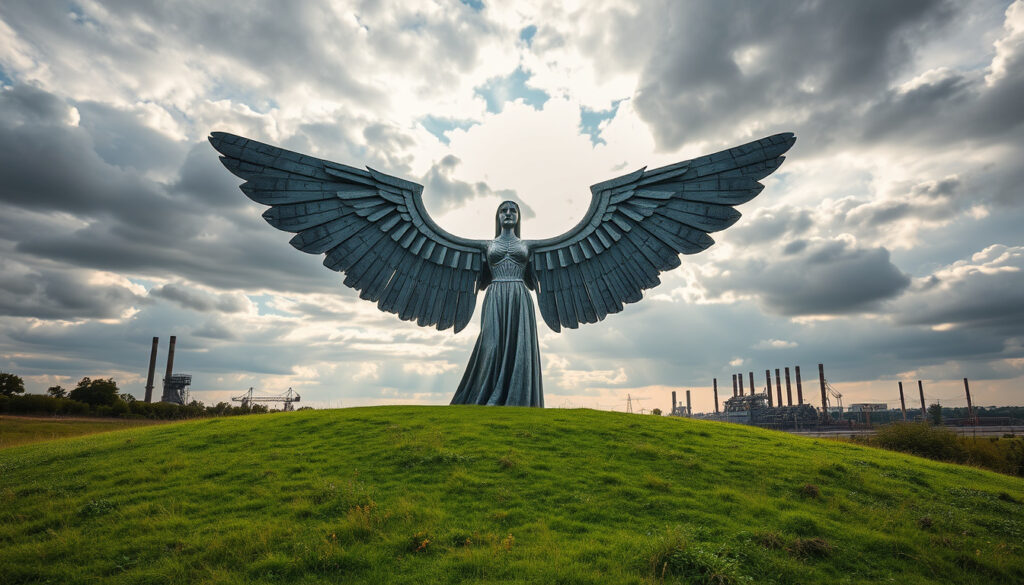
There are few sights that announce you’re entering the North East of England quite like the Angel of the North. Perched on a former colliery site near Gateshead, Antony Gormley’s 20-metre-tall steel angel has become an unlikely emblem of hope and regeneration since its unveiling in 1998.
Height: 20 meters (66 ft) ·
Wingspan: 54 meters (177 ft) ·
Weight: 200 tonnes ·
Cost: £800,000 ·
Material: Corten steel ·
Location: Gateshead, England
Quick snapshot
- Location: Gateshead, England (Wikipedia (online encyclopedia))
- Height: 20 m / 66 ft (Britannica (reference work))
- Wingspan: 54 m / 177 ft (Britannica (reference work))
- Weight: 200 tonnes (Wikipedia (online encyclopedia))
- Antony Gormley (Antony Gormley official site (artist))
- Inspired by industrial heritage (TheCollector (arts publication))
- Material: Corten steel (Wikipedia (online encyclopedia))
- Cost: £800,000 (Wikipedia (online encyclopedia))
- Completed: 1998 (Wikipedia (online encyclopedia))
- Initially controversial (BBC News (UK broadcaster))
- Now a beloved landmark (BBC News (UK broadcaster))
- Major tourist attraction (BBC News (UK broadcaster))
Six key facts tell the story of this giant: its scale, cost, materials, and the timeline that brought it from concept to completion.
| Attribute | Value |
|---|---|
| Height | 20 m (66 ft) (Britannica (reference work)) |
| Wingspan | 54 m (177 ft) (Britannica (reference work)) |
| Weight | 200 tonnes (Wikipedia (online encyclopedia)) |
| Cost | £800,000 (Wikipedia (online encyclopedia)) |
| Construction started | 1997 (Wikipedia (online encyclopedia)) |
| Completed | 1998 (Wikipedia (online encyclopedia)) |
What is the Angel of the North and where is it?
The Angel of the North is a contemporary sculpture by Antony Gormley, standing on a hilltop in Gateshead, Tyne and Wear, just south of the River Tyne (Britannica (reference work)). It sits near the A1 road and the East Coast Main Line, making it visible to millions of passing motorists and train travellers. The sculpture is made of Corten steel, a material that develops a stable rust-like patina, chosen for its durability and low maintenance (Wikipedia (online encyclopedia)). At 20 metres tall with a 54-metre wingspan, it is one of the largest angel sculptures in the world (TheCollector (arts publication)).
For a region whose economy depended on coal and heavy industry, placing a colossal steel angel on a former colliery site sends a clear message: the North East is turning toward culture as a driver of identity and tourism.
The implication: this isn’t just a big sculpture — it’s a deliberate piece of place-making, announced by Gateshead Council in 1994 as part of a regeneration strategy (TheCollector (arts publication)).
What is the meaning of the Angel of the North?
Gormley has explained that he wanted the Angel to be “a focus of hope” during a painful period of transition for the people of the North East (Antony Gormley official site (artist)). The site was once the location of a colliery pithead, and the artist has spoken about the work “resisting post-industrial amnesia” and bearing witness to the miners who worked there for 200 years (TheCollector (arts publication)).
What is the spiritual meaning of the Angel of the North?
- Many visitors interpret the Angel as a spiritual messenger, representing protection and new beginnings (TheCollector (arts publication)).
- Gormley himself avoids overt religious reading, but the form — a winged figure with arms outstretched — echoes angelic iconography across cultures.
- For some, it symbolises the transformation of the landscape from industrial coal seam to open sky.
What is the history of the Angel of the North?
Gateshead Council first earmarked the site for a public artwork in 1990 (TheCollector (arts publication)). In 1994, the council formally proposed a landmark sculpture as part of its regeneration plans (Wikipedia (online encyclopedia)). Antony Gormley was selected as the artist in 1995, chosen from a shortlist of leading sculptors.
Construction began in 1997 and the Angel was installed overnight on 14 February 1998 (Wikipedia (online encyclopedia)). The project cost £800,000, funded by Gateshead Council and the National Lottery (TheCollector (arts publication)).
Why was the Angel of the North controversial?
When the plans were announced, many local residents objected. Critics called it a “white elephant” and questioned both its size and its rusted appearance (BBC News (UK broadcaster)). The £800,000 price tag drew sharp commentary, with some arguing the money should have been spent on public services (TheCollector (arts publication)).
Even Gormley reportedly had moments of doubt. The BBC reported that strong local opposition, engineering difficulties, and the artist’s own uncertainty almost killed the project (BBC News (UK broadcaster)). Yet the council held its course, and after the sculpture was erected, much of the opposition faded.
The controversy forced a public reckoning over how regeneration funds should be spent. In hindsight, the Angel’s economic impact — drawing millions of visitors annually — has arguably vindicated the spend, but at the time the gamble was very real.
Why is the Angel of the North so famous?
Location is a big reason. The Angel stands on a hill beside the A1, the major north-south road in eastern England, and next to the East Coast Main Line railway. An estimated 33 million people see it each year (Wikipedia (online encyclopedia)). Its photogenic silhouette has made it a favourite for filmmakers, photographers, and social media posts.
Beyond visibility, it has become a symbol of the North East’s post-industrial identity. The Angel appears on merchandise, in tourist brochures, and in countless selfies. It is arguably the most famous public sculpture in Britain after the Eros statue in London.
How much is the Angel of the North worth?
- Its cultural value is immense, but a precise financial valuation is elusive. Insurance is reported at over £1 million, though Gateshead Council has not officially confirmed a figure.
- As an economic asset, the Angel drives tourism to Gateshead — visitors to the sculpture often spend money in local shops, restaurants, and hotels.
- In 2019, the sculpture was given a Grade I listing by Historic England, recognising its exceptional architectural and cultural significance (Wikipedia (online encyclopedia)).
The Angel’s fame rests on three pillars: scale, siting, and symbolism. It dominates the landscape, is unavoidable for travellers, and tells a story of a region finding new purpose.
How was the Angel of the North constructed?
The engineering behind the Angel is as impressive as its size. The sculpture sits on concrete foundations that extend 20 metres deep — necessary to anchor the 200-tonne structure against wind loads on the exposed hilltop (Wikipedia (online encyclopedia)). The body is made of Corten steel panels welded onto a steel skeleton, a modular design that allowed assembly on site using a crane (TheCollector (arts publication)).
The Institution of Civil Engineers documented the project as a case study in large-scale public art construction. The Angel was designed to last more than 100 years with minimal maintenance (TheCollector (arts publication)).
Timeline of the Angel of the North
- 1994 — Gateshead Council proposes a landmark sculpture as part of regeneration (Wikipedia (online encyclopedia)).
- 1995 — Antony Gormley is selected as the artist (TheCollector (arts publication)).
- 1997 — Construction begins (Wikipedia (online encyclopedia)).
- February 1998 — The Angel of the North is unveiled (Wikipedia (online encyclopedia)).
Confirmed facts
- Designed by Antony Gormley (Antony Gormley official site (artist))
- Completed in 1998 (Wikipedia (online encyclopedia))
- Height 20 m, wingspan 54 m (Britannica (reference work))
- Cost £800,000 (Wikipedia (online encyclopedia))
- Located in Gateshead, UK (Britannica (reference work))
What’s unclear
- Exact insurance value (reported £1 million but not officially confirmed)
- Precise number of annual visitors (estimates range up to 33 million)
Voices on the Angel
I wanted to make an object that would be a focus of hope during a painful time of transition for the people of the North East. For more details on the artist behind this iconic structure, you can read a Lewis Pullman biography. Lewis Pullman biography
— Antony Gormley (Antony Gormley official site (artist))
We didn’t want some rusting monstrosity on our hill. It felt like money wasted on a gimmick.
— Local resident quoted in BBC News (BBC News (UK broadcaster))
The Angel was a catalyst for regeneration. It put Gateshead on the map and attracted investment and visitors.
— Gateshead Council spokesperson (via TheCollector (arts publication))
For the North East of England, the Angel of the North is far more than a tourist photo opportunity. It is a deliberate statement of identity — a steel monument that turned a disused colliery into a symbol of hope, resilience, and economic reinvention. The choice to back such a bold piece of public art was risky, but the payoff has been lasting. The region took the gamble: lean into culture as an engine of regeneration, or risk being overlooked.
Related reading: **Temple of the Sun at Machu Picchu: History & Significance** · **Willy Wonka and the Chocolate Factory: Deeper Meaning, Where to Watch, and More**
reddit.com, carolechaloupka.com, facebook.com, instagram.com, study.com, scribd.com
Frequently asked questions
Can you visit the Angel of the North for free?
Yes, there is no admission fee. The sculpture is located in a public park with free access 24 hours a day.
Is there parking at the Angel of the North?
Yes, a dedicated car park is available a short walk from the sculpture. It is free of charge.
Is the Angel of the North lit up at night?
Yes, the sculpture is illuminated from dusk, making it visible from the nearby roads and railway.
How long did it take to build the Angel of the North?
Construction began in 1997 and was completed in February 1998 — roughly one year of on-site work after earlier design and planning phases.
Who paid for the Angel of the North?
The project was funded by Gateshead Council and a grant from the National Lottery. The total cost was £800,000.
What is the largest angel sculpture in the world?
The Angel of the North is often described as the largest angel sculpture in the world, though some larger angel figures exist in other countries if measured differently. Its 54-metre wingspan makes it exceptional.
Does the Angel of the North have a religious meaning?
While it takes the form of an angel, the artist Antony Gormley intended it as a secular symbol of hope and transformation, rooted in the region’s industrial heritage rather than religious faith.
More related posts
 Auckland Airport Flight Status: Real-Time Arrivals & Departures
 Car Hire Wellington Airport: Compare Prices & Pickup Guide
 What National Day Is It Today? UK, Ireland, UAE Guide
 North Shore Hospital Jobs: Careers & Application Guide
 King Single Bed Size NZ – Dimensions & Comparison Guide
 Houses for Sale Levin – Current Listings Prices Trends
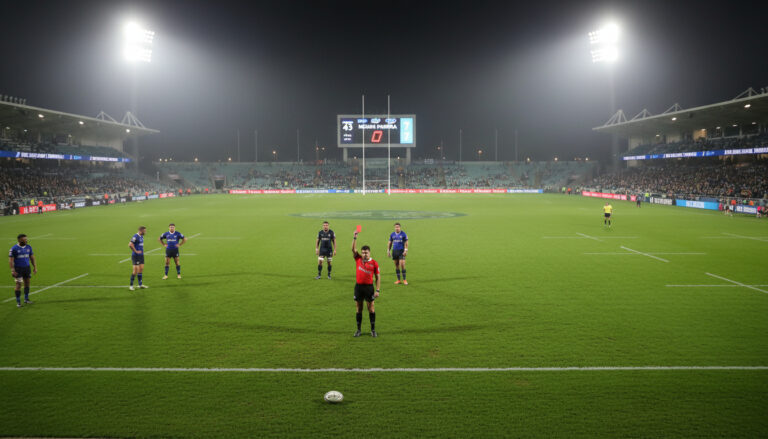 Blues vs Moana Pasifika – 43-7 Win, Red Card and Tries
 Thing 1 and Thing 2: Origin, Movie Cast, Costumes, FAQ
