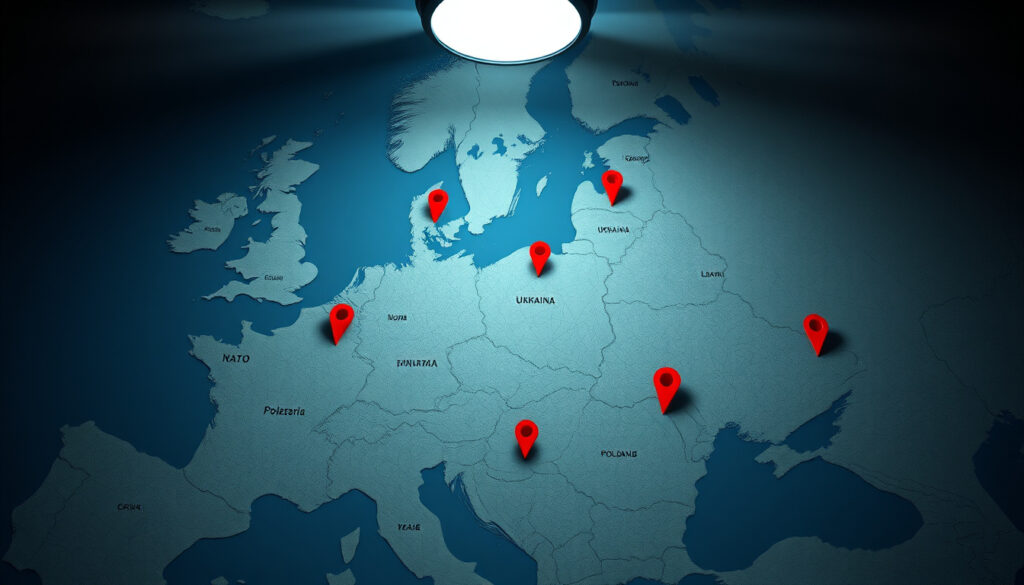
NATO Poland Ukraine Strikes: Full Timeline & Analysis
When a missile crossed into Polish airspace in November 2022, it jolted NATO into a new reality: the war in Ukraine could reach alliance territory. Since then, drones, jets, and air-raid alarms have become part of daily life along Poland’s eastern border, and this article pieces together what happened between 2022 and 2025, how NATO responded, and what it means for the region’s security.
NATO scrambles jets over Poland (Sept 10, 2025): 19 Russian drones entered Polish airspace ·
Missile strike in Poland (Nov 15, 2022): 2 civilians killed in Przewodów ·
7-hour incursion (Sept 9-10, 2025): Article 4 invoked after drones crossed from Belarus ·
NATO air defence alert (Sept 10, 2025): German Patriot systems activated
Quick snapshot
- A missile struck Przewodów on Nov 15, 2022, killing two civilians (Wikipedia (open encyclopedia))
- On Sept 10, 2025, at least 19 Russian drones crossed into Polish airspace for about 7 hours (ABC News (US news outlet))
- NATO air defences were activated and successfully defended alliance territory (NATO (North Atlantic Treaty Organization))
- Poland invoked Article 4 of the NATO Treaty after the incursion (Institute for the Study of War (defense analysis think tank))
- Whether recent airspace violations were accidental or deliberate Russian provocation (DW News (German public broadcaster))
- Exact chain of command for the 2022 missile launch (Wikipedia (open encyclopedia))
- Ukraine’s long-term NATO membership timeline (DW News (German public broadcaster))
- 2022-11-15: Missile hits Przewodów, Poland (Wikipedia (open encyclopedia) – details)
- 2025-02-11: Russian Su-24 enters Polish airspace near Gdańsk Bay (Wikipedia) (details)
- 2025-04-25: Russian helicopter enters Polish airspace over territorial waters (Wikipedia) (details)
- 2025-09-10: 19 drones violate Polish airspace; Article 4 triggered (Institute for the Study of War) (details)
- NATO will increase air policing in the Baltic region (NATO transcript)
- Poland’s ongoing aid to Ukraine will continue; EU sanctions on Russia remain hardened
- Ukraine’s NATO membership decision postponed indefinitely due to war
Five key facts that frame the security landscape at a glance.
| Fact | Value | Source |
|---|---|---|
| Poland joined NATO | 1999 | Wikipedia |
| Ukraine applied for NATO membership | September 2022 | Wikipedia |
| NATO troops stationed in Poland (2025) | ~10,000 | NATO transcript |
| Russian military budget (2024) | $109 billion | Wikipedia |
| US defense budget (2024) | $886 billion | Wikipedia |
Has a Russian missile hit Poland?
The 2022 Przewodów incident
The most serious known strike on Polish soil occurred on November 15, 2022, when a missile exploded in the village of Przewodów, killing two civilians. NATO later concluded the missile was likely fired by Ukrainian air defense systems attempting to intercept incoming Russian rockets — but blamed Russia for starting the war that created the risk (Wikipedia (open encyclopedia) – details). Then-President Andrzej Duda said the event was a “single tragic accident” rather than a deliberate act of war.
Recent airspace violations
In 2025, the pattern shifted from one-time accidents to repeated incursions. On February 11, a Russian Su-24 entered Polish airspace near Gdańsk Bay for 72 seconds (Wikipedia). A helicopter followed in April. Then on September 9-10, at least 19 Russian drones crossed into Polish airspace from Belarus, staying for roughly seven hours — the most significant NATO-border incident of the war to that point (DW News (German public broadcaster) – details).
NATO’s response protocol
After the September 2025 incursion, Poland immediately invoked Article 4 of the NATO Treaty, requesting consultations about the threat to alliance security (Institute for the Study of War (defense analysis think tank) – details). NATO Secretary General Mark Rutte confirmed that “numerous drones from Russia violated Polish airspace” and that alliance air defenses were activated and successfully defended territory (NATO transcript – details). Polish and Dutch aircraft participated in the interception effort, supported by Italian airborne early-warning planes and NATO mid-air refueling aircraft (ISW).
NATO’s response to the 2025 incursion was defensive, not offensive — but the act of shooting down Russian drones over NATO territory marked a first in the conflict. The alliance publicly claimed it was protecting its airspace, while Russia insisted it had no intention of striking Poland.
Is Poland supporting Ukraine or Russia?
Military aid from Poland
Poland has been one of Ukraine’s most vocal backers, providing billions of dollars in military equipment including Leopard 2 tanks, MiG-29 fighter jets, artillery systems, and anti-aircraft weapons (ABC News (US news outlet) – details). Poland also serves as a key logistics hub for Western arms shipment to Ukraine.
Refugee and logistics support
Poland hosts over 3 million Ukrainian refugees, the largest number in Europe relative to its population. Border crossings remain open, and Poland coordinates with EU institutions to provide housing, education, and healthcare (DW News).
Poland’s political stance
The Polish government has consistently condemned Russia’s invasion and supports EU and NATO sanctions packages. Prime Minister Donald Tusk, after the September 2025 drone incursion, stated that “these acts of aggression can never be ignored” and called for a stronger NATO deterrent along the eastern flank (ISW).
Poland is now the most militarized NATO member on Russia’s border: a frontline state that simultaneously supplies weapons to Ukraine, absorbs millions of refugees, and demands a permanent Allied combat presence on its soil.
Why did NATO not let Ukraine join?
NATO’s open door policy and membership criteria
NATO’s Article 10 allows any European country to join if it meets political and military criteria — including a functioning economy, democratic institutions, and civilian control of the armed forces. Unanimous consent from all existing members is required. Ukraine formally applied for membership in September 2022 (Wikipedia – Ukraine–NATO relations).
Russian opposition and security concerns
Russia has long declared Ukraine’s NATO membership a “red line,” claiming it would threaten Russian strategic depth and violate perceived security interests. This opposition, backed by implicit and explicit threats, has deterred some NATO members from fast-tracking Ukraine’s accession (DW News).
Ukraine’s reform status and war conditions
The ongoing war makes it impossible to implement needed reforms and sets borders in flux — a situation NATO traditionally avoids for new members. Allies emphasize that Ukraine will join eventually, but only after security conditions and domestic reforms are met (Wikipedia).
The catch: NATO’s open-door principle collides with the reality of an active war, leaving Ukraine’s membership in limbo.
Can Russia withstand NATO?
A straightforward comparison reveals the scale of the imbalance.
| Metric | NATO (US + Allies) | Russia | Source |
|---|---|---|---|
| Defense spending (2024) | $1.4+ trillion (alliance total) | $109 billion | Wikipedia (US budget) / Wikipedia (Russia budget) |
| Active military personnel | ~3.5 million | ~1.5 million | Wikipedia |
| Nuclear warheads | 5,550 (US) + ~500 (others) | ~5,889 | Wikipedia (US) / Wikipedia (Russia) |
| Interception capability over Poland (2025) | F-35, Patriot, Typhoon, German Patriot systems | S-400, Su-35, drones | NATO transcript |
The implication: NATO’s conventional and financial advantage is massive, but Russia’s nuclear arsenal and wartime economy create a symmetrical deterrent — neither side can risk a full-scale war.
Why is Ukraine so important to Russia?
Historical and cultural ties
President Putin has repeatedly referred to Ukraine as part of the “common historical and cultural space” with Russia, citing centuries of shared Kyivan Rus origins. This narrative justifies Russia’s claim that Ukraine is not a legitimate independent nation (DW News).
Strategic buffer and security
Ukraine lies between Russia and NATO’s eastern flank. Losing it to NATO would reduce Russia’s strategic depth, placing alliance troops and missile systems closer to Moscow — a scenario Russia considers an existential threat (Wikipedia – Ukraine–NATO relations).
Economic and energy interests
Ukraine is a major transit route for Russian natural gas to Europe, and its industrial base in Donbas (now largely destroyed) historically supplied components to Russia’s defense sector. Crimea, annexed in 2014, hosts the headquarters of Russia’s Black Sea Fleet (Wikipedia – Annexation of Crimea).
The pattern: Russia sees Ukraine not just as a neighbor but as an integral part of its sphere, making the NATO membership question a direct challenge to its security doctrine.
Timeline of key incidents
- Nov 15, 2022 — Missile strikes Przewodów, Poland; 2 killed. NATO says it was likely Ukrainian air defense but holds Russia responsible (Wikipedia).
- Feb 11, 2025 — Russian Su-24 enters Polish airspace near Gdańsk Bay for 72 seconds (Wikipedia).
- Apr 25, 2025 — Russian military helicopter enters Polish airspace over territorial waters (Wikipedia).
- Sept 9-10, 2025 — 19 Russian drones cross into Poland from Belarus; Article 4 invoked; NATO forces shoot down drones over Poland for the first time (ABC News; ISW).
The timeline shows a clear escalation from a single accident to repeated, deliberate incursions that triggered NATO’s first direct engagement on the eastern flank.
What’s confirmed and what’s unclear
Confirmed facts
- A missile hit Przewodów on Nov 15, 2022, killing two civilians (Wikipedia).
- NATO concluded the missile was likely Ukrainian air defense but Russia bears ultimate responsibility (Wikipedia).
- Poland and allied forces scrambled fighter jets multiple times in 2025 (ABC News).
- NATO activated air defences and shot down Russian drones over Poland on Sept 10, 2025 (NATO transcript).
What’s unclear
- Whether the 2025 drone incursions were accidental or deliberate provocation (DW News).
- Exact chain of command for the 2022 missile launch (Wikipedia).
- Ukraine’s long-term NATO membership timeline.
Key statements from officials
“Numerous drones from Russia violated Polish airspace. NATO air defences were activated and successfully defended NATO territory.”
— Mark Rutte, NATO Secretary General, Sept 10, 2025 (NATO transcript)
“The incursion lasted about seven hours, from around 23:30 local time on Sept 9 to 06:30 on Sept 10.”
— Donald Tusk, Prime Minister of Poland, quoted by Institute for the Study of War
“Our military did not intend to strike targets in Poland during the drone operation.”
— Russian Ministry of Defence, reported by DW News
For Poland, the choice is no longer theoretical: it is the alliance’s eastern linchpin, exposed to daily incursions and hosting a war economy next door. The next decision—whether to push for permanent NATO combat brigades or to rely on rotational deployments—will define its security for a generation. For Polish policymakers, the implication is clear: invest in integrated air and missile defense now, or face the consequences of a single miscalculation.
theconversation.com, cnn.com, foreignpolicy.com, cnn.com, youtube.com, aljazeera.com, youtube.com
Frequently asked questions
Who is Poland’s biggest ally?
The United States is widely considered Poland’s most important military and political ally, reinforced by permanent troop rotations and joint exercises. The UK and Germany are also key partners (NATO).
What country is helping Ukraine the most?
The United States leads in total military aid (over $60 billion since 2022), followed by the United Kingdom, Germany, and Poland in terms of GDP-adjusted contributions (Wikipedia).
Has Putin ever asked to join NATO?
Russia never formally applied for NATO membership. Putin expressed interest in closer ties in the early 2000s, but NATO’s enlargement in Eastern Europe eventually turned relations adversarial (DW News).
Does Russia use female soldiers?
Yes, women serve in the Russian armed forces, including in combat roles, though in smaller numbers than men. Estimates suggest women make up about 10% of Russia’s military personnel (Wikipedia).
Who is richer, Russia or the USA?
The United States has a GDP of about $26 trillion, compared to Russia’s $2.1 trillion (2023). The US economy is roughly 12 times larger, though Russia’s wartime economy is funded by energy exports and high military spending (Wikipedia).
What is the current status of the Ukraine war front?
As of late 2025, the front lines are roughly static in eastern and southern Ukraine, with intense artillery and drone warfare. Russia continues to launch long-range strikes on Ukrainian energy infrastructure, and Ukraine maintains a defensive posture with ongoing Western support (DW News).
More related posts
 $1,000 Baby Bonus NZ: Best Start Payments Guide
 King’s Birthday Honours NZ 2025: Full List of Recipients & Details
 Start Up Business Loans NZ: Complete Funding Guide
 Temple of the Sun at Machu Picchu: History & Significance
 17 Best Things to Do in Paihia, New Zealand (Free + Family-Friendly)
 How to Set Up a Home Office: Guide, Costs & Tax Tips
 North Shore Hospital Jobs: Careers & Application Guide
 Galaxy A21s to Buy: Prices, Reviews & Ireland Deals
