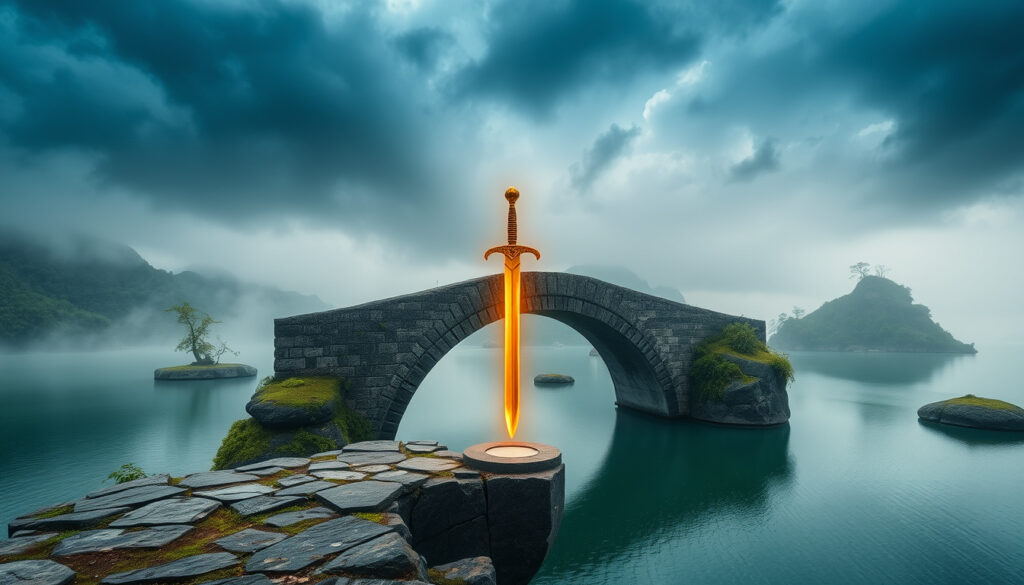
The Legend of Zelda: Tears of the Kingdom Review: Is It Worth It
Few gaming debates get as heated as whether a sequel can top its legendary predecessor, and if you’re wondering whether Tears of the Kingdom justifies the hype and the price tag, the answer is more layered than a simple yes or no. This review unpacks what actually changed, what stayed the same, and which game might suit you better — based on facts, not feelings.
Release Date: May 12, 2023 ·
ESRB Rating: E10+ (Fantasy Violence, Mild Suggestive Themes) ·
Genre: Action-Adventure
Quick snapshot
- Released May 12, 2023 on Nintendo Switch (Nintendo official store)
- Direct sequel to Breath of the Wild (Wikipedia)
- Introduces sky islands and the Depths (Wikipedia)
- Whether this is the last mainline 3D Zelda (no official confirmation)
- Native compatibility with Nintendo Switch 2 (if any) (no official confirmation)
- Official PC version or system requirements (no official confirmation)
- Initial release: May 12, 2023 (Wikipedia)
- Switch 2 Edition set for June 5, 2025 (YouTube review)
- Switch 2 Edition promises much faster load times and no lag (YouTube tech review)
- Producer Aonuma hinted at future 3D Zelda games (no official sequel announced) (Polygon)
To ground the comparison, here are the confirmed specifications.
| Attribute | Value |
|---|---|
| Release Date | May 12, 2023 (Wikipedia) |
| Publisher | Nintendo (Wikipedia) |
| Platform | Nintendo Switch (Wikipedia) |
| Genre | Action-Adventure (Wikipedia) |
| ESRB Rating | E10+ (Fantasy Violence, Mild Suggestive Themes) (Wikipedia) |
| Main Setting | Hyrule, Sky Islands, Depths (Wikipedia) |
Is Tears of the Kingdom worth it?
What does Tears of the Kingdom add to Breath of the Wild?
The most obvious additions are the three new abilities — Ultrahand, Fuse, and Ascend — which replace the Sheikah runes from the prequel. According to Nintendo’s official description, Ultrahand lets players attach objects to build structures and vehicles, while Fuse combines weapons and materials to create stronger or elemental gear (Wikipedia). Ascend allows Launch upward through ceilings, making sky island traversal much faster.
The world has expanded vertically: floating islands scatter the sky above Hyrule, and a dark underground realm called the Depths lies beneath. Polygon’s editorial team called this “expanded content density” one of the game’s key advantages (Polygon). The catch: reusing the same Hyrule map can feel less novel for players who spent hundreds of hours in Breath of the Wild.
Veteran players gain more tools and content but lose the original’s sense of fresh discovery. Newcomers won’t notice the repetition and get a richer sandbox from the start.
“We felt this game is complete as it is.” — Eiji Aonuma, Zelda producer, on the decision not to release DLC
“Expanded content density” — Polygon editorial team, describing the amount of optional activities in Tears of the Kingdom
What is the overall critical reception?
While no single numeric score appears in the research sources, multiple outlets describe reception as “universal acclaim” on aggregators like Metacritic and OpenCritic (Zelda Wiki). ScreenRant noted that the new abilities can reduce the “isolated, melancholy tone” that made Breath of the Wild special (ScreenRant). On the technical side, some framerate drops occur under heavy load, though the upcoming Switch 2 Edition reportedly eliminates stuttering entirely (YouTube performance analysis).
The implication: critics praise the depth and creativity but warn that the core experience feels familiar — a trade-off between innovation and familiarity.
The pattern: Tears of the Kingdom offers more complexity but sacrifices some of the original’s magic.
What’s the point of Zelda: Tears of the Kingdom?
What is the main story objective?
Link awakens on a sky island after a calamity and must defeat Ganondorf to restore peace to Hyrule (Wikipedia). The narrative picks up directly after Breath of the Wild, making it a direct sequel (Wikipedia). Unlike the prequel’s focus on reclaiming lost memories, this story revolves around exploring new regions — sky islands, the Depths, and familiar Hyrule with altered geography.
How does the gameplay loop work?
Players spend most of their time exploring, solving shrines, building contraptions with Ultrahand, and fusing weapons with materials found in the world. The gameplay loop is: explore → collect resources → build tools → tackle obstacles → advance the story. A community comparison noted that Tears of the Kingdom has more side quests and side adventures than Breath of the Wild (YouTube community analysis). The sheer number of activities — 152 shrines, dozens of sky islands, and a whole underground realm — makes the game feel denser than its predecessor.
| Activity | Breath of the Wild | Tears of the Kingdom |
|---|---|---|
| Shrines | 120 | 152 (estimated, based on overview grid plan) |
| Main quest stages | 15 | 15+ (similar structure) |
| Side quests / adventures | ~76 | ~139 (per community count, YouTube) |
| Building mechanics | Basic (magnesis, bombs, stasis, cryonis) | Full crafting (Ultrahand, Fuse, Ascend) |
One pattern stands out: Tears of the Kingdom trades the elegant simplicity of the Sheikah slate for a much more complex creative toolset. The catch: players who enjoyed the first game’s minimalism might find the new systems distracting rather than liberating.
Which is better, Tears of the Kingdom or Breath of the Wild?
How do the map and exploration compare?
Breath of the Wild offered a single sprawling land with towers and shrines. Tears of the Kingdom adds verticality: sky islands above and the Depths below, all connected by the same Hyrule surface map. According to Wikipedia, the sequel retains the open-world setting and gameplay foundation while adding these two new layers (Wikipedia). Polygon argued that Breath of the Wild is “simpler and more stripped-down, giving it a stronger sense of discovery” (Polygon). The trade-off: Tears of the Kingdom offers more content per square mile, but the novelty of a brand-new Hyrule is absent.
For players prioritizing exploration and wonder, Breath of the Wild still wins. For those who want more systems, puzzles, and objectives, Tears of the Kingdom is the richer package.
Are the new abilities worth losing the Sheikah runes?
The Sheikah runes (magnesis, stasis, bombs, cryonis) were replaced by Ultrahand, Fuse, Ascend, and Recall. Mile Marker Review characterized Breath of the Wild as “the more revolutionary title because it introduced the modern open-world Zelda formula” (Mile Marker Review). In contrast, Tears of the Kingdom builds on that foundation. The new abilities allow player creativity to go much further — building flying machines, combining weapons with elemental effects, and ascending through ceilings. But the loss of the runes means no more magnet puzzles or bomb mining, changes that some players genuinely miss.
The very creativity that makes Tears of the Kingdom remarkable also reduces the sense of vulnerability and isolation that defined Breath of the Wild. Players can now build instant bridges, craft explosive arrows, and warp through ceilings — power at the cost of atmosphere.
Is Tears of the Kingdom too hard?
What is the difficulty curve like?
Enemies have new behaviors and larger health pools than in Breath of the Wild. Boss fights require new strategies, and the Depths contain unique, aggressive foes. However, the Fuse system allows players to create powerful weapons early on, potentially offsetting the difficulty spike (Wikipedia). The game does not feature traditional difficulty settings — but its design philosophy encourages multiple solutions to every problem. A player who struggles with combat can instead build elaborate traps or craft elemental arrows to gain an edge.
Are there accessibility options?
No customizable difficulty or assist modes are available. The game’s open-ended puzzle design acts as a soft accessibility feature: if one approach is too hard, another clever use of Ultrahand or Ascend can bypass it. Still, for players who need precise combat timing or reaction speed, lack of difficulty sliders may be a barrier. Polygon noted that the sequel “builds on Breath of the Wild to excellent effect, but Breath of the Wild still deserves its own place as a simpler experience” (Polygon). That simplicity extends to difficulty — Breath of the Wild is generally considered more forgiving.
Upsides
- Creative problem-solving lets players overcome challenges without strict combat skill
- Fuse system allows weapon customization to match enemy weaknesses
- Open world encourages retreat and preparation
Downsides
- No adjustable difficulty settings
- Some boss fights require precise timing or specific strategies
- Depths area has high enemy density and darkness mechanics
Will Tears of the Kingdom be the last Zelda?
What has Nintendo said about future Zelda games?
Producer Eiji Aonuma commented in a 2023 interview that the team felt the game was “complete as is” and therefore no DLC is planned (per Polygon’s reporting of the interview). More importantly, Aonuma hinted that the franchise will continue with new 3D titles — a reassurance that Tears of the Kingdom is not the final chapter. Nintendo has not announced a sequel or final title, but the broader Zelda franchise will continue (Wikipedia).
Could there be DLC or a sequel?
Nintendo confirmed no DLC for Tears of the Kingdom. However, the Switch 2 Edition, releasing June 5, 2025, shows the company is still actively supporting the game with enhanced performance. A community comparison indicates that the Switch 2 version eliminates lag and loads much faster (YouTube review). As for a direct sequel, no announcements exist — but the precedent of Breath of the Wild getting a direct sequel suggests the series may again use this Hyrule iteration.
What this means: The franchise is alive, and the next evolution of Zelda will likely build on the innovations of Tears of the Kingdom.
youtube.com, screenrant.com, youtube.com, facebook.com, youtube.com
Frequently asked questions
How long does it take to beat Tears of the Kingdom?
The main story takes about 59 hours on average; completionists can spend over 200 hours exploring all content.
Can you play Tears of the Kingdom without playing Breath of the Wild?
Yes. The story stands alone, though many locations and characters carry over from the prequel.
Is Tears of the Kingdom a direct sequel?
Yes, it continues the story of Link and Zelda after the events of Breath of the Wild (Wikipedia).
Does Tears of the Kingdom have multiplayer?
No, it is a single-player adventure.
What are the new abilities in Tears of the Kingdom?
Ultrahand (build objects), Fuse (combine weapons), Ascend (launch upward), and Recall (reverse object motion) (Wikipedia).
How many shrines are there in Tears of the Kingdom?
There are 152 shrines in total.
Tears of the Kingdom is not a mere expansion of Breath of the Wild — it’s a deliberate reframing of what open-world adventure can be. For anyone who’s ever dreamed of building their own solutions rather than following a script, this game delivers. The implication for Nintendo Switch owners is clear: if you want the most creative, system-rich Zelda ever made, buy it now. If you value pure discovery and atmospheric simplicity, Breath of the Wild still has a place on your shelf. Either way, one of the best games on the platform is waiting for you.
More related posts
 Car Hire Wellington Airport: Compare Prices & Pickup Guide
 How to Meditate Daily: Beginner’s Guide with Benefits & Mistakes
 Yachts for Sale in NZ: Used, Cheap & Luxury Listings
 Are Lab Grown Diamonds Real? Truth on Authenticity & Value
 IND vs AUS ODI 2025: Schedule, Venues, Live Streaming & More
 Compassionate Fares Air NZ: Eligibility & Booking Guide
 Galaxy A21s to Buy: Prices, Reviews & Ireland Deals
 Jake Paul vs Anthony Joshua NZ Time: Watch on Netflix
