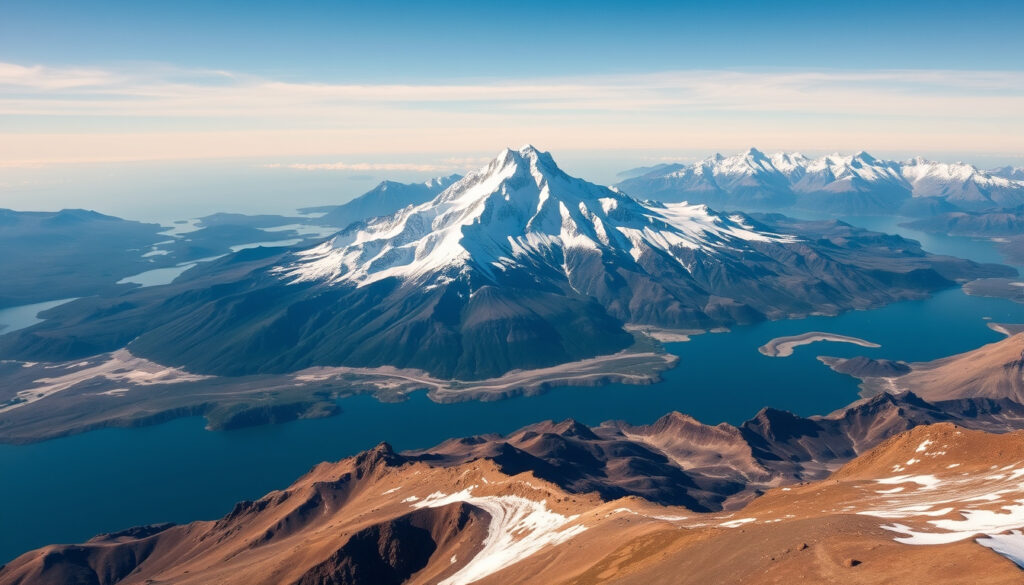
Aoraki / Mount Cook: Height, Climbing Difficulty, Hikes
Most people first encounter Aoraki / Mount Cook through a postcard: a perfect white pyramid rising above turquoise lakes. But the mountain that serves as New Zealand’s scenic backdrop is also one of the country’s most demanding technical climbs.
Height: 3,724 m (12,218 ft) ·
Location: Canterbury, South Island, New Zealand ·
First ascent: 1894 by Tom Fyfe, James Clarke, Charles Milne ·
National Park: Aoraki / Mount Cook National Park ·
Glacier cover: 40% of park area ·
Peaks over 3,000 m in park: 19
Quick snapshot
- Aoraki / Mount Cook is New Zealand’s highest peak at 3,724 m, per the 2014 survey (Wanaka Mountain Guides)
- First ascent was 25 December 1894 by Tom Fyfe, James Clarke, Charles Milne (Wikipedia)
- The official dual name was adopted in 1998 (Wikipedia)
- Climbing difficulty on the standard Linda Glacier route is AD+ on the alpine grade scale (Adventure Consultants)
- Exact ranking of Mount Cook vs Everest in “hardest” lists depends on criteria (technical vs altitude) (Adventure Consultants)
- Number of annual climbers is not consistently reported (Department of Conservation)
- First ascent: 25 December 1894 (Wikipedia)
- Official dual name change: 1998 (Wikipedia)
- Height survey updated: 2014 (Wanaka Mountain Guides)
- Climbing season runs November to February; bookings for guided climbs open months ahead (Adventure Consultants)
- DOC continues trail maintenance on Hooker Valley Track and other popular walks (Department of Conservation)
Six key facts, one pattern: the mountain’s imposing size is matched by its technical demands.
| Specification | Value |
|---|---|
| Elevation | 3,724 m (12,218 ft) |
| Prominence | 3,724 m (highest in NZ) |
| First ascent | 25 December 1894 by Tom Fyfe, James Clarke, Charles Milne |
| Official name | Aoraki / Mount Cook (since 1998) |
| National Park area | 707 km² |
| Glacier coverage | ~40% of park |
Is Aoraki the same as Mount Cook?
Yes, Aoraki and Mount Cook refer to the same peak — New Zealand’s highest mountain. The official name became Aoraki / Mount Cook in 1998 to recognise both Māori and European heritage, as documented by Wikipedia. The dual name replaces the former single “Mount Cook”.
Dual name history
- The Māori name Aoraki (often spelled Aorangi) refers to a figure in Ngāi Tahu legend, while the English name Mount Cook honours Captain James Cook (Wikipedia).
Official name status
- The Ngāi Tahu Claims Settlement Act 1998 formally changed the name to Aoraki / Mount Cook, making it one of several dual-named peaks in the region (Wikipedia).
The implication: if you see “Aoraki / Mount Cook” on a map or sign, you’re looking at the same iconic mountain, just with both names given equal weight.
Why is Aoraki Mount Cook famous?
At 3,724 m, it’s the tallest mountain in New Zealand and the centrepiece of a World Heritage-listed national park that contains 19 peaks over 3,000 m (Wanaka Mountain Guides). That singular combination of height, glaciation, and accessibility makes it a magnet for climbers, hikers, and scenic-flight operators.
Highest peak in New Zealand
- Its elevation of 3,724 m (12,218 ft) is based on a 2014 survey (Wanaka Mountain Guides).
Alpine climbing reputation
- Adventure Consultants describes Aoraki / Mount Cook as a “serious mountaineering objective” requiring proven climbing proficiency, excellent fitness, and recent alpine experience (Adventure Consultants).
- SummitPost notes there are no walk-up routes — every summit attempt is a technical climb (SummitPost).
Scenic flights and tourism
- Scenic flights from Mount Cook Village and nearby towns offer glacier landings; the Department of Conservation manages walking trails like the Hooker Valley Track for non-climbers (Department of Conservation).
Aoraki / Mount Cook is famous for being both a tourist icon and a serious alpine challenge. The gap between the two experiences is wide — and the national park’s beauty is the common thread.
The trade-off: the mountain’s fame attracts thousands of visitors who never see its summit, while the handful who do climb it face one of the Southern Hemisphere’s most demanding routes.
Can you climb Aoraki Mount Cook?
Yes, but it’s not a casual hike. As Adventure Consultants states, you need proven climbing proficiency, excellent fitness, and recent alpine experience. Most climbers join guided expeditions.
Climbing requirements
- Technical skills: ice axe, crampons, rope work, and crevasse rescue (Adventure Consultants).
- Fitness: must be able to climb 1,000 vertical metres with an 8 kg backpack in 3.5 hours or less (Adventure Consultants).
Guided vs. independent climbs
- Guided services like Alpine Guides and Adventure Consultants handle logistics, safety, and route-finding. Independent ascent is possible but strongly discouraged for anyone without significant alpine experience (Adventure Consultants).
Seasonal access
- Climbing season is November to February (summer); winter conditions are extreme and beyond the scope of most guided operators (Adventure Consultants).
What this means: if you’re fit, experienced, and willing to pay for a guide, the summit is achievable. If you’re not, start with a training course on a smaller peak.
What is the climbing difficulty of Aoraki Mount Cook?
The mountain’s technical grade varies by route, but the standard ascent — the Linda Glacier — is rated AD+ (fairly difficult to difficult) on the alpine grade scale. Adventure Consultants calls it “the most straightforward route on Aoraki / Mount Cook” but warns it still has a high level of objective hazard.
Technical grade
- SummitPost rates the Linda Glacier route as grade 4- or New Zealand grade 3, with steep ice, crevasses, and rockfall risk (SummitPost).
Common routes and their difficulty
- Linda Glacier (standard): AD+, 15–18 hours round trip, 1,700 m vertical gain from Plateau Hut (Adventure Consultants).
- Other routes like the East Ridge and Caroline Face are harder (D or TD) and rarely attempted (SummitPost).
Comparison to other mountains
- Adventure Consultants notes that the region’s vertical relief, glaciation, and weather make it a “very serious mountaineering challenge” (Adventure Consultants).
Route specifications, one pattern: the standard route is short but relentless.
| Route specification | Value |
|---|---|
| Route name | Linda Glacier & North-East Ridge |
| Alpine grade | AD+ |
| Vertical gain from Plateau Hut | ~1,700 m |
| Round trip time | 15–18 hours |
| Technical requirements | Ice axe, crampons, rope, crevasse rescue |
| Objective hazards | Crevasse fall, rockfall, weather change |
| Fitness prerequisite | 1,000 m vert in 3.5 hrs with 8 kg pack |
| Best season | November–February |
The catch: while the grade is AD+, the objective hazards and weather changeability push the actual difficulty higher for climbers not used to New Zealand’s alpine conditions.
Is Mount Cook harder than Everest?
By altitude, Everest is far higher. But when it comes to pure technical climbing, many guides consider Aoraki / Mount Cook the more demanding mountain. Adventure Consultants rates the Linda Glacier at AD+, while Everest’s South Col route is typically AD. The difference is that Cook’s routes are steeper, more glaciated, and offer less margin for error.
Technical climbing comparison
- Everest’s standard route: AD, with a long altitude grind but relatively moderate ice angles. Cook’s standard: AD+, with sustained 45–60° ice and serac hazards (Adventure Consultants).
Altitude and endurance comparison
- Everest requires weeks of acclimatisation; Cook’s summit is reached in a single 15–18 hour push from Plateau Hut (Adventure Consultants).
Climber testimonials
- Alpine Guides notes that many climbers find Cook technically more demanding than Everest’s standard route, owing to the steep ice and variable weather (Alpine Guides, Aoraki Mount Cook).
Aoraki / Mount Cook is shorter than Everest by more than 5,000 m, yet its technical difficulty is rated higher. For climbers who value skill over altitude, it’s arguably the harder summit.
Why this matters: if you’re an experienced mountaineer looking for a technical challenge, Cook may be the more rewarding climb than a high-altitude slog.
Can beginners climb Mount Cook?
Generally, no. Adventure Consultants requires that participants have proven climbing proficiency and recent alpine experience before booking. Beginners should start with introductory alpine courses on less technical peaks.
Skill prerequisites
- Must be able to climb 1,000 vertical metres in 3.5 hours with an 8 kg pack (Adventure Consultants).
- Must have experience with ice axe, crampons, and rope work (SummitPost).
Training and preparation
- Many guided operators, such as Queenstown Mountain Guides, offer multi-day training climbs on nearby peaks like Mount Aspiring / Tititea (Queenstown Mountain Guides).
Guided programs for novices
- Some operators run “intro to alpine climbing” courses that include glacier travel and crevasse rescue, but the summit of Cook itself is not included in those programs (Adventure Consultants).
The pattern: if you’re a beginner, Aoraki / Mount Cook is not your first climb. Build skills on smaller peaks first, then graduate to the big one.
What are the top hikes in Aoraki Mount Cook National Park?
The national park offers a range of trails for non-climbers. The Department of Conservation classifies the Hooker Valley Track as an easy to intermediate walking track, 4.3 km return, taking about 1 hour with low fitness required. For day hikers, the Sealy Tarns Track is a steeper but rewarding ascent. If you’re planning a broader South Island itinerary, check out our guide from Te Anau to Queenstown for transport and base options.
Short walks (30 min–1 hr)
- Hooker Valley Track: 4.3 km return, flat gradient, 1 hour — DOC describes it as “easy to intermediate” (Department of Conservation).
- Kea Point Walk: 1 hour return, great views of Mueller Glacier (Department of Conservation).
Day hikes
- Sealy Tarns Track: 2–3 hours one way, steep stairs, but offers alpine tarns and views of Cook (Department of Conservation).
Multi-day trails
- Mueller Hut Route: requires alpine skills and overnight booking; not a walk, but a short alpine climb (Department of Conservation).
The trade-off: the park’s accessible trails attract thousands of visitors, while the serious alpine routes remain the domain of experienced mountaineers.
“The standard route is a serious alpine climb requiring prior experience.”
“A technically demanding climb for experienced mountaineers.”
Adventure Consultants
First ascent on 25 December 1894 by Tom Fyfe, James Clarke, and Charles Milne.
Wikipedia
Aoraki / Mount Cook is a mountain of two faces: one accessible to day-trippers on the Hooker Valley Track, the other reserved for those who train, prepare, and accept the risk. For the casual visitor, the park’s trails and scenic flights offer a genuine taste of the alpine environment. For the climber, the summit remains one of the most technically rewarding peaks in the world. The choice is yours — but know the difference before you go. While planning your trip, also explore Things to Do in Taupō for another iconic New Zealand destination.
doc.govt.nz, shinshing.tw, walkmyworld.com, naturesights.com, outthere.kiwi, britz.com, whereintheworldisnina.com, flightlessbutcurious.com
Frequently asked questions
What is the exact height of Aoraki / Mount Cook?
3,724 m (12,218 ft) per the 2014 survey, as confirmed by Wanaka Mountain Guides.
Is Aoraki / Mount Cook taller than Mount Aspiring?
Yes. Mount Aspiring / Tititea is 3,033 m, nearly 700 m shorter than Aoraki / Mount Cook (Wikipedia).
How long does it take to climb Aoraki / Mount Cook?
The standard Linda Glacier route takes 15–18 hours round trip from Plateau Hut, according to Adventure Consultants.
Do you need a guide to climb Mount Cook?
Not legally, but most operators strongly recommend a guide due to the technical demands and objective hazards. Adventure Consultants requires proven experience for independent climbers.
What is the Linda Glacier route?
The standard climbing route on Aoraki / Mount Cook, rated AD+. It ascends the Linda Glacier and North-East Ridge from Plateau Hut, with steep ice, crevasses, and rockfall risk (SummitPost).
Are there any fatalities on Mount Cook?
Yes. The mountain has claimed many lives over the years. The frequent cause is objective hazard (crevasse falls, rockfall, avalanches) combined with weather changes (Wikipedia).
What is the best time of year to visit Aoraki Mount Cook National Park?
For hiking, November to March offers the best weather. For climbing, the core season is November to February. In winter, many trails are icy and unmaintained (Department of Conservation).
More related posts
 Best Road Trip Apps 2025: Planning, Navigation & Fun
 Shopify Make a Website: Full Step-by-Step Guide 2026
 The Summer I Turned Pretty Season 3: Episodes & Ending
 Best Pizza Porteña Near Me: Guide to Argentinian Pizza in Ireland
 Liam Lawson Deletes Social Media After Toxic Online Abuse
 IRD Bank Account Number: How to Pay Tax via Internet Banking
 Map of Pacific Islands: 14 Countries, Regions & Facts
 How to Calculate Percentage Increase: Step-by-Step Guide
