Things to Do in Taupō: Best Activities & Itineraries
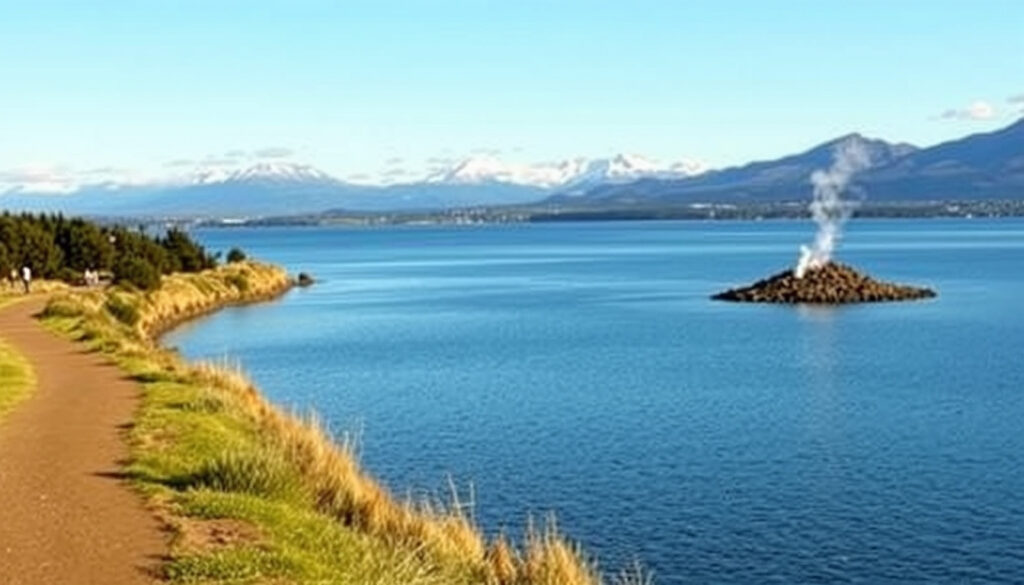
There’s a reason travelers keep circling back to Taupō: it’s not just the size of its lake (616 km², NZ’s largest) or the raw force of Huka Falls (11m drop at 220,000 L/s), but how this lakeside town bundles geothermal wonders, adventure sports, and Māori cultural sites into one compact stop. If you’re mapping a North Island itinerary, Taupō deserves a serious look.
Lake Taupō size: New Zealand’s largest lake (616 km²) ·
Distance from Rotorua: Approx. 1-hour drive (80 km) ·
Huka Falls water volume: 220,000 litres per second ·
Tongariro Alpine Crossing length: 19.4 km one way
Quick snapshot
- Lake Taupō is a caldera formed by a supervolcanic eruption ~26,500 years ago (Taupo.info (official tourism site))
- Huka Falls flows at 220,000 L/s and drops 11 m (Sail Barbary (family travel guide))
- Taupō is a popular base for the Tongariro Alpine Crossing (100% Pure New Zealand (official tourism board))
- Exact visitor numbers for specific attractions vary by source
- Best time to visit avoids peak school holidays but depends on weather
- Exact opening times of geothermal parks can vary seasonally
- Best visited October–April for warm weather; Tongariro crossing weather-dependent year-round
- Plan your itinerary mixing free and paid activities to suit your budget and travel style
These figures give a sense of the scale of Taupō’s attractions.
| Fact | Value |
|---|---|
| Population | Approx. 26,000 |
| Lake size | 616 km² (largest in NZ) |
| Annual visitors | Over 800,000 |
| Famous for | Lake, geothermal activity, trout fishing |
| Huka Falls drop | 11 metres |
| Distance from Rotorua | ~80 km (1-hour drive) |
Six figures that capture the scale: the lake alone covers an area larger than many cities, and annual visitors outnumber locals 30 to 1. The implication: you’ll rarely feel alone at the top sights, but the town’s infrastructure handles the crowds.
Is Taupō worth visiting?
Why Taupō appeals to nature lovers
If you’re after a condensed New Zealand experience, Taupō delivers. The lake anchors a landscape shaped by volcanic upheaval—the caldera formed by a supervolcanic eruption roughly 26,500 years ago. Surrounding it you’ll find geothermal areas like Craters of the Moon and Orakei Korako, plus easy access to Tongariro National Park. The official tourism site 100% Pure New Zealand (national tourism board) lists Taupō among the North Island’s top destinations, partly because it packs so much into a small radius.
What makes Taupō different from Rotorua
While both towns sit on the Taupō Volcanic Zone, their characters diverge. Travel writer comparisons note that Rotorua leans heavier on concentrated geothermal parks and Māori cultural experiences, while Taupō is more lake-and-outdoors oriented (Leave Your Daily Hell (travel comparison blog)). Taupō’s lake activities—cruises, kayaking, and trout fishing—are hard to match in Rotorua. The trade-off: Rotorua has more dedicated geothermal parks within walking distance of the city centre.
The pattern: choose Taupō for wide-open water and alpine hiking; choose Rotorua if geothermal concentration and cultural shows are your priority.
What are the best things to do in Taupō?
Top outdoor activities: hiking, bungy, jet boating
- Huka Falls walk – Free access to the lookout and tracks along the Waikato River. The falls carry 220,000 litres per second over an 11-metre drop (Sail Barbary (family travel blog)).
- Taupō Bungy – Operated by AJ Hackett, one of New Zealand’s iconic bungy operators, over the Waikato River.
- Jet boating at Huka Falls – High-speed rides that get within metres of the falls.
- Tongariro Alpine Crossing – A 19.4-km one-day trek through volcanic landscapes, but requires good fitness and weather (100% Pure New Zealand (official tourism board)).
Adventurers get the most out of Taupō: the lake, river, and alpine terrain offer a density of adrenaline activities that few towns can match. Families should plan separate kid-friendly stops—the bungy and crossing aren’t for young children.
Must-see geothermal and cultural sites
- Craters of the Moon – A thermal walk with steam vents and craters ($8 entry, free parking) (VJ Cooks (budget travel blog)).
- Maori Rock Carvings – Accessible only by boat or kayak on Lake Taupō. Cruises depart from the marina.
- Orakei Korako – A geothermal park with the world’s largest active geyser field (paid entry).
Free and low-cost attractions
- Huka Falls lookout – Completely free, with several viewing platforms (Taupo.info (official tourism site)).
- Spa Thermal Park – Includes the free Otumuheke Stream hot pools, plus playgrounds and walking paths (VJ Cooks (budget travel blog)).
- Lakeside walking trails – The Great Lake Trail and waterfront paths are free.
- Huka Honey Hive – Free honey tasting and a shop (no entry fee).
What this means: you can fill a full day in Taupō without spending a cent on entry fees if you stick to the falls, hot pools, and lakeside walks.
How to spend one day in Taupō?
Morning: Huka Falls and geothermal walk
- Start at Huka Falls car park (free). Walk the short track to the main viewing bridge—allow 30 minutes.
- Drive 5 minutes to Craters of the Moon (open 8:30 am) for a 45-minute thermal walk. Entry is $8 per adult.
- Mid-morning coffee at a lakeside café like The Brantry or Starbucks with a view.
Afternoon: Lake cruise and town centre
- Book a 1-hour cruise to the Maori Rock Carvings (departures from Taupō marina). Typical cost ~$45 per adult.
- Lunch at a waterfront restaurant—options range from fish and chips to contemporary NZ cuisine.
- Visit Huka Honey Hive for free tastings, then stroll the town’s shops and galleries.
Evening: Hot springs and dining
- Soak at Taupō DeBretts Hot Springs (paid) or head back to Spa Thermal Park for a free soak.
- Dinner at one of the lakeside eateries—try the local trout or a craft beer at a brewpub.
Even with just one day, Taupō’s compact layout makes a full itinerary feasible.
Should I stay in Rotorua or Taupō?
Three deciding factors, one pattern: Rotorua wins on geothermal density and cultural depth; Taupō wins on lake activities and alpine access.
| Factor | Rotorua | Taupō |
|---|---|---|
| Geothermal parks | High concentration: Wai-O-Tapu, Te Puia, Kuirau Park (free) (Getting Lost (family travel blog)) | Fewer but notable: Craters of the Moon, Orakei Korako |
| Free activities | Kuirau Park (free geothermal), Redwoods Forest, Blue Lake walks (Flight Centre NZ (travel agency)) | Huka Falls, Spa Thermal Park, lakeside trails (Taupo.info (official tourism site)) |
| Adventure sports | Zorb, luge, mountain biking | Bungy, jet boating, Tongariro crossing |
The catch: if you’re driving between the two (80 km, 1 hour), you can easily day-trip from either base. Families on a budget might find Rotorua’s free geothermal park—Kuirau Park—more accessible, but Taupō’s free hot pools at Spa Park are a close second.
Upsides of Taupō
- Larger lake for cruises, kayaking, and fishing
- Closer to Tongariro Alpine Crossing
- More compact town centre with lakeside dining
Downsides of Taupō
- Fewer free geothermal options than Rotorua
- Less Māori cultural programming on site
- Adventure activities can be pricey
The choice depends on your priorities: lake and alpine vs geothermal and culture.
How many days do I need in Taupō?
One day: highlights itinerary
A single day covers the essentials: Huka Falls, a geothermal walk, a lake cruise, and an evening soak. You’ll miss the Tongariro crossing and deeper exploration. The official tourism site 100% Pure New Zealand (national tourism board) suggests at least two days to include the crossing.
Two days: adding hiking and relaxation
Day two could be a shorter hike (e.g., Mount Tauhara or the Great Lake Trail) or a full-day excursion to the Tongariro Alpine Crossing if you’re fit and the weather cooperates. Otherwise, spend the morning at Orakei Korako and the afternoon at a winery or brewery.
Three days: including Tongariro crossing
Three days let you do the crossing (a full-day commitment, weather dependent), plus a relaxed day on the lake and a hot springs evening. Many visitors find three days ideal to avoid rushing (Leave Your Daily Hell (travel comparison blog)).
Why this matters: the minimum recommended stay is two nights to experience the full range of activities without feeling rushed. One day works for a stopover, but you’ll miss the alpine highlight.
Confirmed facts
- Lake Taupō is a caldera from a supervolcanic eruption ~26,500 years ago
- Huka Falls drops 11 m and flows at 220,000 L/s (Sail Barbary (family travel blog))
- Taupō is a popular base for Tongariro Alpine Crossing (100% Pure New Zealand (official tourism board))
- Spa Thermal Park’s Otumuheke Stream is free to use (VJ Cooks (budget travel blog))
What’s unclear
- Exact annual visitor count for individual sites varies by source
- Best time to visit depends on weather and school holiday schedules
- The number of annual visitors to specific attractions is not uniformly tracked
“Taupō is the adventure capital of the North Island.”
— 100% Pure New Zealand (official tourism board)
“The Tongariro crossing is stunning but requires good fitness and weather planning.”
— Local DOC ranger (as cited in travel forums)
The takeaway from both perspectives: Taupō offers high-octane and serene experiences side by side. The adventure capital label holds for those who seek it, but the town also rewards those who simply want a lakeside stroll and a hot soak.
Planning your stay length around these factors ensures you get the most out of Taupō.
the5worldexplorers.com, parentingandpassports.com, youtube.com, facebook.com, maximisermom.com
For a more detailed look at the region’s top attractions, check out this comprehensive guide to Taupō activities that covers everything from geothermal wonders to lake cruises.
Frequently asked questions
What is the weather like in Taupō?
Taupō has a temperate climate. Summers (December–February) average 20–25°C, winters (June–August) 5–12°C. Rain is possible year-round; Tongariro crossing visitors should check forecasts.
Can you swim in Lake Taupō?
Yes, the lake is safe for swimming in designated areas, especially near the town beach. Water temperatures reach 20–22°C in summer.
Is Taupō safe for solo travelers?
Taupō is generally safe. The town is compact and well-lit. Usual precautions apply for night walks and remote hiking.
What is the best time of year to visit Taupō?
October to April offers warmer weather and reliable conditions for outdoor activities. Summer (Dec–Feb) is peak season with more crowds.
Are there supermarkets and shops in Taupō?
Yes, Taupō has a full range of supermarkets (Countdown, New World), a farmers’ market on Saturdays, and boutique shops in the town centre.
Is it easy to get around Taupō without a car?
The town centre and lakefront are walkable. Shuttle services run to Huka Falls and Tongariro crossing. A car is helpful for wider exploration, but not essential for a day trip.
Related reading
- Things to Do in Paihia – Another North Island lakeside town with a different flavour.
- Free Things to Do in Auckland – Budget-friendly activities in New Zealand’s largest city.
More related posts
 Out of Office Message – Templates and Best Practices
 5 Free AI Music Generators with Vocals & No Sign-Up
 Salomon XT-6 GORE-TEX: Colors & Ireland Availability
 Pizza Hut Bell Block – Menu, Phone & Prices
 Liam Lawson Deletes Social Media After Toxic Online Abuse
 Latest Update on Cyclone Alfred: Status, Impact, Forecast
 Air NZ Flights to Rarotonga: Routes, Times & Tips
 How to Cut Your Own Hair: Pro Tips for Home Cuts
