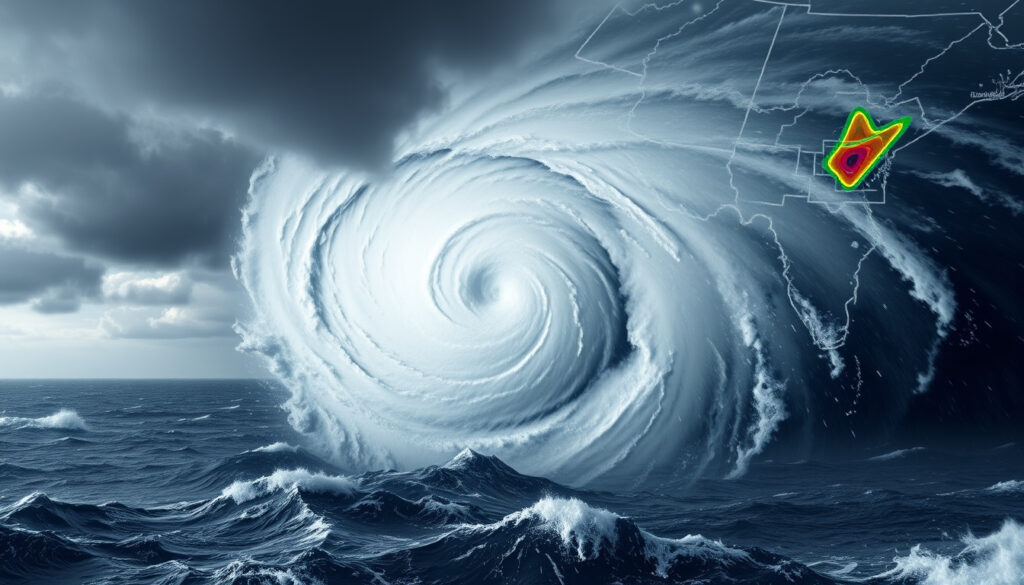
Latest Update on Cyclone Alfred: Status, Impact, Forecast
It’s rare for a tropical cyclone to force the complete shutdown of an entire metro region’s airports, but that’s exactly what Severe Tropical Cyclone Alfred did in early March 2025. Downgraded to a tropical low on 4 March, the system still packed enough punch to close multiple airports and leave half a million homes without power across southeast Queensland.
Formed: 21 February 2025 ·
Status: Downgraded to tropical low ·
Expected landfall: Between Maroochydore and Bribie Island ·
Reported injuries: Several (road collision) ·
Airports closed: Multiple Queensland airports
Quick snapshot
Current Status
- Ex-cyclone, now a tropical low (Bureau of Meteorology)
- Landfall expected 8 March 2025 (Bureau of Meteorology)
Affected Airports
- Multiple closures in Queensland (FCM Travel)
- Check TMR for live updates (FCM Travel)
Areas Impacted
- Queensland coast from Cooktown to Brisbane (Bureau of Meteorology)
- Hardest hit between Maroochydore and Bribie Island (Bureau of Meteorology)
Damage & Injuries
- Several injuries (road collision with ADF) (Wikipedia)
- Widespread power outages and road flooding (Bureau of Meteorology)
Six key facts encapsulate the scope of the system, from its formation to its landfall.
| Label | Value |
|---|---|
| Formed | 21 February 2025 |
| Downgraded | 4 March 2025 (Bureau of Meteorology) |
| Category at peak | Severe Tropical Cyclone (Category 3 equivalent) |
| Landfall location | Between Maroochydore and Bribie Island |
| Reported injuries | Several — one incident with ADF vehicle (Wikipedia) |
| Deaths | None confirmed in available sources |
Is Alfred no longer a cyclone?
Current classification from the Bureau of Meteorology
The Bureau of Meteorology (Australia’s national weather authority) downgraded Alfred from a tropical cyclone to a tropical low on 4 March 2025, ending its official status as a cyclone.
This means Alfred no longer meets the technical criteria for a tropical cyclone, specifically the sustained wind speed thresholds required to maintain that classification.
Timeline of downgrade from cyclone to tropical low
- 21 February 2025: Tropical low 22U forms northeast of Cooktown (Bureau of Meteorology)
- Late February 2025: System intensifies into Severe Tropical Cyclone Alfred (Bureau of Meteorology)
- 4 March 2025: Cyclone downgraded to a tropical low (Bureau of Meteorology)
- 7 March 2025: Alfred makes landfall on Moreton Island, according to Suncorp Group’s event summary
- 8 March 2025 (expected): Mainland crossing between Maroochydore and Bribie Island (The Conversation)
The takeaway: Residents should treat a downgraded low with the same caution as an active cyclone, as heavy rainfall and flood risks persist inland.
Which airports are closed due to Cyclone Alfred?
List of affected Queensland airports
- Brisbane Airport: Suspended all domestic and international departures and arrivals from 4:00 pm on 6 March 2025 (FCM Travel)
- Gold Coast Airport: Closed from 5 March 2025 (FCM Travel)
- Ballina-Byron Airport: Closed from 5 March 2025 (FCM Travel)
- Sunshine Coast Airport: Remained open on the morning of 5 March 2025, but was later impacted (Australian Aviation)
- FT Alliance logistics hub (Brisbane): Closed from midday 6 March to midday 8 March 2025 (FT Alliance)
Expected reopening timeline
Resumption of flights: 9 March 2025
By the evening of 8 March, FCM Travel reported that flights would resume for departing and arriving domestic and international services at all Southeast Queensland airports on Sunday 9 March 2025. The Queensland Recovery Agency notes the event period stretched from 1 March to 16 March 2025, meaning ongoing disruptions to schedules were likely well into the following week.
The implication for travellers: The shutdown window was short but severe. Anyone with a flight booked 6–8 March had very few alternative options to reroute through other Queensland hubs.
Which countries will be affected by Cyclone Alfred?
Primary impact: Australia (Queensland)
- The cyclone’s primary impact was confined to the Australian state of Queensland
- Coastal regions from Cooktown south to Brisbane experienced the most severe weather
- Northeastern New South Wales also saw significant wind and rain impacts (Bureau of Meteorology)
Potential effects on neighbouring islands or territories
- No other countries reported direct impacts from the system
- The storm’s trajectory remained fixed on the Australian mainland and Moreton Island
The pattern: This was a purely domestic weather event for Australia, sparing the broader South Pacific region despite its initial formation off the Queensland coast near Cooktown.
What areas will Cyclone Alfred impact?
Coastal regions from Cooktown to Brisbane
- The cyclone’s path affected coastal communities along a vast stretch of the Queensland coast
- Hardest hit: the area between Maroochydore and Bribie Island, where landfall is expected
- Peak wind gusts recorded include 107 km/h at Gold Coast Seaway and 100 km/h at Gold Coast Airport on 7 March (Bureau of Meteorology)
- Brisbane Airport recorded a gust of 93 km/h on the same day (Bureau of Meteorology)
Inland flood risk zones
Inland flooding posed a significant secondary threat as the tropical low moved west after crossing the coast. The Bureau of Meteorology warned of heavy rainfall extending well inland, causing riverine flooding. For official updates, visit Queensland Disaster Management.
Toowoomba Airport, located inland on the Great Dividing Range, recorded a peak gust of 98 km/h on 9 March 2025 (Bureau of Meteorology).
What this means: Residents from Brisbane to Cooktown faced severe weather, but those in the landfall zone bore the brunt of the storm surge, coastal erosion, and structural damage.
Where is Cyclone Alfred going to hit hardest?
Worst-hit areas around Maroochydore and Bribie Island
- The most severe impacts were expected between Maroochydore and Bribie Island
- The Conversation reported that the low was expected to cross the mainland coast there on Saturday morning (8 March)
- This zone experienced the highest wind speeds and most significant storm surge
Reported damage and injuries in those zones
Several injuries were reported, mostly from a road collision involving the Australian Defence Force (Wikipedia).
- More than 500,000 customers lost power across southeast Queensland and northeastern NSW during Alfred’s impacts (Bureau of Meteorology)
- The Queensland Department of Transport and Main Roads warned that roads and bridges were expected to be impacted by flooding and high winds
- Australian Aviation reported that Alfred caused severe flooding and was blamed for a spike in flight cancellations in the month following the event (Australian Aviation)
The trade-off: While injuries were relatively low for a system of this magnitude, the infrastructure damage — particularly to the power grid and road networks — was severe and extended well beyond the immediate landfall zone.
Timeline signal
The following timeline outlines key dates and events during the cyclone’s lifecycle.
| Date / Period | Event |
|---|---|
| 21 February 2025 | Tropical low 22U forms northeast of Cooktown (Bureau of Meteorology) |
| Late February 2025 | System intensifies into Severe Tropical Cyclone Alfred (Bureau of Meteorology) |
| 4 March 2025 | Cyclone Alfred downgraded to a tropical low (Bureau of Meteorology) |
| 7 March 2025 | Landfall on Moreton Island (Suncorp Group) |
| 8 March 2025 (expected) | Mainland coast crossing between Maroochydore and Bribie Island (The Conversation) |
| 9 March 2025 | Airports reopen, flights resume (FCM Travel) |
| 1 – 16 March 2025 | Official event period for Tropical Cyclone Alfred and Associated Severe Weather (Queensland Recovery Agency) |
| Ongoing | Flood and storm emergency response by QLD SES, power restoration, and road repairs (Bureau of Meteorology) |
Confirmed facts
- Alfred was downgraded to a tropical low on 4 March 2025 (Bureau of Meteorology)
- Landfall is expected between Maroochydore and Bribie Island (Bureau of Meteorology)
- Multiple Queensland airports were closed (FCM Travel, Australian Aviation)
- Several injuries were reported, including a road collision with an ADF vehicle (Wikipedia)
- Over 500,000 customers lost power (Bureau of Meteorology)
What’s unclear
- The exact number of airports that were completely closed versus operating limited services at the peak of the event
- The full extent of property and infrastructure damage (recovery and assessments are still ongoing)
- When the ex-cyclone low will fully dissipate (dependent on inland weather systems)
- Exact number of injuries (reports remain incomplete)
- Number of evacuees (still being compiled by recovery agencies)
The timeline confirms the system’s progression, but the full extent of recovery efforts remains to be seen.
What officials are saying
“Roads and bridges are expected to be impacted by flooding and high winds. Please drive to the conditions and avoid travel when possible.”
— Queensland Department of Transport and Main Roads (state road authority) (Queensland Department of Transport and Main Roads)
“Cyclone Alfred has been downgraded to a tropical low and is expected to cross the mainland coast between Maroochydore and Bribie Island on Saturday morning.”
— The Conversation (academic news analysis, 4 March 2025)
“Several injuries have been reported… mostly due to a road collision involving the Australian Defence Force.”
— Wikipedia (community-sourced encyclopaedia, drawing on news reports)
For Queensland residents and the tourism industry along the Sunshine and Gold Coasts, the recovery from ex-Cyclone Alfred will be a multi-week effort spanning power restoration, road repairs, and flood clean-up. The implication for anyone with travel plans to the region is straightforward: verify your flight status directly with the airline before heading to the airport, and stay tuned to the Bureau of Meteorology for evolving flood warnings. Without this vigilance, the cyclone’s aftermath can catch even the best-laid plans off guard.
youtube.com, youtube.com, youtube.com, facebook.com, youtube.com
Frequently asked questions
What was the maximum wind speed of Cyclone Alfred?
The highest recorded gust was 107 km/h at Gold Coast Seaway, along with 100 km/h at Gold Coast Airport and 93 km/h at Brisbane Airport, all recorded on 7 March 2025 (Bureau of Meteorology).
How long did Cyclone Alfred last?
The Bureau of Meteorology dates the system’s lifecycle from 21 February 2025 to 8 March 2025 (Bureau of Meteorology). The Queensland Recovery Agency defines the official event period as 1 March to 16 March 2025 (Queensland Recovery Agency).
What should residents do during the storm?
The Queensland Department of Transport and Main Roads advises residents to drive to conditions, avoid travel when possible, and monitor official channels for road closures and flood warnings.
How many people were evacuated?
Specific evacuation figures are still being compiled by the Queensland Recovery Agency and local emergency services as the event progresses (Queensland Recovery Agency).
What government agencies are responding?
The Bureau of Meteorology provides forecasting data, the Queensland Reconstruction Authority coordinates the long-term recovery, and local SES units handle immediate emergency response (Bureau of Meteorology, Queensland Recovery Agency).
Is there a forecast for further rainfall?
Yes. The ex-cyclone tropical low is expected to continue bringing heavy rain and potential flooding as it moves inland. Residents should actively monitor BoM warnings and flood bulletins (Bureau of Meteorology).
The FAQ addresses the most common questions, but residents should always refer to official sources for the latest updates.
More related posts
 iPhone 12 Pro Case: Compatibility, Best Picks, and Value in 2025
 Best Online Casino NZ: CasinoStopReviews – Fast Payouts
 Mouth Tape Sleeping: Safety Risks and Dentist Warnings
 Invoice Template Google Docs: Free Templates & How to Use
 How to Dose Fertilizer for Plants: Step-by-Step Guide
 Products Offered by Mitre 10 Mega Rotorua: A Guide
 Dyson Wash G1 Review – Hard Floor Performance Pros Cons Tests
 AZ Alkmaar vs Tottenham 2025: Score, Highlights, Stats & Lineups
