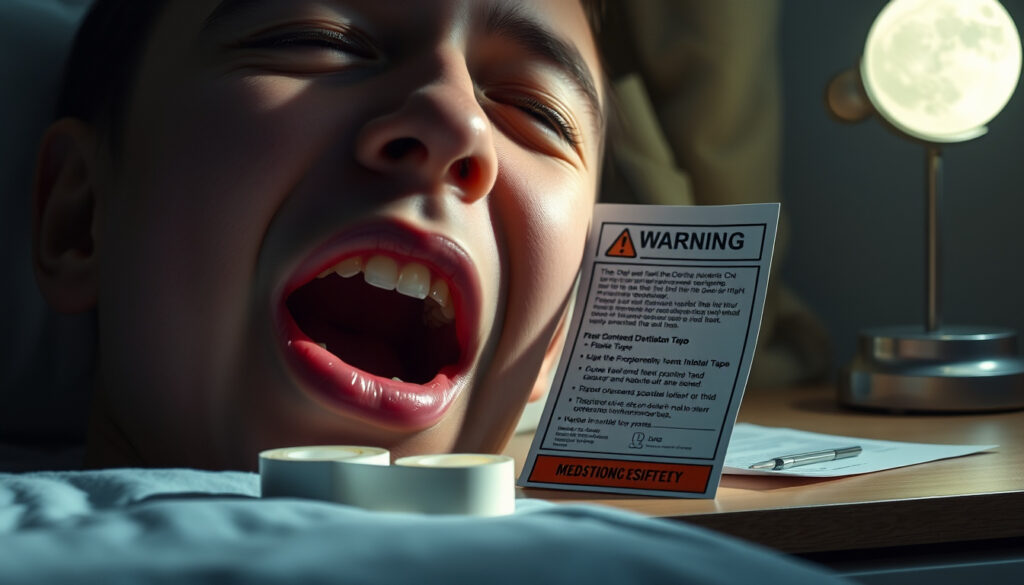
Mouth Tape Sleeping: Safety Risks and Dentist Warnings
Anyone who’s scrolled through TikTok lately has probably seen someone sleeping with tape over their mouth. But while influencers promote mouth taping for better sleep, major health organizations like the Cleveland Clinic (leading US hospital system) and the American Dental Association (national dental authority) are pushing back. This guide lays out what dentists, sleep doctors, and health authorities actually say about mouth tape for sleeping — and what to use instead.
Approximate monthly searches for mouth tape: Low (<100 in some regions) ·
Tier 1 or 2 medical organizations opposing without supervision: Cleveland Clinic, American Dental Association, NHS ·
Respiratory risks cited by sleep specialists: Breathing obstruction, skin irritation, anxiety ·
Number of related Reddit threads (sample): Over 2,000 results for ‘mouth tape sleeping’ on Reddit
Quick snapshot
- Cleveland Clinic: not recommended (Cleveland Clinic)
- ADA: social media fad (WebMD)
- No strong evidence for health benefits (PubMed Central (NIH database))
- Whether mouth tape improves sleep quality in people without breathing disorders (PubMed Central)
- Long-term effects on oral microbiome (no studies found) (PubMed Central)
- 2022 – Mouth taping goes viral on TikTok (Cleveland Clinic)
- 2023 – Amazon removes certain mouth tape products over safety concerns (Cleveland Clinic)
- 2024-2025 – ADA and Cleveland Clinic publish explicit warnings (Cleveland Clinic)
- Growing medical warnings may reduce consumer uptake (PubMed Central)
- More research needed on mouth taping safety and efficacy (PubMed Central)
Six key facts pulled from medical authorities and reviews show why mouth tape for sleeping is more buzz than breakthrough.
| Fact | Details |
|---|---|
| Organization opposing routine use | Cleveland Clinic, American Dental Association, NHS (Cleveland Clinic, WebMD) |
| Primary risk cited | Breathing obstruction and skin irritation (Sleep Foundation) |
| Evidence level | No randomized controlled trials support health benefits (PubMed Central) |
| Social media traction | Viral TikTok trend, multiple product launches (2022 onward) |
| Official guidelines available? | No official safe-use guidelines exist (Sleep Foundation) |
| Alternative treatments listed by experts | CPAP, oral appliances, nasal strips, side sleeping (Cleveland Clinic) |
Is it healthy to sleep with mouth tape?
What the research says about mouth taping
- Mouth tape can cause breathing difficulty, skin irritation, and anxiety, according to the Cleveland Clinic (leading US hospital system).
- The Sleep Foundation (nonprofit sleep health organization) warns that people who snore or have sleep apnea should not use mouth tape.
- A 2025 systematic review in PubMed Central (NIH biomedical database) found no strong evidence that mouth taping works as a clinical intervention for sleep-disordered breathing.
Cleveland Clinic warning on mouth tape risks
The Cleveland Clinic explicitly advises against mouth taping if you snore, have sleep apnea, or any breathing problems (Cleveland Clinic). The same review noted “serious risk of asphyxiation” when oral occlusion is used with nasal obstruction (PubMed Central).
Influencers trade safety for trending content: no health authority endorses mouth tape, yet social media pushes it as a cure-all. The consumer ends up with skin irritation and no proven sleep benefit.
Do dentists recommend mouth taping?
American Dental Association position on mouth taping
- The American Dental Association (national dental authority) does not include mouth taping in its dental care guidelines or list it as a sleep apnea treatment, according to WebMD (medical information publisher).
- The ADA refers to mouth taping as a “social media fad” without dental benefits.
Dentist concerns about dry mouth and oral health
Chronic mouth breathing — which mouth tape tries to prevent — can dry out oral tissues and increase bacterial growth, potentially worsening gum disease and tooth decay. WebMD notes that doctors and dentists do not recommend mouth taping because of insufficient evidence.
Do sleep doctors recommend mouth tape?
Why sleep specialists advise against unmonitored mouth taping
- The Sleep Foundation (nonprofit sleep health organization) says people with untreated sleep apnea, chronic nasal congestion, or difficulty breathing through the nose should avoid mouth taping.
- Mouth tape does not treat snoring or apnea; it only forces the mouth shut, which can be dangerous if the airway is already compromised.
Sleep apnea and mouth tape danger
Experts at the Cleveland Clinic recommend CPAP, oral appliance therapy, nasal strips, and side sleeping as proven alternatives. A 2025 review in PubMed Central concluded that existing data do not support mouth taping for the general population with sleep-disordered breathing.
People with undiagnosed sleep apnea may see mouth tape as a quick fix — but it masks the real problem and can lead to oxygen drops. CPAP and oral appliances, not tape, are the standard of care.
What are the negatives to mouth taping?
Skin irritation and allergic reactions
- Adhesive used in many tapes can cause contact dermatitis, especially with overnight wear (Cleveland Clinic).
- The Sleep Foundation reports skin irritation as a common complaint.
Breathing obstruction risk
- If nasal passages become blocked due to allergies, colds, or structural issues, mouth tape can cause airway obstruction (Sleep Foundation).
- The 2025 PubMed Central review highlighted asphyxiation risk when oral occlusion is combined with nasal obstruction.
Anxiety and panic during sleep
Some users report waking up in a panic, feeling unable to breathe. The Cleveland Clinic lists anxiety as a potential side effect of mouth taping.
Is mouth taping safe in the NHS?
UK health authority guidance
- The UK’s National Health Service (NHS) has not published any endorsement of mouth taping for sleep.
- There are no official safety guidelines for mouth taping in the UK, mirroring the stance of the Sleep Foundation that no such guidelines exist.
In the absence of NHS guidance, UK residents should consult a GP before trying mouth tape. The Cleveland Clinic and ADA positions — both widely referenced in British medical media — align on the core message: proceed with caution, or not at all.
Can yellow teeth turn white again?
Mouth breathing and tooth discoloration link
- Chronic mouth breathing can dry the mouth, reduce saliva flow, and allow bacteria to multiply, leading to yellowing.
- Mouth tape does not whiten teeth — it only addresses the symptom (open mouth) without targeting the cause.
Whitening options beyond mouth tape
Professional whitening, good oral hygiene, and addressing underlying breathing issues are effective. WebMD confirms that dentists do not recommend mouth taping for dental aesthetics.
Upsides
- May encourage awareness of nasal breathing during waking hours
- Inexpensive to try (though not recommended without supervision)
- Can be used during the day for short practice under guidance (Sleep Foundation)
Downsides
- Skin irritation and allergic reactions (Cleveland Clinic)
- Breathing obstruction risk, especially with nasal congestion (Sleep Foundation)
- No proven health benefits (PubMed Central)
- Anxiety and panic episodes reported
- Not recommended by any major health authority
Five common types of mouth tape products show varying features — none of which guarantee safety.
| Product type | Material | Adhesive | Breathability | Safety feature | Reusable |
|---|---|---|---|---|---|
| Pre-cut strips | Paper or surgical tape | Hypoallergenic acrylic | Perforated | Some have small hole | No |
| Roll tape (cut your own) | Medical tape (silk or paper) | Silicone or acrylic | Varies – non-woven | Must fold corner for easy removal (Sleep Foundation) | No |
| Mouth tape with hole | Silicone adhesive | Silicone | Small central hole | Designed for emergency breathing | Often reusable |
| X-shaped tape strips | Polyurethane | Acrylic | Non-perforated | Leaves corners of mouth free | No |
| Hydrocolloid patches | Hydrocolloid gel | Self-adhesive | Not breathable | Used for acne, not sleep | No |
Quotes from health experts
Mouth taping should not be used if a person snores, has sleep apnea, or has other breathing problems — it can cause skin irritation, anxiety, and difficulty breathing.
— Cleveland Clinic sleep specialist (paraphrase), Cleveland Clinic
The American Dental Association does not include mouth taping in its dental care guidelines and labels it a social media fad without dental benefits.
— American Dental Association statement, reported by WebMD
For anyone tempted to try mouth tape for sleeping, the choice is clear: skip the tape, see a doctor about snoring or sleep quality, and try evidence-based alternatives like nasal strips or oral appliances — or risk breathing problems and skin damage without any proven benefit.
sleepandsinuscenters.com, smilesofcambridge.com, babylondentalcare.com, cfad.net, millbraedental.com, rejuv-health.com, reddit.com, sleephealthypa.com
Frequently asked questions
Can mouth tape help with snoring?
No, mouth tape does not treat the underlying cause of snoring. Snoring often indicates airway obstruction, and taping the mouth shut can make it harder to breathe (Cleveland Clinic).
Does mouth tape whiten teeth?
No. Mouth tape does not whiten teeth; it only keeps the mouth closed. Yellowing caused by dry mouth requires treating the breathing issue and professional whitening (WebMD).
How should I choose mouth tape if I still want to try it?
If you decide to try it despite warnings, choose a medical-grade tape with a breathing hole, test it during the day first, and never use it if you have nasal congestion or sleep apnea (Sleep Foundation).
What are safe alternatives to mouth taping?
Nasal strips, side sleeping, CPAP, and oral appliances are proven safer options for improving sleep breathing (Cleveland Clinic).
Can mouth tape cause panic attacks?
Yes, some users wake up feeling unable to breathe, which can trigger panic. The Cleveland Clinic lists anxiety as a potential side effect.
Is mouth tape safe for children?
No health authority recommends mouth taping for children. Kids have smaller airways and higher risk of obstruction. Always consult a pediatrician before trying any sleep breathing device.
Does mouth tape expire?
Like any adhesive product, mouth tape can lose stickiness over time. Check the package for expiration date. Expired tape may not stay in place and could pose a choking hazard.
Related reading
- How to Reduce Blue Light Exposure — another factor that affects sleep quality
- How to Meditate Daily: Beginner’s Guide — relaxation techniques to support better sleep
More related posts
 Car Hire Wellington Airport: Compare Prices & Pickup Guide
 Whau Valley Fish & Chips Chinese Takeaway – Phone, Menu, Hours
 Wordle Game Play Online Free: Best Starting Words & More
 Wella Colour Fresh Mask: How to Use & Shade Guide
 Pike River Movie Release Date: US Theatrical & Festival Premiere
 Taupo DeBretts Hot Springs Tickets: Prices, Discounts & Guide
 DOT 3 Brake Fluid: Uses, Differences vs DOT 4 Guide
 Airbus A330-200: Specifications, Comfort, and Best Seats Guide
