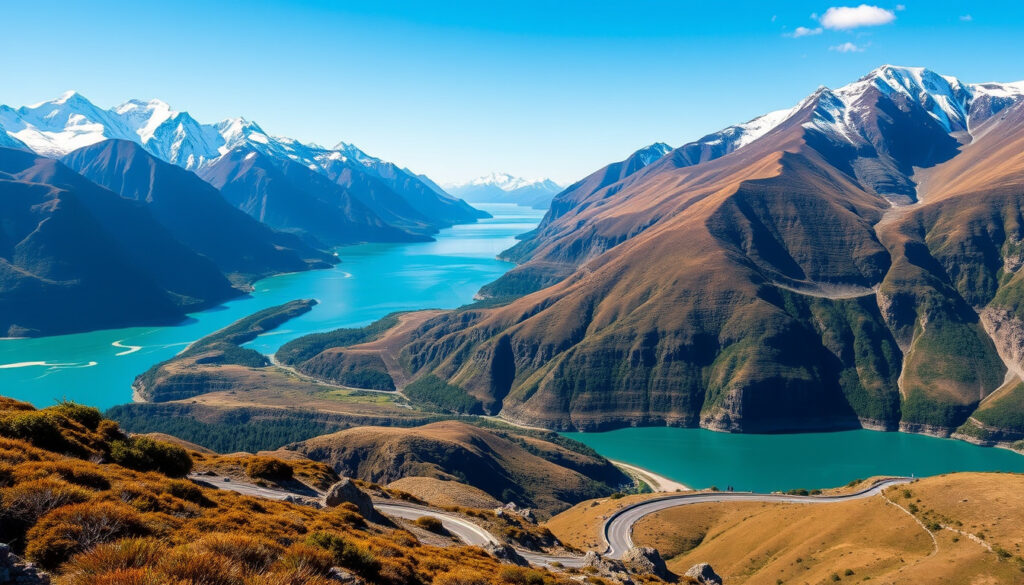
New Zealand South Island: Must-Sees, Itineraries & Costs
New Zealand’s South Island delivers landscape diversity that forces visitors to abandon the usual travel calculus. Where most destinations force you to choose between mountains and coastline, this island delivers both within a few hours’ drive — a rarity that makes it one of the world’s most efficient adventure playgrounds.
Size comparison: Larger surface area than North Island · Key landscapes: Southern Alps to Abel Tasman beaches · Top spots: Queenstown, Fiordland, Aoraki/Mount Cook · Notable areas: Wanaka, Lake Tekapo · Tour focus: Scenery, adrenaline, culture
Quick snapshot
- South Island is larger by surface area than North Island (Roam with Ross travel guide)
- The 14-day road trip loop starts and ends in Christchurch (Roam with Ross travel guide)
- Exact daily budgets vary depending on season, accommodation tier, and whether you rent a campervan or stay in hostels
- Specific restaurant price points shift frequently and aren’t tracked in official tourism data
- Milford Track bookings fill up 12–18 months ahead for summer slots (That Travelista specialist NZ outlet)
- Multi-day tour packages range from budget coach options to premium all-inclusive packages (TripAdvisor tour aggregation platform)
- Choose your priority: adrenaline in Queenstown, wilderness in Fiordland, or wine regions in Marlborough
- Plan transport logistics early — car and campervan hire hubs are concentrated in Christchurch
Key facts about New Zealand’s South Island at a glance:
| Key fact | Detail |
|---|---|
| Surface area | Larger than North Island |
| Population note | Less populous than North Island |
| Major landscapes | Southern Alps, golden beaches |
| Key parks | Aoraki/Mount Cook, Fiordland |
What is special about South Island, New Zealand?
The South Island holds New Zealand’s most dramatic range of landscapes packed into a single landmass — and visitors notice it fast. Where most destinations force you to choose between mountains and coastline, this island delivers both within a few hours’ drive. The official tourism platform from 100% Pure New Zealand official tourism authority frames it as a compact diversity of experiences: alpine trails, coastal walks, fjord cruises, and wine regions all within reach.
Landscapes from Southern Alps to beaches
The Southern Alps run the length of the island, with Aoraki/Mount Cook National Park holding New Zealand’s highest peak. Just a few hours west, the coastline turns sandy — Abel Tasman National Park marks the country’s smallest national park but stands out for its golden beaches and clear water, according to That Travelista specialist NZ travel outlet. Between those extremes, West Coast towns like Hokitika offer rainforests, turquoise rivers, and dramatic coastal rock formations. Lake Matheson near Franz Josef is particularly striking for its mirror-like reflections of Mount Cook and Mount Tasman, best captured in early morning light.
Cultural and adventure highlights
Adventure culture runs deep here — Queenstown has been the base for New Zealand’s original adrenaline activities for decades. The Omaka Aviation Heritage Centre near Blenheim features aircraft displays curated by filmmaker Peter Jackson, adding a cultural layer for those wanting variety between action and history. On the quieter end, Marlborough’s wine region produces the world-renowned Sauvignon Blanc, which visitors can explore by cycling between cellar doors, per Roam with Ross NZ travel guide creator.
For travellers who thought they’d need to pick between scenery and activity, the South Island removes that trade-off. A single multi-day itinerary can include a glacier walk, a fjord cruise, and a wine-tasting session — no compromises required.
Takeaway: The South Island’s geographic compression means you can experience Southern Alps hiking in the morning and beach swimming by noon — a combination virtually impossible elsewhere in the world.
What not to miss on NZ South Island?
Certain spots have earned their reputation through sheer consistency of wow-factor. These aren’t insider secrets — they’re the stops that most visitors return home raving about, and for good reason. According to That Travelista specialist NZ travel outlet, Milford Sound ranks as the single most-visited destination in Fiordland, and travellers regularly describe it as worth the journey even when the weather doesn’t cooperate.
Top attractions list
- Milford Sound: A fjord presided over by Mitre Peak, accessible via a narrow highway winding through Fiordland National Park. Boat cruises give close views of wild waterfalls, dolphins, seals, and penguins. The area is designated as the eighth natural wonder of the world (Petrina Darrah independent travel writer).
- Milford Track: At 52.5 km over four days, this is one of New Zealand’s premier Great Walks. Spots fill quickly — visitors serious about hiking need to book 12–18 months in advance (That Travelista specialist NZ outlet).
- Aoraki/Mount Cook National Park: Home to the highest peak in New Zealand at 3,724 metres, with guided glacier experiences available through operators like Glacier Explorers.
- Abel Tasman National Park: The smallest national park but among the most visited, with the Coast Track as a highlight. Roam with Ross NZ travel guide notes it can be visited as a day trip from Nelson or tackled as a 3–5 day hike.
- Kaikōura: The name translates to “crayfish” and the town lives up to it — world-famous for whale watching, with sperm whales, orcas, and dusky dolphins visible year-round on daily boat tours.
For first-time visitors, the risk is packing too much. Milford Sound alone can consume two days if you’re driving from Queenstown. The travellers who enjoy the island most are the ones who accept they’ll need to return — and plan their first trip accordingly.
Must-see spots like Queenstown and Fiordland
Queenstown functions as the adventure hub of the South Island — bungy jumping, skydiving, and jet boating are within the town itself, and the surrounding mountains and lakes provide the backdrop. The drive from Queenstown to Fiordland (roughly 300 km) passes through scenery that Manus Menu NZ travel guide describes as consistently jaw-dropping. Wānaka, roughly an hour from Queenstown, offers a quieter alternative with the famous Wānaka Tree for photographers and Roy’s Peak for hikers — though Roy’s Peak requires an early start to beat the crowds. Lake Tekapo rounds out the central region with its turquoise waters and designation as a dark sky reserve, making it one of the best spots in the Southern Hemisphere for stargazing.
Takeaway: Prioritizing Queenstown and Fiordland first prevents the common mistake of spreading yourself thin across too many regions.
How many days do you need to see the South Island of NZ?
The honest answer depends on how thoroughly you want to cover the island — and how much you enjoy long drives through beautiful terrain. The 14-day road trip loop from Roam with Ross NZ travel guide creator starts and ends in Christchurch and covers Kaikōura, Marlborough, Abel Tasman, West Coast, Wānaka, Queenstown, Milford Sound, and Tekapo. That itinerary is designed to hit the high points without feeling like a military operation.
Ideal itinerary length
For a meaningful first visit, seven days is the bare minimum — you’d prioritise either the northern loop (Christchurch to Kaikōura to Nelson to Abel Tasman) or the southern loop (Christchurch to Lake Tekapo to Queenstown to Milford Sound). Ten to twelve days lets you string together both regions with reasonable time in each stop. A five-day coach tour from Christchurch to Queenstown, listed on TripAdvisor tour aggregation platform, offers a compressed version for those with limited time.
Planning perfect South Island itinerary
- 5–7 days: Pick either the top of the South (Nelson, Abel Tasman, Kaikōura) or the lower circuit (Queenstown, Fiordland, Tekapo)
- 10–12 days: Cover both regions with at least two nights in Queenstown and one overnight in Fiordland
- 14+ days: Add Abel Tasman, Marlborough wine region, and West Coast glaciers for the full experience
- 7-day mountain biking itinerary: Covers 810 km through Nelson Tasman, Queenstown, and West Coast on the island’s most challenging cycle trails — a niche option for experienced riders (100% Pure New Zealand official itinerary planner)
Takeaway: Most visitors underestimate distances on mountain roads — building buffer time between destinations prevents the exhaustion that comes from treating scenic drives as mere transit.
What is the best month to visit the South Island of New Zealand?
New Zealand’s seasons flip the Northern Hemisphere’s expectations: summer runs December through February, making those months the peak window for outdoor activities. 100% Pure New Zealand official tourism platform notes that summer brings longer daylight hours — in December, Queenstown sees nearly 16 hours of daylight, giving you wide windows for hikes, scenic drives, and boat cruises. That said, shoulder seasons (October–November, March–April) can be equally rewarding with fewer crowds, though some attractions like Milford Track are only fully accessible during warmer months.
Seasonal weather considerations
The South Island’s geography creates sharp microclimates: the West Coast is notoriously wet (glacier country, after all) while the eastern regions around Christchurch and Blenheim enjoy considerably drier weather. Winter (June–August) brings snow to higher elevations, making Aoraki/Mount Cook spectacular but some high-country roads potentially tricky without appropriate tyres or transport. For most travellers, January and February offer the most reliable window — just book Milford Sound cruises and accommodation early, as these months consistently sell out.
Best times from responsible sources
- December–February: Peak season. Longest daylight hours, warmest temperatures, full access to all tracks and attractions. Expect higher costs and busier sites.
- March–April: Shoulder season. Good weather often persists, autumn colours appear in the south, and crowds thin significantly.
- October–November: Shoulder season. Spring awakening in the south, wildflowers in Fiordland, pre-booking still manageable for Milford Track.
- June–August: Winter. Dramatic snow-dusted landscapes, but limited daylight (8–9 hours), and some high-country routes may close.
Chasing the cheapest time to visit means accepting trade-offs: May through August cuts costs significantly but restricts access to many of the walks and experiences that define the South Island. The balance point for most travellers is either side of summer, when weather remains decent and peak-season pricing softens.
Takeaway: January or February gives you the widest window for outdoor activities, but booking Milford Sound cruises and accommodation 3-6 months ahead is non-negotiable during peak season.
Is New Zealand South Island expensive?
New Zealand in general sits at the higher end of travel costs for English-speaking destinations, and the South Island adds transport logistics that can quickly stack up. The good news: it’s possible to visit on a range of budgets, and the country has a solid network of hostels, campervan hire options, and free natural attractions that let you control spending. TripAdvisor tour pricing aggregator shows multi-day tour packages ranging from budget coach options to premium all-inclusive experiences, reflecting the full spectrum.
Budget guide for travel
- Budget (NZD 100–150/day): Staying in hostels or campgrounds, self-catering, focusing on free natural attractions (beaches, walking tracks, viewpoints)
- Mid-range (NZD 200–350/day): Private accommodation, eating out occasionally, booking one or two paid experiences (fjord cruise, whale watching)
- Premium (NZD 400+/day): Hotels, guided tours, activities like heli-hikes, helicopter transfers, fine dining in Queenstown
Costs for 2 weeks
A 14-day South Island itinerary realistically costs between NZD 2,500–5,500 per person depending on accommodation choices, transport type (campervan hire versus rental car), and how many paid activities you book. The biggest variable is transport — campervan hire in Christchurch runs roughly NZD 150–250 per day in peak season, while a compact rental car sits around NZD 80–130 per day. Activities like Milford Sound boat cruises (NZD 80–150), whale watching in Kaikōura (NZD 150–200), and the Tasman Glacier Explorer (NZD 200+) add to the total but are the experiences travellers consistently rank highest.
Upsides
- Free natural attractions are abundant — beaches, lakes, mountain viewpoints, and forest walks require no entry fee
- Self-drive itineraries let you control costs by choosing when and where to stop
- Strong hostel and holiday park network keeps accommodation costs manageable even in peak season
- Diverse experiences across a compact area mean you’re not paying for expensive domestic flights between regions
Downsides
- Petrol costs add up on long-distance routes — the drive from Franz Josef to Wānaka alone is roughly 285 km
- Paid experiences (glacier walks, fjord cruises, wildlife tours) are non-negotiable for most travellers and add up quickly
- Summer season pricing spikes accommodation costs by 30–50% compared to shoulder months
- International hire car excess can be significant — fully comprehensive insurance is worth factoring into the budget
Takeaway: Your budget stretches furthest during shoulder seasons with self-drive, self-catering, and a focus on free natural attractions — but you’ll still need to budget NZD 2,500+ per person for two weeks if you want meaningful paid experiences.
How to plan your South Island trip: steps
Planning a multi-region trip can feel overwhelming, but breaking it into steps keeps it manageable. Whether you’re flying in for a week or doing an extended road trip, here’s a practical sequencing based on what experienced travellers and 100% Pure New Zealand official itinerary planner recommend.
- Lock in your timeframe first. This determines whether you do a northern loop, a southern loop, or attempt both. Seven days is a single loop; fourteen days opens up the full circuit.
- Book your transport hub. Christchurch is the primary entry point for most travellers, and it’s also the main hub for car and campervan hire. Pre-book at least 2–3 weeks ahead in summer.
- Prioritise your must-see list. Milford Sound and Queenstown consistently rank highest. If they’re non-negotiable, build around them and add secondary stops.
- Book high-demand activities early. Milford Track requires booking 12–18 months ahead for peak summer spots. Whale watching in Kaikōura sells out in peak season. Glacier experiences should be reserved at least a week in advance.
- Build in rest days. The distances look short on paper but mountain roads are winding. Driving from Queenstown to Milford Sound takes 3–4 hours without stops. Build buffer time between major destinations.
- Check seasonal access. Some high-country roads (particularly around Aoraki/Mount Cook and the West Coast glaciers) can be affected by winter weather from May through August.
- Plan your packing around activities. If you’re hiking and glacier-walking, bring layers. If you’re primarily doing scenic drives, prioritise a quality camera and comfortable walking shoes.
A bucket list New Zealand adventure tour has been the #1 ranked since 2005 and includes skydiving, bungy jumping, and helicopter activities — TripAdvisor activity ranking platform
“The drive from Franz Josef to Wānaka is approximately 285 km and takes 5–6 hours and is described as one of the true highlights of the South Island” — Roam with Ross NZ road trip guide
The South Island isn’t a place you fully solve in one visit — it’s more like a long conversation you keep having. What makes it work is matching your time to your priorities: whether you need the adrenaline fix of a bungee jump in Queenstown, the quiet spectacle of Milford Sound at dawn, or the stargazing clarity of Lake Tekapo’s dark sky reserve. For first-time visitors, the 14-day loop from Roam with Ross gives you the framework — from there, you edit ruthlessly based on what matters to you. The travellers who feel satisfied rather than exhausted are the ones who accepted early that some stops would wait for next time.
Related reading: Ultimate 14-Day South Island road trip guide · Top New Zealand South Island travel destinations
South Island’s landscapes inspire endless exploration, where top adventures hikes and itineraries reveal hidden gems alongside your must-see stops.
Frequently asked questions
What does “yeah nah” mean in New Zealand?
“Yeah nah” is a casual New Zealand expression that essentially means “yeah, I understand but I’m not agreeing” or “yes, but not really.” It’s part of a broader set of Kiwi slang that feels friendly while politely creating distance — visitors should resist reading it as confusion. Context usually makes the meaning clear, and New Zealanders are generally forgiving of visitors who don’t pick it up immediately.
What is the prettiest place in New Zealand?
This question has no single answer, but Milford Sound consistently ranks near the top of traveller rankings. The combination of Mitre Peak rising from the water, the fjord’s dramatic scale, and the surrounding wilderness creates a visual impact that’s hard to match elsewhere. That said, Aoraki/Mount Cook, Lake Matheson, and Roy’s Peak all have dedicated fan bases — “prettiest” ultimately depends on what kind of scenery moves you most.
How much money will I need for 2 weeks in New Zealand?
A realistic budget for two weeks on the South Island ranges from NZD 2,500 per person on the tight end (hostels, self-catering, minimal paid activities) to NZD 5,500+ for a mid-range experience (private accommodation, regular dining out, key paid experiences like fjord cruises and glacier walks). The biggest variable is accommodation tier and transport type.
What are the do’s and don’ts in New Zealand?
Key dos: book high-demand experiences (Milford Track, glacier walks, whale watching) well in advance, respect environmental signage in national parks, and follow Leave No Trace principles on outdoor trails. Key don’ts: don’t feed or approach wildlife, don’t park illegally in small towns (towing is common and expensive), and don’t assume all roads are sealed — gravel sections appear on popular routes.
What is the weather like in New Zealand South Island?
Weather on the South Island is notoriously changeable — particularly on the West Coast, where you can experience four seasons in a single day. Summer (December–February) brings temperatures of 18–28°C in most regions, though evenings cool significantly. The West Coast receives high rainfall year-round (it’s why the glaciers exist), while eastern regions like Marlborough and Christchurch are considerably drier. Winter brings snow to higher elevations and cold but clear days to lower areas.
What cities are in New Zealand South Island?
The South Island’s largest city is Christchurch (population roughly 380,000), serving as the primary international gateway. Dunedin (population roughly 130,000) is the second major city, known for its Scottish heritage and university. Invercargill is the southernmost city of any size. Smaller towns with significant visitor presence include Nelson, Greymouth, Hokitika, Queenstown, and Wanaka — though the latter two are towns that grew into tourism centres.
What is the capital of New Zealand South Island?
The South Island does not have its own capital — Wellington, at the southern tip of North Island, is New Zealand’s national capital. The largest city in the South Island is Christchurch, which often serves as the de facto administrative hub for the island due to its size and infrastructure, but it holds no official capital status. Travellers frequently ask this question expecting Queenstown, which is the tourism capital by reputation but not by governance.
More related posts
 Nahm Nelson Menu – Dishes Prices Dietary Options Guide
 Journey to the Center of the Earth: Movies, Book & Franchise Guide
 Black and White Box: Storage, Photo Lab & Gift Options
 Invoice Template Google Docs: Free Templates & How to Use
 10 Gallons to Litres: US vs UK Conversion Guide
 Auckland Domestic Airport Arrivals and Departures Guide
 Things to Do in Auckland: Top Must-Sees, Itineraries & Tips
 Surfers Paradise Beach After Cyclone Alfred: Damage & Recovery
