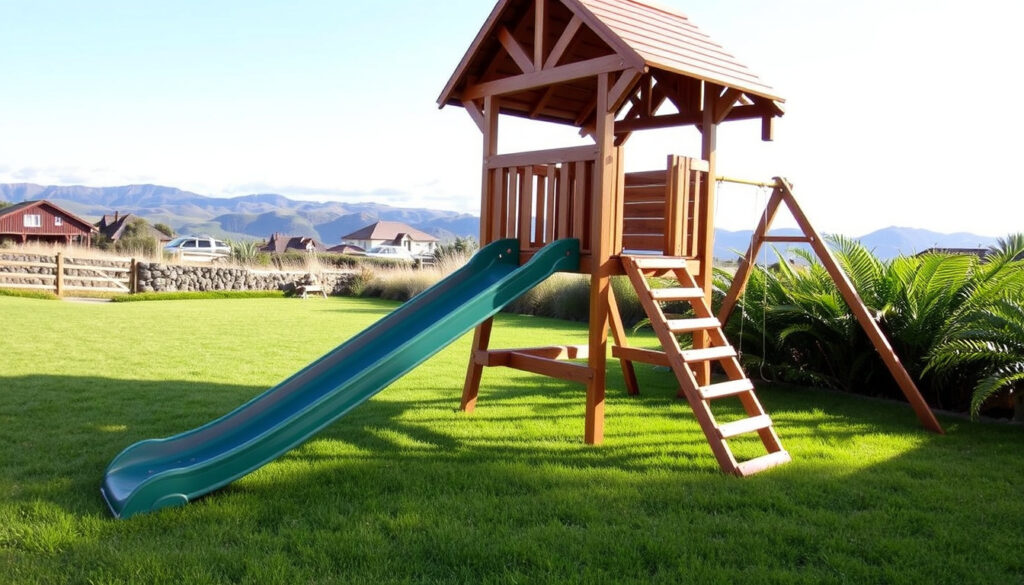
Outdoor Play Equipment NZ: Buying Guide and Top Picks
Anyone with a backyard in New Zealand knows the struggle: finding play equipment that survives the sun, rain, and occasional frost without turning into a safety hazard. Whether you’re eyeing a swing set for toddlers or a climbing frame for older kids, the right choice depends on balancing durability, cost, and compliance with local standards. This guide breaks down the options, costs, and regulations that actually matter for Kiwi homes.
Safety standard: AS/NZS 4685 ·
Average cost: $500 – $2,000 ·
Common materials: Wood, metal, plastic
Quick snapshot
- Classic A-frame designs available at major retailers (Bunnings NZ)
- Must comply with AS/NZS 4685 for safety (New Zealand Ministry of Education)
- Elevated playhouses require soft-fall surfacing underneath (Ministry of Education)
- Customizable with slides and climbing features (Rainbow Play)
- Promote sensory play but need covers to keep clean (Harvey Norman NZ)
- Use non-toxic materials and check for poisonous plants nearby (Ministry of Education) (Harvey Norman NZ)
- Multi-activity stations build motor skills for ages 6+ (Rainbow Play)
- Require at least 6 feet of clearance on all sides (Rainbow Play)
Four equipment types, one common thread: every piece needs to meet AS/NZS 4685 and be placed on appropriate surfacing to reduce injury risk.
| Attribute | Details |
|---|---|
| Safety standard | AS/NZS 4685 (New Zealand Ministry of Education) |
| Average cost | $500 – $2,000 (Bunnings NZ) |
| Popular retailers | Bunnings, Mitre 10, Forest & Frolic (Forest & Frolic) |
| Common materials | Wood, metal, plastic |
What Are the Best Outdoor Play Equipment Options for NZ Backyards?
Swing sets
- A-frame swing sets with climbing forts suit ages 2–12 (Rainbow Play).
- Always check that the set meets AS/NZS 4685 (Ministry of Education).
Cubby houses
- Elevated wooden cubbies with slides encourage imaginative play (Forest & Frolic).
- Soft-fall surfacing and regular maintenance are essential (Ministry of Education).
Sandpits
- Wooden or plastic sandpits with covers keep the play area hygienic (Harvey Norman NZ).
- Ensure sand is clean and free from contaminants (Ministry of Education).
Climbing frames
- Multi-activity stations with monkey bars and rope ladders build coordination (Rainbow Play).
- Allow at least 6 feet of clearance around the structure (Rainbow Play).
Wooden cubbies and sandpits require ongoing maintenance to stay safe and hygienic, especially in NZ’s humid coastal areas.
How Much Does Outdoor Play Equipment Cost in New Zealand?
Budget-friendly options under $500
- Basic plastic sandpits and small slide units start around $150–$400 (Harvey Norman NZ).
- Second-hand options on Trade Me can be cheaper but require careful safety checks.
Mid-range wooden sets $500–$1500
- Most wooden swing sets with fort and slide fall in this range (Bunnings NZ).
- Shipping costs add $50–$150 depending on location (Forest & Frolic).
Premium commercial-grade $2000+
- Commercial-grade climbing frames and multi-play units for schools start above $2000 (Active For Life).
- Warranties often last 5–10 years (Rainbow Play).
Budget plastic sets are light and affordable, but may degrade faster under intense NZ UV than well-sealed wooden or powder-coated metal sets.
The implication: for long-term value, investing in weather-resistant materials reduces replacement costs.
Where Can I Buy Outdoor Play Equipment in NZ?
Major retailers: Bunnings, Mitre 10, Harvey Norman
- Bunnings offers Click & Collect and delivery across NZ (Bunnings NZ).
- Mitre 10 stocks wooden and plastic playsets in-store and online.
- Harvey Norman NZ carries a curated range with advice on age and space (Harvey Norman NZ).
Specialist stores: Forest & Frolic, Kiwiplay
- Forest & Frolic specialises in wooden equipment with NZ-specific designs (Forest & Frolic).
- Kiwiplay offers heavy-duty timber sets suitable for schools.
Online marketplaces: Trade Me, Amazon
- Trade Me has second-hand and new equipment, but check compliance (Ministry of Education guidance).
- Amazon ships select brands, but return shipping to NZ can be costly.
The implication: for best support and warranty, buying from a dedicated NZ retailer or hardware chain is safer than importing unknown brands.
Are Wooden or Metal Outdoor Play Sets Better for the NZ Climate?
Durability in coastal vs inland areas
- Wooden sets need regular sealing to resist rot and warping (Rainbow Play).
- Powder-coated metal is more resistant to salt spray near the coast.
Maintenance requirements
- Wood: reapply water-resistant sealant every 1–2 years.
- Metal: check for rust spots, especially around bolts, and touch up paint.
- Plastic: wash with mild soap; UV stabilisers help but may fade over 3–5 years.
Safety considerations
- Metal can heat up in direct sun — consider shade cloth or place in a partially shaded area.
- Wood may splinter; choose smooth, sanded timber and check regularly (Ministry of Education).
The pattern: wood offers natural aesthetics and easy repairability; metal wins on coastal durability and lower ongoing maintenance. For inland areas with moderate weather, either works if you maintain it properly.
What Safety Standards Apply to Outdoor Play Equipment in New Zealand?
AS/NZS 4685: Playground equipment standard
- This joint Australian/New Zealand standard covers design, construction, and installation (Ministry of Education).
- Compliance is mandatory for schools and early learning centres.
Import regulations for residential equipment
- All equipment sold for children under 3 must meet Product Safety Standards (Children’s Toys) Regulations 2005 (Ministry of Education).
- Even residential sets should follow AS/NZS 4685 to minimise risk.
Tips for safe installation
- Place equipment on level ground, away from fences and pools.
- Use soft-fall materials (wood chips, rubber mulch) under and around structures (Ministry of Education).
- Anchor all equipment securely to prevent tipping.
- Inspect regularly for loose bolts, splinters, rust, or rot (Rainbow Play).
Parents buying imported equipment from overseas online stores may not have AS/NZS 4685 certification, potentially exposing children to unsafe spacing, entrapment hazards, or toxic finishes.
The implication: always verify AS/NZS 4685 compliance before purchase, especially for imported goods.
Outdoor Play Equipment Materials Comparison
Three materials, one standout: each suits different NZ conditions. The table below maps the trade-offs.
| Material | Durability | Maintenance | Best for | Typical cost per set |
|---|---|---|---|---|
| Wood | Moderate (requires sealing) (Rainbow Play) | High (stain/seal every 1–2 years) | Inland areas, classic look | $500–$1500 |
| Metal (steel) | High (powder-coated) (Active For Life) | Low (check rust) | Coastal areas, all climates | $400–$1200 |
| Plastic | Moderate (UV can degrade) (Harvey Norman NZ) | Low (wash only) | Budget, toddlers, lightweight use | $150–$600 |
The pattern: powder-coated metal offers the best balance of durability and low maintenance for most NZ conditions, while wood remains a valid choice for inland areas with a maintenance commitment.
How to Install and Maintain Outdoor Play Equipment in NZ
- Choose a level site with good drainage. Avoid low spots where water pools (Rainbow Play).
- Ensure at least 6 feet of clearance around the structure on all sides (Rainbow Play).
- Install soft-fall surfacing (wood chips or rubber mats) to a depth of 300 mm for falls up to 3 m (Ministry of Education).
- Anchor all posts according to manufacturer instructions to prevent tipping.
- Supervise children at all times during play (Ministry of Education).
- Perform monthly inspections for rust, splinters, loose bolts, and ground erosion (Rainbow Play).
- Re‑seal wooden equipment annually with a water‑repellent stain.
Expert Perspectives on Outdoor Play in NZ
Shop our wide range of outdoor play equipment at warehouse prices
We specialise in beautiful outdoor kids play equipment
When choosing a playset, consider age appropriateness, safety features, space requirements, and weather resistance for New Zealand conditions
What this means: New Zealand’s varied climate demands equipment that can withstand both coastal salt and inland UV. The two most important safeguards are choosing AS/NZS 4685‑compliant gear and committing to regular maintenance. For families near the coast, powder‑coated metal is the low‑hassle winner; for inland backyards where aesthetics matter, a well‑sealed wooden set remains the classic choice.
For Kiwi families considering modular play systems, it’s worth reviewing a safety standards and maintenance guide for Canadian safety requirements.
Frequently asked questions
What is the best age for outdoor play equipment?
Toddlers (1–3) benefit from low platforms, bucket swings, and gentle slides (Rainbow Play). Ages 4–7 can handle mid‑height climbers, and 8+ enjoy monkey bars, pole slides, and multi‑platform forts.
Can I install outdoor play equipment myself?
Yes, but ensure compliance with AS/NZS 4685, use concrete footings if recommended, and always check for underground utilities before digging (Rainbow Play).
How to weatherproof wooden play equipment in NZ?
Apply a water‑repellent stain or sealer annually. Store loose accessories indoors during wet months. Check for splits and treat promptly.
Are there any government subsidies for school playgrounds?
The Ministry of Education provides funding for early learning centres, but not directly to households. Schools can apply for capital works grants.
What is the warranty on outdoor play equipment in NZ?
Most wooden sets come with 1–5 years against rot and structural defects; metal sets often have 5–10 years (Rainbow Play).
How often should outdoor play equipment be inspected?
At least monthly, and before each active play session if possible. Check for loose bolts, sharp edges, rust, rot, and soft‑fall depth (Ministry of Education).
More related posts
 Wooden Venetian Blinds NZ: Prices, Retailers & Guide
 Cash Converters Mt Roskill: Sell Items, Hours & Address
 Denver Nuggets vs Phoenix Suns Match Player Stats 2025-2026
 Eintracht Frankfurt vs Liverpool: 1-5 Score, Stats & Highlights
 Things to Do in Thailand: Attractions, Budget, Dos and Don’ts
 Love Quotes for Her: 100+ Heart-Melters From Top Sources
 Emmerdale Spoilers Next 2 Weeks – Full Episode Guide April 13-17
 Fiji Marriott Resort Momi Bay: Rooms, Prices & Activities
