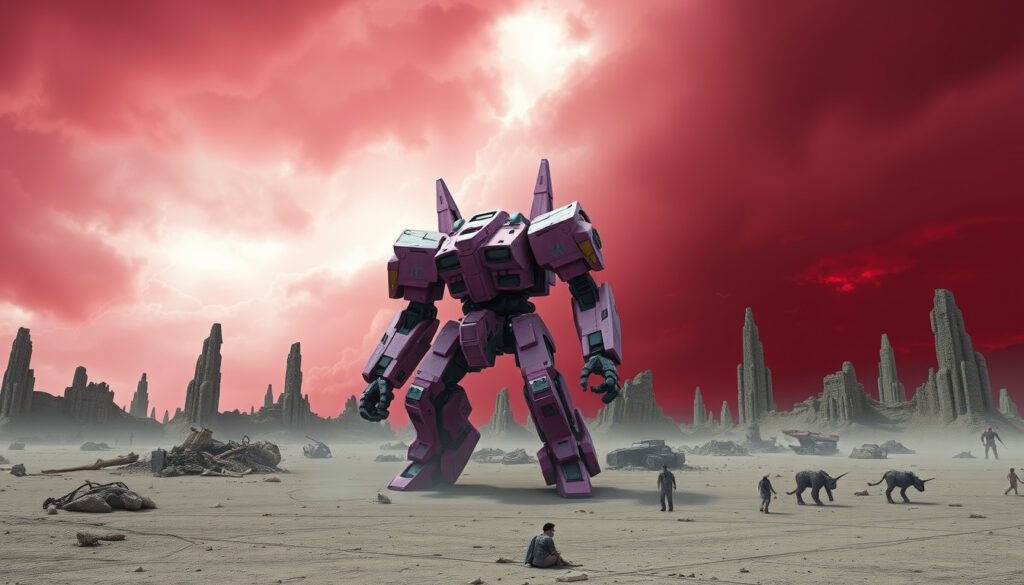
Darling in the Franxx – Plot, Characters and Ending Guide
Darling in the Franxx stands as one of the most ambitious mecha anime productions of the 2010s, blending high-octane robot battles with emotionally complex character relationships. The 24-episode series aired from January to June 2018, emerging from a collaboration between two of anime’s most recognizable studios.
Set in a post-apocalyptic future where humanity has retreated underground, the series introduces viewers to a world where children known as parasites are raised in isolation to pilot massive mecha called Franxx. The story centers on the reunion of two childhood friends whose bond becomes central to humanity’s struggle against mysterious giant creatures threatening their survival.
While the series garnered praise for its animation quality and early romantic storytelling, it sparked significant debate over its handling of certain themes. This comprehensive guide covers everything from plot details and character breakdowns to streaming options and the controversial finale.
What is Darling in the Franxx?
Darling in the Franxx is a 2018 Japanese anime television series that combines science fiction, mecha action, and romance elements. The story unfolds in a post-apocalyptic world where humanity has retreated underground into massive mobile fortress-cities called Plantations after achieving near-immortality through magma energy exploitation.
This advancement came at a steep cost. The pursuit of immortality eliminated natural reproduction and suppressed human emotions. Adults now operate under the APE council, worshipping a figure known as “Papa,” while children are raised in isolated facilities called “birdcages” to develop the piloting compatibility necessary to operate the Franxx mecha.
The narrative follows Squad 13 stationed at Plantation 13, with particular focus on Hiro (Code:016), a former prodigy who had failed to sync with any partner, and his reunion with Zero Two (Code:002), a horned humanoid hybrid with klaxosaur DNA who had become known as a “Partner Killer” after her previous partners died during their third ride together. Their connection becomes the emotional backbone of the series.
Key Insights About the Series
- Co-production: The series was developed jointly by Trigger (known for Kill la Kill, Little Witch Academia) and A-1 Pictures (known for Sword Art Online, Blue Exorcist), combining their respective strengths in action animation and character-driven storytelling.
- Director: Atsushi Nishigori served as both director and character designer, bringing his experience from previous Gainax productions to shape the series’ distinctive visual style.
- Original anime: Unlike many mecha series that adapt existing manga or light novels, Darling in the Franxx was created specifically for television, with no manga adaptation released.
- MyAnimeList score: The series holds a 7.32/10 rating on MyAnimeList, reflecting generally positive but mixed reception among the anime community.
- Emotional sync system: The Franxx require piloting in male-female pairs called stamen and pistil, with effectiveness determined by emotional synchronization rather than technical skill alone.
- Evolution across episodes: The series transitions from focused mecha combat and romance in early episodes to broader themes of humanity, mortality, and rebellion against controlling authority structures.
Series Snapshot
| Attribute | Details |
|---|---|
| Aired | January 13 – June 28, 2018 |
| Episodes | 24 (no split season) |
| Director | Atsushi Nishigori |
| Script Writer | Ichirō Ōkouchi |
| Mecha Designer | Shigeto Koyama |
| Main Pair | Hiro (016) & Zero Two (002) |
| Primary Mech | Strelizia |
| MAL Score | 7.32/10 |
Who Are the Main Characters?
The character roster centers on Squad 13, a group of parasites trained at Plantation 13, though the narrative gives particular depth to those involved in the central romantic pairing and the mysteries surrounding Zero Two’s origins.
Hiro and Zero Two
Hiro, designated Code:016, begins the series as a frustrated former prodigy who failed to synchronize with any partner, making him an outcast among the parasite children. His childhood memories of meeting Zero Two were deliberately erased, though they resurface as their bond rekindles. As the series progresses, Hiro transforms from a passive character into someone willing to risk everything for the person he calls his “darling.”
Zero Two, Code:002, presents a stark contrast. Her distinctive red horns mark her as a human-klaxosaur hybrid created through cloning experiments by Dr. Franxx using klaxosaur queen DNA. Initially portrayed as feral and dominant, Zero Two’s personality softens as her relationship with Hiro develops, though some viewers perceived her character development as inconsistent. Her reputation as a “Partner Killer” stems from the deaths of previous stamen partners after their third ride, a consequence of her klaxosaur physiology.
Hiro and Zero Two’s childhood encounter was erased from memory but proved pivotal. They had met as children during an earlier incident, and Hiro’s blood contact with Zero Two during that encounter left lasting physiological effects that eventually made them compatible pilots.
Supporting Squad 13 Members
The supporting cast provides both combat capability and interpersonal dynamics that drive the series’ middle episodes. Ichigo (015) serves as squad leader, driven by guilt over a childhood friend’s death. Goro (056) harbors romantic feelings for Ichigo while maintaining his duty as her stamen partner.
Other notable parasites include Zorome (666), who pursues an independent piloting path; Miku (390), whose relationship with Goro explores intimacy in a society that discourages emotional bonds; Kokoro (556), whose storyline explores pregnancy in a world that eliminated natural reproduction; and Mitsuru (326), who begins as Hiro’s rival for Zero Two’s attention.
Futoshi (214) forms an unexpected pair with Kokoro after her relationship with Mitsuru ends, while Ikuno (196), the only female-female pilot pairing in the series, quietly processes her own unrequited feelings. Each character’s arc reflects the series’ central question about what it means to be human when emotions and reproduction have been artificially suppressed.
The Franxx Mechs
The Franxx are bipedal mecha that serve as humanity’s primary defense against klaxosaurs. Unlike conventional robots, they require two pilots working in perfect emotional harmony to function effectively. The stamen (male pilot) provides raw power while the pistil (female pilot) handles precision control, with their combined emotional synchronization determining the mecha’s capabilities.
Key Franxx units include Strelizia, Zero Two and Hiro’s distinctive red mecha capable of beast-mode transformations; Delphinium, piloted by Ichigo and Goro, featuring spear-based weaponry; and Genista, operated by Ikuno and Mitsuru, notable for requiring an unusual female-female pairing.
Klaxosaurs, the opposing forces, emerge from deep within Earth and are categorized by size classifications: Conrad, Mohorovičić, Gutenberg, and the devastating Super Lehmann class. The series eventually reveals these creatures as guardians of the magma energy that humanity exploits, corrupted by the alien VIRM who seek to harvest Earth’s resources.
What Happens in the Ending?
The series finale resolves the central conflict while delivering an emotionally layered conclusion that divided audiences. After uncovering the truth about klaxosaurs, VIRM’s alien involvement, and the APE council’s deceptive immortality system, Squad 13 stages an open rebellion against the adults controlling their lives.
Hiro and Zero Two’s relationship reaches its climax when they confront VIRM on their homeworld through a wormhole. Zero Two undergoes a dramatic transformation, merging with her Strelizia mecha to become a fully mechanical form capable of facing the alien threat. Together, they destroy VIRM’s planet but at fatal cost.
The final scenes suggest reincarnation rather than death. Hiro and Zero Two are shown reborn as children on a restored Earth, meeting again as their younger selves with clear visual references to birds and childhood statues. This imagery, combined with the earlier emphasis on their childhood encounter, frames the ending as a triumphant assertion that love transcends mortality and external control.
The conclusion drew significant criticism for its pacing, with many viewers feeling the final arc rushed through revelations that deserved more development. The series’ MyAnimeList score of 7.32 reflects this mixed reception, with strong early ratings declining as the second half unfolded.
Why Was the Ending Controversial?
Several factors contributed to audience divided reaction. The series had built substantial investment in its romance through carefully paced early episodes, only to accelerate through its climactic events in the final five episodes. Viewers who had anticipated extended development of the Hiro-Zero Two relationship felt shortchanged by the rapid progression.
Thematic concerns also emerged. Some critics pointed to the portrayal of gender dynamics, particularly how female pistils were expected to dominate berserk Franxx units without male stamen partners, and the abrupt introduction of mature content involving Kokoro and Mitsuru in a society explicitly designed to suppress emotional relationships.
Zero Two’s character arc drew particular scrutiny. Her transformation from a fierce, independent figure to a more conventional romantic partner prompted discussions about whether the series regressed her agency rather than developing it. The symbolic weight placed on her relationship with Hiro sometimes overshadowed her individual characterization.
Defenders of the series argued that the ending honored its themes of sacrifice and love transcending artificial constraints, pointing to the reincarnation imagery as a deliberate artistic choice rather than narrative convenience. The open-ended nature allowed viewers to interpret the final scenes according to their investment in the characters’ journey.
The series includes some mature themes including intimate relationships, violence, and existential questions about humanity. Parents or younger viewers should note the series is directed toward teen and adult audiences rather than general anime consumption.
Is There a Season 2?
No second season, sequel series, or related film has been released or announced as of 2025. The series concluded as a complete 24-episode run with a conclusive but thematically open ending that allows for interpretation without requiring continuation.
Director Atsushi Nishigori and the production team have not publicly indicated plans to extend the story. The decision to conclude rather than continue reflects both creative choices and the practical realities of anime production, where successful series sometimes receive follow-ups and sometimes do not despite audience interest.
Production Timeline
- January 13, 2018: Series premiere on TV Asahi and other networks
- June 28, 2018: Final episode broadcast, concluding the 24-episode run
- 2019: Compilation film released in Japan, condensing the series for theatrical presentation
- 2020–2024: No announcements regarding sequel content or continuation
- 2025: Series remains complete as originally broadcast with no new content confirmed
Verified Information vs. Rumors
| Confirmed | Unconfirmed / Denied |
|---|---|
| 24 episodes aired January–June 2018 | Season 2 production (never officially announced) |
| Co-produced by Trigger and A-1 Pictures | New anime project (no official confirmation) |
| Director: Atsushi Nishigori | Manga continuation (none exists) |
| Available on Crunchyroll | Sequel movie (never announced) |
| Compilation film released 2019 | Spin-off series (not in development) |
Where to Watch and Episode Info
The complete 24-episode series remains available through legitimate streaming platforms, with availability varying by region. As of 2025, viewers can access the series through Crunchyroll, which absorbed Funimation’s streaming library in the intervening years.
The episodes aired weekly from January 13 to June 28, 2018, with no mid-season break. While official episode titles may vary by platform release, the series divides into distinct narrative arcs that provide structural organization even without individual episode naming.
Episode Arc Structure
- Episodes 1–6: Introduction to Squad 13, piloting basics, early battles, Hiro and Zero Two’s reunion
- Episodes 7–13: Gran Crevasse arc, deeper klaxosaur encounters, squad dynamics development
- Episodes 14–19: Relationship developments, rebellion preparations, personal conflicts
- Episodes 20–24: VIRM revelation, final confrontation, series climax and conclusion
Each arc builds upon the previous, with the early episodes establishing character relationships and world mechanics before gradually introducing the larger conspiracy surrounding humanity’s history and the true nature of their enemies.
Official Streaming Options
Crunchyroll maintains licensing rights for the series in most regions outside of Japan. Viewers should verify current availability based on their geographic location, as streaming rights can change. The platform offers both subtitled and dubbed versions, with the English dub featuring performances by industry voice actors.
Regional variations may apply in certain markets. For viewers in regions where Crunchyroll is unavailable, other licensed platforms occasionally acquire temporary rights. Pirate sources should be avoided both for legal reasons and because legitimate platforms ensure proper support for creators and the anime industry.
Understanding the Series’ Themes and Reception
Beyond its surface-level mecha combat, Darling in the Franxx explores several interconnected themes about human connection, autonomy, and what constitutes genuine personhood. The series uses its science fiction framework to examine questions that resonate with contemporary concerns about technology, reproduction, and social control.
The suppression of emotion and reproduction in the series represents a commentary on how societies sometimes prioritize stability over individual fulfillment. The adults in the story have traded natural human experiences for extended lifespan and social harmony, creating a world where children exist primarily as weapons rather than individuals with autonomous futures.
Squad 13’s rebellion against APE mirrors coming-of-age narratives where young people challenge established structures that limit their potential. Each character’s journey toward self-discovery reflects different aspects of this transition, from romantic relationships to career aspirations to fundamental questions about personal identity.
The pilot bond system serves as both plot mechanism and metaphor for human connection. The requirement for emotional synchronization suggests that genuine partnership demands vulnerability and mutual understanding rather than mere technical competence. This theme resonates regardless of whether viewers interpret the stamen-pistil dynamic as romantic metaphor or narrative necessity.
Critics who found fault with the series often cited execution rather than concept. The ambitious scope of the narrative introduced elements that perhaps deserved more careful development, particularly the VIRM alien threat and certain character transitions that felt compressed within the episode format.
Sources and Production Background
Darling in the Franxx represents a significant collaboration between two prominent anime studios. Trigger, founded by former Gainax staff, brought their signature style emphasizing dynamic action sequences and vibrant visual design. A-1 Pictures contributed their expertise in character animation and consistent production quality.
Director Atsushi Nishigori previously worked on notable productions including PSYREN and The World God Only Knows, developing a style that emphasizes both mechanical design and emotional character moments. His decision to create an original series rather than adapt existing material allowed greater creative freedom but also greater narrative risk.
The series explores how connection between individuals can challenge systems designed to suppress genuine emotion, using the mecha genre to examine questions about human autonomy and relationship.
Scriptwriter Ichirō Ōkouchi contributed experience from previous mecha productions, while mecha designer Shigeto Koyama developed the distinctive mechanical designs that balance humanoid form with the more bestial klaxosaur opponents. This combination of experienced staff resulted in production values that remained consistent throughout the broadcast run.
The lack of source material adaptation means the series stands as a complete television production without external canonical content. For viewers who finish the series, no manga, light novel, or additional media exists to explore further—though the complete story was told within the 24-episode framework.
Summary
Darling in the Franxx remains a significant entry in the mecha anime genre despite its divisive reception. The 24-episode series successfully combined striking animation with emotionally driven storytelling, even as its later episodes drew criticism for pacing and thematic execution.
The central relationship between Hiro and Zero Two provides compelling drama throughout, while the supporting cast and broader conspiracy involving VIRM aliens offer additional narrative layers. Those interested in exploring more animation discussions and character breakdowns or comparisons to other popular media may find related content valuable.
No continuation exists or has been announced. Viewers can access the complete series through Crunchyroll, where it remains available as part of their mecha anime catalog. The series recommends itself to audiences who appreciate the genre combination of robot combat, romance, and existential science fiction themes.
Frequently Asked Questions
Who created Darling in the Franxx?
The series was co-produced by Trigger and A-1 Pictures, directed by Atsushi Nishigori with scripts by Ichirō Ōkouchi. Nishigori also served as character designer. It is an original anime with no manga or light novel source material.
What are Franxx mechs in Darling in the Franxx?
Franxx are bipedal mecha requiring two pilots—a male stamen and female pistil—who must achieve emotional synchronization to operate the machine. Key units include Strelizia (piloted by Zero Two and Hiro) and Delphinium (piloted by Ichigo and Goro).
How many episodes does Darling in the Franxx have?
The series contains 24 episodes that aired weekly from January 13 to June 28, 2018, with no mid-season break or split cour format.
What is Zero Two’s backstory?
Zero Two is a human-klaxosaur hybrid created by Dr. Franxx using klaxosaur queen DNA. Her distinctive red horns mark her hybrid nature. She was raised as a parasite but her physiology differs from other pilots, making her both more powerful and more dangerous to her partners.
Why was Darling in the Franxx controversial?
The series sparked debate over its handling of gender dynamics, with critics citing portrayals of female pistils in certain situations and an abrupt mature content storyline. Some viewers also felt character development regressed rather than progressed, particularly regarding Zero Two’s characterization.
Will there be more Darling in the Franxx content?
No season 2, sequel, or related movie has been announced as of 2025. The series concluded as a complete 24-episode production with no confirmed plans for continuation.
Where can I watch Darling in the Franxx?
The series is available on Crunchyroll in most regions, with both subtitled and English dubbed versions. Availability may vary by geographic location, so viewers should check regional licensing agreements.
What is the MyAnimeList score for Darling in the Franxx?
The series holds a 7.32 out of 10 rating on MyAnimeList, based on user scores. This places it in the generally well-received category while reflecting the mixed reception the series received during and after its broadcast.
More related posts
 What National Day Is It Today? UK, Ireland, UAE Guide
 Convert 2000 NZD to USD: Live Rate & Best Tips
 The Legend of Zelda: Tears of the Kingdom Review: Is It Worth It
 Whau Valley Fish & Chips Chinese Takeaway – Phone, Menu, Hours
 Te Reo Days of the Week: Complete Guide to Māori Day Names
 NRL Grand Final NZ Time: 9:30 PM Kickoff Guide
 Convert 25 USD to NZD: Live Rate, Fees & Best Provider
