How to Track Calories: Smart Counting for Weight Loss
Anyone who’s tried to lose weight has probably wondered if counting calories is really worth the effort. The short answer is yes — but not just for weight loss. Tracking calories can help you understand how much energy your body needs, whether your goal is to lose, maintain, or gain weight. Backed by the NHS Better Health program, calorie awareness is a practical skill that puts you in control.
Average daily need (women): 1,600–2,400 kcal ·
Average daily need (men): 2,000–3,000 kcal ·
Calories per pound of fat: 3,500 kcal ·
Calories burned by 10,000 steps (approx.): 300–500 kcal ·
MyFitnessPal downloads: over 200 million
Quick snapshot
- Tracking calories helps many people lose weight (NHS Better Health)
- MyFitnessPal database exceeds 20 million items (MyFitnessPal)
- FDA allows ±20% accuracy on food labels (FDA)
- Exact calories burned per step varies by individual weight and pace (Harvard Health Publishing)
- Long-term adherence to calorie tracking varies widely among individuals (Good Housekeeping)
- 2005: MyFitnessPal launched, popularizing smartphone tracking (MyFitnessPal)
- 2014: Cronometer introduces micronutrient-level tracking (Cronometer)
- 2024: AI photo-logging feature added to apps like Cronometer (Cronometer Official Site)
Before diving into the details, here’s a quick overview of the numbers that matter.
| Label | Value |
|---|---|
| Daily recommendation (adult women) | 1,600–2,400 kcal |
| Daily recommendation (adult men) | 2,000–3,000 kcal |
| Calories in 1 lb of fat | 3,500 kcal |
| Calories burned walking 10,000 steps | 300–500 kcal |
| Accuracy of food labels | ±20% allowed by FDA |
What is the best way to track your calories?
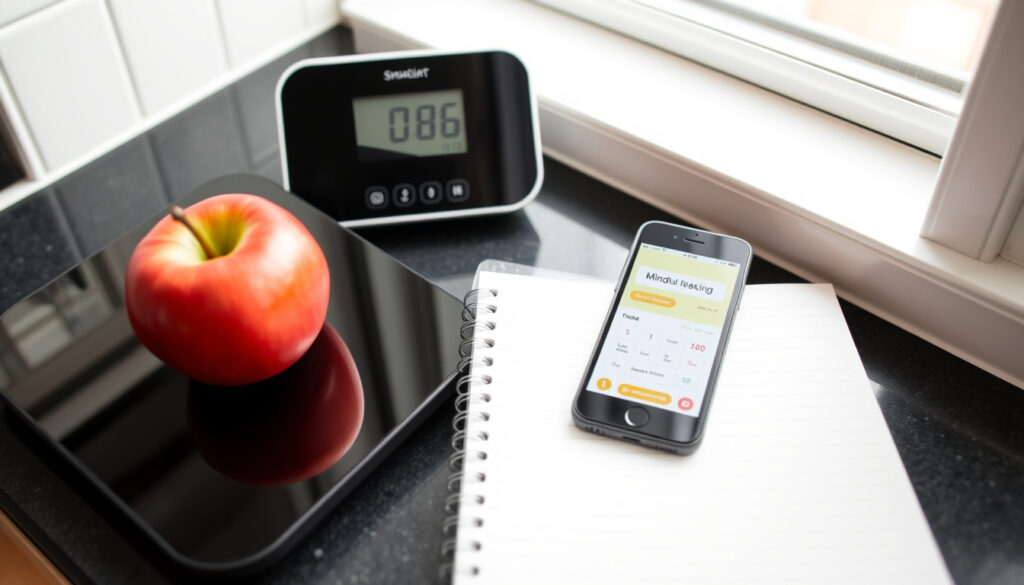
The most reliable method combines a digital app with a food scale and consistent label reading. A food diary — whether paper or on a phone — makes you accountable for every bite.
How can I track my daily calories?
- Use an app like MyFitnessPal (database of 20 million+ foods) — it scans barcodes and logs meals in seconds.
- Weigh portions with a kitchen scale for better accuracy than estimating.
- Read the Nutrition Facts label — the FDA allows a ±20% margin, so the number on the box is an estimate, not a guarantee.
The same meal logged by two people could differ by 100–200 kcal if one uses a scale and the other doesn’t. That gap can make or break a 500‑kcal daily deficit.
The implication: accuracy matters more than the tool.
How do I track calories without an app?
A pen-and-paper food diary works just as well. The See How You Eat approach recommends photographing meals and writing portion sizes down. The key is consistency, not the tool.
Another option: a simple spreadsheet. Free templates from Harvard Health Publishing let you track calories and macros without any download.
The takeaway: The best method is the one you’ll stick with for more than two weeks. For most people, that’s a mobile app — but old‑fashioned paper has the same power if it becomes a habit.
Is 1200 calories a day actually enough?
For most adults, 1,200 kcal per day falls below the recommended maintenance level. The NHS advises that women need 1,600–2,400 kcal and men 2,000–3,000 kcal daily just to maintain weight. Cutting to 1,200 is a severe deficit that can backfire.
“One approach is to add up the number of calories per serving of all the foods that you eat, and then plan your menus accordingly.”
— Harvard Health Publishing
Why am I not losing weight eating 1200 calories a day?
- Your body may lower its metabolic rate in response to prolonged restriction (the Harvard Medical School explains adaptive thermogenesis).
- You could be undercounting — portion errors, unlogged condiments, and liquid calories add up fast.
- Muscle loss occurs when protein intake is too low; less muscle burns fewer calories at rest.
A 1,200‑kcal diet can create a short‑term deficit, but the long‑term metabolic slowdown and nutrient gaps (especially calcium, iron, and protein) make it unsustainable for most adults without medical supervision.
The pattern: When a plateau happens on a very low‑calorie diet, the fix is often to increase calories temporarily and rebuild metabolic rate, not cut further.
Do I need to count calories on Wegovy?
Wegovy (semaglutide) suppresses appetite, but calorie counting can still boost results. Clinical trials published by Novo Nordisk show that patients who combined the drug with lifestyle counseling lost significantly more weight than those on medication alone.
Why am I not losing weight on Wegovy?
- Your calorie intake may still be close to maintenance, especially if you’re eating calorie‑dense comfort foods.
- The dosage may need adjustment — weight loss on Wegovy is dose‑dependent.
- Activity level matters: tracking steps and exercise calories keeps the deficit real.
Patients on Wegovy who record their meals daily are more aware of hidden calories — the same awareness the drug’s appetite suppression alone can’t provide. Counting becomes a safety net against creeping portions.
Why this matters: Even with a prescription, the fundamental law of energy balance applies: a surplus prevents weight loss, regardless of the drug.
How many calories do 10,000 steps actually burn?
A 150‑lb person burns roughly 300–400 kcal walking 10,000 steps at a moderate pace; a heavier person may burn 500+ kcal. The Harvard Health calculator provides personalised estimates based on weight and pace.
Which body part loses fat first?
Fat loss is genetically programmed — you can’t spot‑reduce. The Harvard Medical School notes that genetics determine whether you lose fat from your face, belly, or hips first. Calorie tracking ensures a steady overall deficit, which eventually draws from all stores.
The implication: Don’t judge the effectiveness of calorie tracking by which body part changes first. As long as the scale trends down over weeks, the deficit is working.
How do I track calories for weight loss?
Setting a deficit of 300–500 kcal per day from your total daily energy expenditure is the standard recommendation from the NHS. That creates a safe weekly loss of 0.5–1 lb.
How do I track calories free?
- The NHS Better Health weight loss tool offers a free calorie checker.
- Cronometer is praised as the best free calorie counter for micronutrient tracking (Fortune, 2026).
- MyNetDiary has a free, ad‑free version with 2 million foods and 108 nutrients per item.
How do I track calories online?
Web‑based trackers like MyFitnessPal and Cronometer sync across devices. You can log from a browser, then view your dashboard on a phone — no app required for entry.
The catch: Free online trackers may have limited features (no barcode scanning, no macro targets). For most dieters, the mobile app version is worth the minor data‑entry friction.
Upsides
- Builds awareness of portion sizes and hidden calories
- Helps identify patterns — mindless snacking, stress eating, liquid calories
- Supports any goal: loss, maintenance, or gain
- Data from apps can be shared with dietitians or doctors
Downsides
- Can become obsessive or trigger disordered eating in vulnerable individuals
- Time‑consuming — poor adherence after the first month is common
- App calorie estimates for exercise are often inflated
- Label inaccuracies (±20%) mean logged numbers are approximate
How to start tracking calories: a step‑by‑step guide
- Calculate your daily calorie needs. Use the NHS calorie checker to find your maintenance level based on age, sex, weight, and activity.
- Choose a tracking method. Download an app (MyFitnessPal, Cronometer, MyNetDiary) or grab a notebook. Set a daily calorie target that’s 300–500 kcal below maintenance for weight loss.
- Buy a digital food scale. Weigh everything for the first two weeks — you’ll be shocked how much a “handful” of nuts actually weighs.
- Log everything, including drinks. Soda, juice, alcohol, and coffee creamers contain sneaky calories. The FDA recommends including all beverages in your daily tally.
- Review weekly. Look for patterns — most weight happens on weekends or when you skip breakfast. Adjust accordingly.
- Don’t chase perfection. An 80% accurate log over a month is far more useful than a perfect log for three days.
The pattern: consistency beats precision.
Clarity: what we know and what remains uncertain
Confirmed facts
- Calorie tracking helps many people lose weight (NHS Better Health).
- 1,200 kcal/day is below most adults’ maintenance needs (NHS).
- MyFitnessPal is one of the most popular tracking apps (over 200 million downloads reported on MyFitnessPal).
- Food labels are accurate to within ±20% as allowed by FDA.
What remains uncertain
- Exact calories burned per step varies by individual weight and walking speed (Harvard Health Publishing).
- Long‑term adherence to calorie tracking varies widely; studies show most people abandon tracking within 6 months (Good Housekeeping).
- Calorie burn estimates from apps and fitness trackers are often inaccurate (Beyond Type 1).
- The accuracy of AI photo-logging for calorie estimation is still being improved and may vary (Fortune).
“Calorie counting can help you understand how much energy you are getting from the food you eat.”
— NHS Better Health
“One approach is to add up the number of calories per serving of all the foods that you eat, and then plan your menus accordingly.”
— Harvard Health Publishing
Tracking calories is not a chore — it’s a mirror held up to your daily energy story. For the person trying to lose weight, the choice is straightforward: log for a month and see real data, or rely on guesswork. For the person on Wegovy, the data is a safety net. For anyone maintaining weight, a few minutes of logging each day provides the feedback loop that keeps health on track. The calorie isn’t the enemy — ignorance is.
To get started, you can refer to a daily calorie intake guide to determine your personal target before logging your meals.
Frequently asked questions
Can I track calories without an app?
Yes. A notebook, a phone’s photo gallery, or a simple spreadsheet all work. The key is consistent logging. The See How You Eat method suggests taking photos of every meal as a visual food diary.
How accurate are calorie labels on packaged foods?
The FDA allows a ±20% margin on Nutrition Facts labels. That means a 200‑kcal snack could actually be 160–240 kcal. Over the day, these errors tend to cancel out, but weighing portions improves accuracy.
Do I need to count calories forever?
No. Many people track for a few months to internalise portion sizes, then stop. The skill stays with you. The NHS recommends periodic “check‑ins” if weight starts creeping back.
What is a calorie deficit?
A calorie deficit means consuming fewer calories than your body burns in a day. For weight loss, a deficit of 300–500 kcal per day is considered safe and sustainable, according to the NHS.
How many calories should I eat to lose weight?
Subtract 300–500 kcal from your total daily energy expenditure (TDEE). Use the NHS calorie checker to estimate your TDEE based on age, sex, weight, and activity level.
Is it safe to eat 1200 calories a day without medical supervision?
For most adults, 1,200 kcal is too low and can lead to nutrient deficiencies, muscle loss, and metabolic slowdown. The Harvard Health Publishing advises against very low‑calorie diets unless under a doctor’s supervision.
The takeaway: calorie tracking adapts to your lifestyle.
More related posts
 PAW Patrol: The Movie Poster – Where to Buy & Value
 15kg LPG Gas Bottle: Cost, Lifespan & Refill Guide
 Are Lab Grown Diamonds Real? Truth on Authenticity & Value
 17 Best Things to Do in Paihia, New Zealand (Free + Family-Friendly)
 Melbourne City FC vs Buriram United – AFC Round of 16 Preview
 The Good Wine Company: Wine Rules, Health & Celebrity Favorites
 Air NZ Boeing 777-300ER – Seat Maps and Cabin Guide
