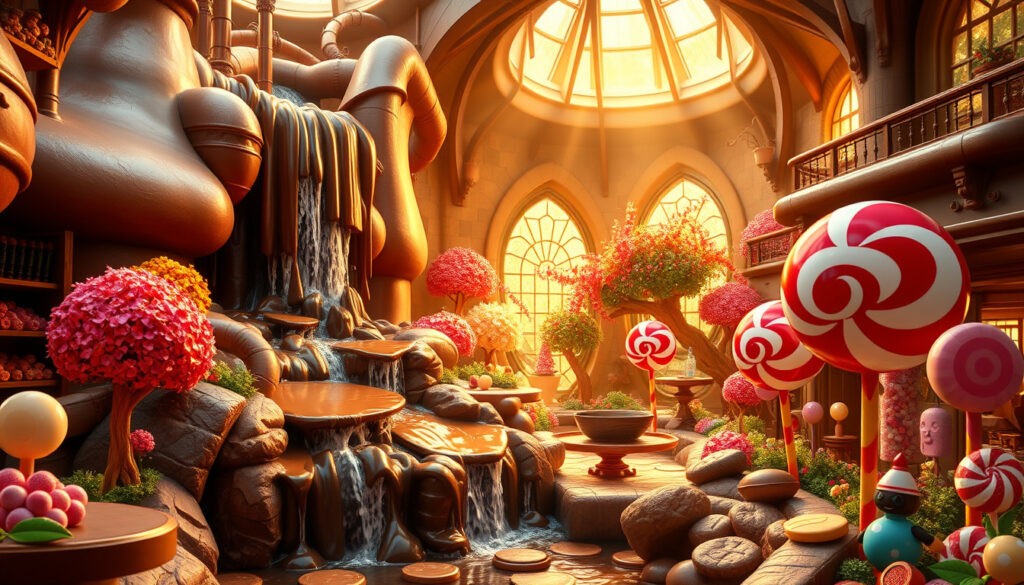
Willy Wonka and the Chocolate Factory: Deeper Meaning, Where to Watch, and More
Few movies from the 1970s still spark the same curiosity as Willy Wonka and the Chocolate Factory, a film that has been watched by generations yet continues to raise questions about its quirky characters and mysterious factory. This guide explores the deeper meanings behind the story, the reasons for its title change, and where to stream the original 1971 classic today.
Release year: 1971 (Hulu) ·
Director: Mel Stuart ·
Based on: Charlie and the Chocolate Factory by Roald Dahl (JustWatch) ·
Starring: Gene Wilder as Willy Wonka ·
Runtime: 100 minutes
Quick snapshot
- Moral tale about greed and humility (SparkNotes)
- Factory as a symbol of wealth inequality (SparkNotes)
- Golden ticket represents hope (SparkNotes)
- Wonka as a trickster figure (MyMythos)
- Inspires wide-ranging fan theories about hidden meanings (Reddit)
Seven key facts about the film, one pattern: the 1971 musical remains a cultural touchstone that blends childlike wonder with biting social commentary.
| Fact | Details |
|---|---|
| Release year | 1971 |
| Director | Mel Stuart |
| Based on | Charlie and the Chocolate Factory by Roald Dahl |
| Leading actor | Gene Wilder as Willy Wonka |
| Runtime | 100 minutes |
| Genre | Fantasy musical |
| Rating | G (PG) |
Why is Charlie and the Chocolate Factory not called Willy Wonka?
The 1971 film was originally announced under the book’s title, Charlie and the Chocolate Factory, but the studio changed it to Willy Wonka & the Chocolate Factory to highlight the title character. The decision reportedly aimed to capitalize on Gene Wilder’s performance and make the film more marketable (IMDb). The book, first published in 1964, carries the original name. Later, Tim Burton’s 2005 adaptation reverted to the book’s title, creating a clear distinction between the two films. The implication: the name change was a marketing bet that the eccentric candy maker would outshine the story’s literal hero — a bet that paid off for decades.
What is the deeper meaning of Willy Wonka and the Chocolate Factory?
On its surface, the story is a whimsical tour of a candy factory, but most interpreters read it as a moral fable about greed, gluttony, and pride. Literary analysis site SparkNotes notes that the chocolate factory itself physically embodies the gap between poverty and wealth. Each of the five children who win a golden ticket represents a different vice: Augustus Gloop is gluttony, Violet Beauregarde is pride, Veruca Salt is greed, Mike Teavee is sloth, and Charlie Bucket is the humble exception. This reading is a common fan interpretation.
“The chocolate factory itself physically embodies the gap between poverty and wealth.” — SparkNotes literary analysis
What is Willy Wonka a metaphor for?
Willy Wonka himself has been read as a trickster, a Christ-like figure, or a representation of the lonely creative genius. According to the mythology site MyMythos, Wonka acts as a gatekeeper between the mundane and the magical, testing each visitor’s character through temptation. No single interpretation is authoritatively correct, but the character’s ambiguity is part of why the film continues to invite analysis.
What do oompa loompas represent?
The Oompa Loompas are widely interpreted as symbols of exploited labor or colonial subjugation. In the original book they are pygmy-like people from Loompaland, and the film’s portrayal — uniform orange skin, green hair, and regimented behavior — has been criticized as reinforcing colonialist stereotypes. A Reddit fan theory (low confidence) suggests they represent the working class whose labor fuels Wonka’s empire but remains unseen. This remains a speculative reading, but one that has gained traction in academic and fan circles alike.
What did Willy Wonka mean by snozzberries?
Snozzberries are a fictional fruit invented by Roald Dahl that appears in several of his books. In the film, Wonka’s line “the snozzberries taste like snozzberries” is often interpreted by fans as a playful euphemism for something else — a joke that has inspired decades of memes and speculation. The exact meaning is never confirmed by Dahl, but the line reflects the film’s undercurrent of gentle adult humor.
Is Wonka autistic?
In recent years, some viewers and autism advocates have pointed to Wonka’s social awkwardness, intense focus on his craft, and literal interpretation of social cues as traits that align with autism spectrum characteristics. However, no official statement from Roald Dahl, Gene Wilder, or the filmmakers supports this interpretation. MyMythos describes Wonka as “a man who is not evil, but is a little bit off-center” — a description that could be read in many ways. It remains a speculative, unofficial reading of the character.
“Willy Wonka is a man who is not evil, but is a little bit off-center.” — Gene Wilder, on his portrayal of the character
Bottom line: The 1971 film is a layered work that operates as both a child’s fantasy and a satire of capitalist excess. Casual viewers get a colorful adventure; attentive viewers find a commentary on human vice and the price of innocence.
Did Roald Dahl write Willy Wonka and the Chocolate Factory?
Yes — Roald Dahl wrote the original 1964 book, Charlie and the Chocolate Factory. He also wrote the screenplay for the 1971 film adaptation. According to the film’s credits (available via JustWatch), Dahl was the sole credited screenwriter. However, Dahl later publicly disowned the film because of the liberties taken with his story — particularly the added musical numbers and the softening of Wonka’s character. This tension between author and adaptation is a recurring note in discussions of the film.
“The film betrayed the spirit of the book.” — Roald Dahl, on his dissatisfaction with the 1971 adaptation
Where can I watch original Willy Wonka and the Chocolate Factory?
As of 2025, the 1971 film is widely available through several digital platforms. The most straightforward option is streaming via Max (formerly HBO Max), which carries both the original and the 2023 prequel Wonka. It is also available for digital purchase or rental on major storefronts including Amazon Prime Video, Apple TV, Google Play, YouTube, Vudu, and Microsoft. The film is not currently offered on Netflix or Disney+.
Is Charlie and the Chocolate Factory on Disney or Netflix?
No. Netflix’s title page for the film exists but only as a catalogue placeholder — the film is not currently streaming there. Disney+ does not carry the 1971 film (it is a Warner Bros. property), and the Tim Burton 2005 version is also absent from Disney+.
Is Wonka on Disney+?
The 2023 prequel Wonka, starring Timothée Chalamet, is distributed by Warner Bros. and is available on Max as of March 2024 (ET Online). It is not on Disney+.
Is ‘Wonka’ coming to Disney+?
There is no indication that the 2023 Wonka will move to Disney+. Warner Bros. family films typically remain in the Warner Bros. ecosystem, especially with Max as their primary streaming home.
Is Wonka autistic?
This question has gained popularity in recent years as part of a broader movement to identify neurodivergent characters in film and literature. Many fans see Wonka’s literal-mindedness, difficulty with social cues, and singular focus on his chocolate-making as autistic traits. But again, no official confirmation exists from the creators or the actor. Gene Wilder himself described Wonka as an eccentric inventor who “is not evil, but is a little bit off-center” — a description far from a clinical diagnosis. The interpretation remains a popular fan theory but lacks authoritative backing.
Bottom line: The autistic reading of Wonka is a plausible but unconfirmed lens. Fans see depth in his behavior; the filmmakers never intended it. For neurodivergent viewers, the character’s quirks may feel familiar, but the evidence is inferential.
Willy Wonka is both a benevolent creator and a manipulative trickster. He eliminates each child through their own vices while testing Charlie’s integrity — all while maintaining a smile and a song. His character’s moral ambiguity is the engine that keeps the film relevant for analysis.
The 1971 film has outlived its contemporaries because it refuses to talk down to children. Its mix of darkness, humor, and music means that generations of viewers discover something new with each rewatch — whether it’s a joke they missed or a social critique they weren’t ready for.
What the film’s enduring popularity means for Warner Bros. and streaming services: the title is a permanent asset. With the 2023 Wonka acting as a prequel, the original remains the entry point for millions of new viewers. The trade-off for fans is the absence of a single high-def restoration that reconciles all of Dahl’s original intentions — something the 2005 adaptation attempted but didn’t fully capture. For families and collectors, the best bet is Max or a digital purchase, knowing that the film’s cultural footprint will only grow as new interpretations emerge.
For a closer look at how the 1971 movie compares to its source material, readers can explore book and film differences in detail.
Frequently asked questions
Who played Willy Wonka in the 1971 film?
Gene Wilder played Willy Wonka in the 1971 film Willy Wonka & the Chocolate Factory.
How long is Willy Wonka and the Chocolate Factory?
The runtime is 100 minutes.
What is the rating of the movie?
The MPAA rating is G (General Audiences), though some streaming services list it as PG.
Did Roald Dahl like the 1971 film adaptation?
No, Dahl publicly disowned the film due to deviations from his book, including the added musical numbers and the softening of Wonka’s character.
Is the 2005 Charlie and the Chocolate Factory a remake?
Yes, Tim Burton’s 2005 film is a direct adaptation of Roald Dahl’s book under its original title. It is not a sequel or a prequel but a separate interpretation.
What is the difference between the 1971 and 2005 films?
The 1971 film features Gene Wilder as a more playful, singing Wonka, while the 2005 film stars Johnny Depp as a more eccentric, socially awkward Wonka. The tone differs: the original is a musical with dark undertones, while the Burton version is more visually surreal and faithful to the book’s plot.
Are the Oompa Loompas in the 1971 film played by the same actors?
The Oompa Loompas in the 1971 film were portrayed by multiple actors, none of whom were credited individually. The 2005 film used a single actor (Deep Roy) for all Oompa Loompas via digital effects.
More related posts
 SBW vs Gallen Fight Time: Schedule, Stream & Card 2025
 Black and White Box: Storage, Photo Lab & Gift Options
 NZ House Prices 2026: Data From QV, ANZ & RNZ
 NCEA Level 2 English – Standards, Credits and 2025 Guide
 Melbourne City FC vs Buriram United – AFC Round of 16 Preview
 iPhone 15 Pro Max New Zealand Price 2025: Best Deals & Costs
 Is Anzac Day a Public Holiday? 2026 State Guide
 Things to Do in Taupō: Best Activities & Itineraries
