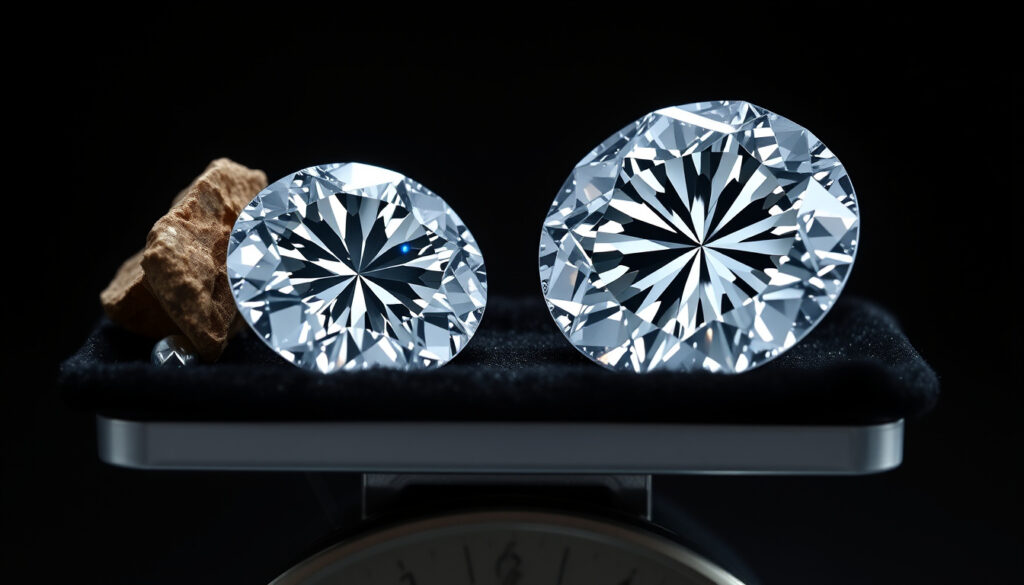
Are Lab Grown Diamonds Real? Truth on Authenticity & Value
The answer to “are lab grown diamonds real” hinges on an official ruling by the United States’ primary consumer watchdog — and that ruling is unambiguous. In 2018, the Federal Trade Commission revised its Jewelry Guides, making a change that reverberated across the entire diamond industry. That decision settled the authenticity question — but introduced a new set of questions about value, transparency, and what buyers should actually know before purchase.
Chemically identical to mined diamonds: Yes ·
FTC recognition as real diamonds: 100% ·
Visually indistinguishable by eye: True ·
Typical cost savings vs mined: 30-50% cheaper ·
Jeweler detection without tools: Impossible
Quick snapshot
- Lab-grown diamonds are chemically, optically, and physically identical to mined diamonds (Haejin Jewelry)
- The FTC classifies them as real diamonds, requiring mandatory disclosure of origin (FTC Official Guidance)
- Major grading bodies (GIA, IGI) grade them identically to natural stones (JAE’s Jewelers)
- How resale values will stabilize as market saturation increases
- Full lifecycle environmental impact accounting (energy use in production)
- Long-term consumer perception shifts in luxury market segments
- Continued FTC enforcement of disclosure mandates for online and retail sellers
- Growing luxury brand adoption as ethical positioning matures
- Price convergence pressure as production capacity expands globally
- Lab-grown diamonds cost 30–50% less than mined equivalents for the same quality grade
- Insist on GIA or IGI grading reports that explicitly confirm lab origin
- Resale value remains a genuine consideration before purchase decision
The table below distills the technical specifications and market factors that define lab-grown diamonds against their natural counterparts.
| Factor | Detail |
|---|---|
| Formation method | HPHT (High Pressure High Temperature) or CVD (Chemical Vapor Deposition) lab processes |
| Certification bodies | GIA, IGI grade lab-grown diamonds as real with explicit origin disclosure |
| Average price per carat | 20-40% of comparable mined diamond |
| Detection technology | DiamondView imaging, spectroscopy — requires specialized equipment |
Are lab-grown diamonds considered fake?
Chemical and physical properties
Lab-grown diamonds are chemically identical to natural diamonds — both are pure carbon crystals with the same atomic structure, hardness (10 on the Mohs scale), and optical properties. The Federal Trade Commission’s official guidance classifies lab-grown diamonds as real diamonds, requiring proper disclosure but confirming their authenticity in composition.
The only meaningful difference is origin: natural diamonds form deep underground over billions of years, while lab-grown diamonds are created in controlled environments using HPHT or CVD methods. According to Haejin Jewelry, “lab-grown diamonds are chemically, optically, physically identical to natural mined diamonds; difference is only origin.”
FTC official stance
In 2018, the FTC revised its Jewelry Guides, removing the word “natural” from its diamond definition. The FTC Official Guidance now recognizes lab-grown diamonds as real diamonds with mandatory disclosure requirements.
The FTC’s business guidance blog specifies that lab-grown diamonds must be disclosed as “laboratory-grown,” “laboratory-created,” or “[manufacturer]-created” immediately preceding “diamond” with equal conspicuousness. The word “synthetic” is no longer recommended due to consumer confusion with “fake,” but it remains permitted if not deceptive.
Lab-grown diamonds cannot be called “real,” “genuine,” “natural,” or “precious” without qualification that makes their origin clear. According to VDB App (diamond industry compliance resource), unqualified use of “diamond” for lab-grown stones violates FTC guidelines because it implies the stone was mined.
For buyers: the FTC’s ruling means lab-grown diamonds carry official authenticity — they are not fake, imitation, or simulated gems. The mandatory disclosure requirement protects consumers from accidental deception while confirming that lab-grown diamonds meet the same material standard as mined stones.
What is the downside to lab-grown diamonds?
Resale value concerns
The most commonly cited disadvantage of lab-grown diamonds is their resale value. Industry analysis indicates that lab-grown diamonds typically resell at significantly lower percentages of their original purchase price compared to natural diamonds, which traditionally hold resale value better.
This dynamic is still evolving as the market matures. Buyers considering lab-grown diamonds should view the purchase as final rather than as an investment vehicle, and should factor this into their decision-making process.
Perceived prestige
Some consumers and jewelry industry professionals continue to associate natural diamonds with higher value due to their rarity and geological history. However, this perception is shifting as more consumers prioritize ethical sourcing and cost efficiency over traditional prestige markers.
The broader diamond market is adapting to accommodate both preferences, with major retailers now offering lab-grown options alongside natural stones.
The resale value gap is real but not static. Early market data showed steep depreciation, but as lab-grown diamonds become normalized, some analysts expect resale conditions to stabilize — though likely not to match natural diamond retention rates.
Can a jeweller tell a lab grown diamond?
Detection methods
Professional jewelers detect lab-grown vs. natural diamonds using specialized equipment, not observation. Detection methods include DiamondView imaging and spectroscopy analysis — tools that reveal growth patterns and inclusions invisible to the naked eye, according to MID Diamonds.
Eye vs. equipment
The FTC’s position is clear: lab-grown and natural diamonds are visually indistinguishable without advanced testing. Jewelers cannot determine origin by eye or with standard jewelry tools because the stones share identical optical properties.
Detection differences come down to inclusions: natural diamonds typically show irregular organic patterns, while lab-grown diamonds may display metallic flux or growth lines visible only under magnification with specialized lighting. Without these tools and training, even experienced jewelers cannot reliably distinguish between the two.
For buyers: this means any diamond purchase should include a grading report from GIA or IGI that explicitly confirms origin. If a seller cannot or will not provide this documentation, independent verification should be required before purchase.
Do rich people buy lab diamonds?
Celebrity and wealthy adoption
High-net-worth individuals and celebrities have publicly embraced lab-grown diamonds, challenging the assumption that only natural diamonds appeal to affluent buyers. Several wealthy individuals have been noted in media coverage for choosing lab-grown options, often citing ethical sourcing and cost efficiency as motivating factors.
The pattern suggests a demographic shift: wealthy buyers are not a monolithic group when it comes to diamond preferences, and ethical considerations increasingly influence purchasing decisions among this segment.
Motivations
The motivations behind wealthy adoption of lab-grown diamonds include ethical considerations (avoiding conflict diamond associations), cost efficiency (same quality at lower price), and environmental positioning. Social media evidence shows prominent figures wearing lab-grown pieces, normalizing the choice across income brackets.
The luxury market’s reception of lab-grown diamonds remains stratified. Some high-end jewelers and brands continue to focus exclusively on natural stones, while others have launched lab-grown lines. Watch for whether established luxury houses expand their lab-grown offerings — this will signal broader market acceptance.
Are lab grown diamonds cheaper?
Lab-grown diamonds typically cost 30–50% less than comparable natural diamonds — sometimes more. This price difference reflects production efficiency rather than quality compromise, according to Haejin Jewelry (diamond retail analysis). The same quality grade that costs $10,000 in a natural diamond might retail at $4,000–$6,000 in a lab-grown equivalent.
Three factors drive this pricing gap: mining infrastructure costs, supply chain complexity, and the scalability of laboratory production. Natural diamonds require expensive extraction operations, global distribution networks, and the geological rarity of gem-quality stones. Lab-grown production eliminates most of these cost drivers by manufacturing in controlled facilities with predictable yields.
| Factor | Lab-Grown Diamonds | Natural Diamonds |
|---|---|---|
| Formation time | Hours to weeks (HPHT/CVD) | 1–3 billion years |
| Price per carat (comparable quality) | 20-40% of natural equivalent | Market-rate premium |
| Resale value retention | Generally lower | Historically holds better value |
| Ethical sourcing clarity | Full traceability | Requires certification |
| Environmental footprint | Lower (controlled production) | Higher (mining impact) |
For buyers prioritizing size and quality over investment potential, the cost advantage is substantial and immediate. A buyer who would spend $8,000 on a natural diamond can access a comparable lab-grown stone at $3,000–$5,000 — or redirect the savings toward a larger stone or different priorities.
Upsides
- Cost 30–50% less than mined diamonds, making quality stones accessible to a broader market
- Full traceability and ethical sourcing without conflict diamond concerns
- Chemically and physically identical to mined diamonds per FTC and major grading bodies
- Faster production (weeks vs. billions of years) enables greater design flexibility
Downsides
- Generally lower resale value compared to natural diamonds
- Some consumers and jewelers still associate natural stones with higher prestige
- Environmental benefits of lab production are debated and depend on energy sources used
- Long-term market value remains uncertain as the industry matures
Clarity on what we know
What experts say
“The Federal Trade Commission revised its Jewelry Guides in 2018, removing ‘natural’ from the diamond definition — lab-grown diamonds are classified as real diamonds, chemically and optically identical to mined ones.”
— Federal Trade Commission (U.S. regulatory body), Official Jewelry Guidance
“Lab-grown diamonds are chemically, optically, physically identical to natural mined diamonds. The difference is only origin.”
— Haejin Jewelry (diamond retail and education resource)
“Lab-grown diamonds display metallic flux or growth lines that differ from the irregular inclusions in natural diamonds — but detection requires specialized equipment like DiamondView, not observation.”
— MID Diamonds (diamond industry analysis)
Summary
The question “are lab grown diamonds real” has a definitive answer from the United States’ primary consumer regulator: yes, they are real diamonds — chemically, optically, and legally. The FTC’s 2018 ruling removed the word “natural” from its diamond definition, confirming that lab-grown stones meet the same material standard as mined diamonds. The catch is in the details: mandatory disclosure requirements ensure consumers know what they’re buying, but resale value and traditional prestige perceptions remain genuine considerations. For buyers in the U.S. market, the decision between lab-grown and natural diamonds is no longer about authenticity — it’s about priorities, budget allocation, and how you weigh cost efficiency against long-term value retention.
Related reading: Lab-tested picks
Frequently asked questions
Are natural diamonds real?
Natural diamonds are real diamonds — but the FTC’s 2018 ruling means lab-grown diamonds are also real diamonds, provided they meet the same material composition and are properly disclosed at point of sale. The distinction is origin, not authenticity.
Are lab-grown diamonds expensive?
Lab-grown diamonds are typically 30–50% less expensive than comparable natural diamonds. They are not inexpensive in absolute terms — a high-quality lab-grown diamond can still cost thousands of dollars — but they cost significantly less than mined alternatives of the same quality grade.
What are disadvantages of lab-grown diamonds?
The main disadvantages are lower resale value, some perception of reduced prestige compared to natural diamonds, ongoing debate about production environmental impacts, and the fact that the market is still maturing — meaning long-term value conditions remain uncertain.
Are Tiffany diamonds mined or lab grown?
As of this writing, Tiffany & Co. continues to offer only natural diamonds. This reflects a prestige positioning strategy rather than a quality assessment — lab-grown diamonds meet the same grading standards as natural stones, but Tiffany has chosen to maintain a natural-only offering.
Are lab grown diamonds real diamonds worth it?
Whether lab-grown diamonds are “worth it” depends on your priorities. If you value ethical sourcing, cost efficiency, and identical visual quality at a lower price, they are worth considering. If resale value retention and traditional prestige matter more to you, natural diamonds may be the better choice.
What is a poor man’s diamond called?
Lab-grown diamonds are not “poor man’s diamonds” — they are real diamonds at lower price points. The term “poor man’s diamond” typically refers to simulants like cubic zirconia, which are not diamonds at all. Lab-grown diamonds are genuine diamonds produced through different methods than mining.
Can jewelers distinguish lab-grown diamonds?
Jewelers cannot distinguish lab-grown from natural diamonds by eye or with standard tools. Detection requires specialized equipment such as DiamondView imaging or spectroscopy analysis. The only reliable identification method is checking the grading report — GIA and IGI reports explicitly indicate lab origin.
More related posts
 Trade Me Dogs to Adopt: Complete Guide for NZ & Ireland
 PAW Patrol: The Movie Poster – Where to Buy & Value
 IND vs AUS ODI 2025: Schedule, Venues, Live Streaming & More
 Houses for Rent Gisborne: Find Your Perfect Rental Home
 Trade Me Horses for Sale: Costs, Breeds & Beginner Tips
 NZD to GBP Exchange Rate: Live, Forecast & Transfer Advice
 Best Face Sunscreen for Men: Dermatologist-Tested Picks
 Te Anau to Queenstown: Bus, Drive & Which Base Is Best
