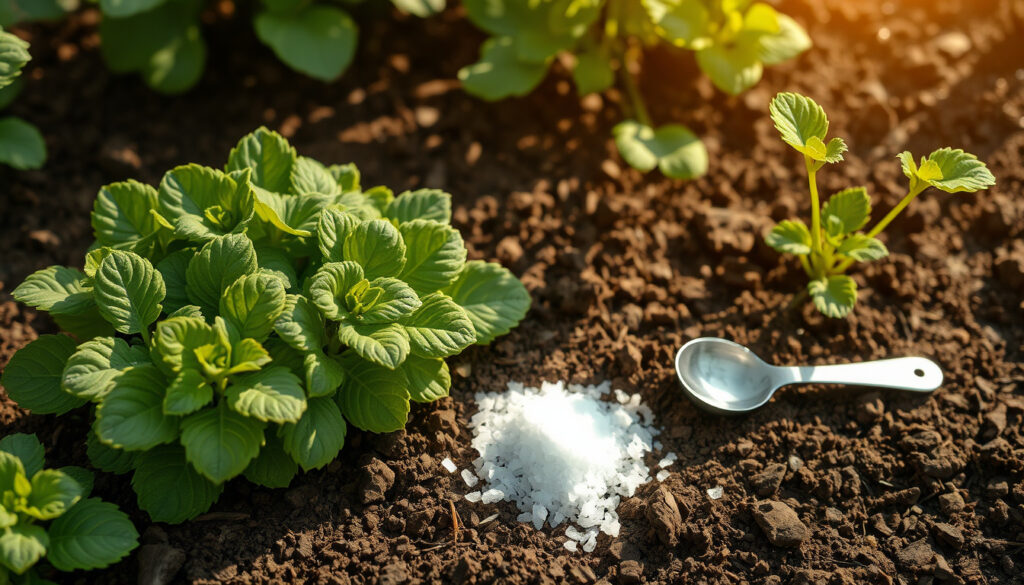
Epsom Salt for Plants: Which Benefit and Dosage Guide
If you’ve ever scrolled past a garden tip promising bigger blooms with a sprinkle of Epsom salt, you’re not alone—millions of gardeners have tried it. But the truth is more selective: Epsom salt (magnesium sulfate) works wonders for specific plants that genuinely lack magnesium or sulfur, yet it can backfire when used as a universal tonic. This guide walks you through which plants actually benefit, the exact dosage per gallon, and how to apply it without harming your soil.
Magnesium sulfate content: ~10% Mg, 13% S · Common dosage frequency: Every 2–4 weeks · Typical dilution: 1 tbsp per gallon · Primary responders: Tomatoes, peppers, roses, potatoes, citrus
Quick snapshot
- Tomatoes, peppers, roses, citrus, and potatoes are the most documented responders (House Beautiful (home & garden publication))
- Over-application can cause leaf scorch and salt buildup (Gardening Know How (gardening resource))
- Whether Epsom salt improves fruit or bloom yield when soil magnesium is already adequate
- Long-term effects of regular Epsom salt use on soil microbial health
- Whether Epsom salt improves seed germination rates
- Apply every 2–4 weeks during active growing season (DailyMed (NIH drug label))
- Roses: dose per foot of plant height every two weeks (House Beautiful)
- Conduct a soil test before your first application (Washington State University Extension (PDF guide))
- Choose between foliar spray or soil drench based on plant needs (Washington State University Extension (PDF guide))
Five key specs, one takeaway: Epsom salt is a simple mineral supplement, not a complete fertilizer, and its neutral pH means it won’t alter soil acidity.
| Specification | Value |
|---|---|
| Chemical composition | Magnesium sulfate heptahydrate (MgSO₄·7H₂O) |
| Nutrient elements | 10% magnesium (Mg), 13% sulfur (S) |
| Recommended dilution | 1 tablespoon per gallon of water (4 mL per liter) |
| Application frequency | Every 2–4 weeks during active growth |
| pH effect on soil | Neutral, does not significantly alter soil pH |
| Primary responders | Tomatoes, peppers, roses, potatoes, citrus |
What plants should I put Epsom salt on?
Tomatoes, peppers, and nightshades
- Tomatoes and peppers often respond with greener leaves and reduced blossom-end rot when magnesium is deficient (House Beautiful).
- Standard dose: 1 tablespoon per gallon of water every two to four weeks during the growing season (Gardening Know How).
- For transplants, some guidance recommends a one-time soil drench at planting (Sea Salt (gardening guide)).
Roses and flowering shrubs
- Roses are known for brighter blooms and stronger stems when treated with Epsom salt. (Gardening Know How)
- Apply 1 tablespoon per foot of plant height per plant, every two weeks (House Beautiful). Alternatively, a product label suggests 1 teaspoon per foot of height every two weeks (DailyMed).
- Soak unplanted rose bushes in half a cup of Epsom salt per gallon of water before planting (Sea Salt).
Citrus trees and other fruits
- Citrus trees often show magnesium deficiency as yellowing between leaf veins; Epsom salt can correct this. (Gardening Know How)
- For trees, spread 2 tablespoons per 9 square feet over the root zone three times annually (House Beautiful).
The pattern: These plants have a relatively high magnesium demand, but supplementation is most beneficial when a soil test or visible deficiency confirms the need.
Which plants don’t like Epsom salts?
Plants that prefer acidic soil
- Evergreens, azaleas, and rhododendrons can be treated with 1 tablespoon per 9 square feet every two to four weeks (DailyMed), but excessive magnesium in acidic soils can interfere with micronutrient uptake.
- Blueberries and other acid-lovers may suffer if Epsom salt raises the pH of their already acidic soil.
Succulents and cacti
- These plants are adapted to low-nutrient environments; excess salts can cause root burn and desiccation. (Gardening Know How)
- No reliable dosage data exists for succulents—better to avoid.
Beans and leafy greens
- Legumes fix their own nitrogen and generally require less magnesium supplementation (House Beautiful).
- Leafy greens like spinach can accumulate magnesium but show no yield improvement in healthy soil.
The catch: Over-application on sensitive plants can lock out other nutrients and create a salty root zone, doing more harm than no treatment at all.
How much Epsom salt per litre of water for plants?
Standard dilution for foliar spray
- General foliar spray: 2 tablespoons per gallon of water (about 8 mL per litre), applied once or twice monthly. (Gardening Know How)
- For roses: 1 tablespoon per gallon per foot of shrub height. (Gardening Know How)
Soil drench dosage guidelines
- Standard drench: 1 tablespoon per gallon of water (4 mL per litre) every two to four weeks (DailyMed).
- Houseplants: 1 teaspoon per gallon every one to four weeks (DailyMed).
- Some product instructions recommend 2 tablespoons per gallon monthly for houseplants, indicating variability in published guidance (Washington State University Extension).
Signs of over-application
- Leaf scorch (browning at edges) and stunted growth are the first visible signs. (Gardening Know How)
- Salt accumulation in soil can be detected by a white crust on the surface or a decline in plant vigor.
Why this matters: Dosage varies widely by plant and method; the safest starting point is 1 tablespoon per gallon, and never exceed a monthly cadence for soil drenches.
A single tablespoon per gallon is the most commonly cited rate across multiple sources, but the real key is to adjust based on plant size and soil test results—not a one-size-fits-all formula.
Is Epsom salt necessary for plants?
When Epsom salt is essential
- Only when a soil test or visible deficiency (interveinal chlorosis) confirms low magnesium or sulfur. (Gardening Know How)
- For tomatoes, blossom-end rot is often associated with calcium imbalance, not magnesium; Epsom salt won’t fix it.
When soil already has enough magnesium
- Most garden soils contain adequate magnesium; adding more can create a nutrient imbalance (Washington State University Extension).
- A professional soil test is the only reliable way to know if supplementation is needed.
Alternatives to Epsom salt
- Dolomitic lime provides both magnesium and calcium while raising soil pH.
- Magnesium sulfate is available in commercial fertilizers with balanced N-P-K ratios.
- Compost and organic matter supply trace minerals without salt risks.
The trade-off: Epsom salt is a quick fix for a specific deficiency, but using it without a diagnosis is wasteful and potentially harmful to soil biology.
How to Use Epsom Salt for Plants (Step-by-Step)
Foliar spray method
- Dissolve 2 tablespoons of Epsom salt in 1 gallon of warm water. (Gardening Know How)
- Pour into a spray bottle or garden sprayer.
- Apply early morning or late evening to avoid leaf burn from sunlight.
- Mist all leaf surfaces until they drip; repeat monthly.
Soil drench method
- Mix 1 tablespoon of Epsom salt per gallon of water (4 mL per litre) (DailyMed).
- Water the base of each plant with the solution until the soil is moist.
- Repeat every two to four weeks during the growing season.
- For houseplants, reduce to 1 teaspoon per gallon and apply monthly.
Granular application at planting
- Sprinkle about 2 tablespoons of Epsom salt around the base of each transplant (DailyMed).
- Gently work it into the top 2–3 inches of soil.
- Water thoroughly to help dissolve the crystals.
- Do not apply more than once at planting; additional doses should be liquid.
What this means: The method you choose depends on how quickly the plant needs magnesium—foliar spray acts fastest, while a soil drench provides more sustained uptake.
Never substitute Epsom salt for a balanced fertilizer. Plants need nitrogen, phosphorus, and potassium in larger quantities; Epsom salt only supplies magnesium and sulfur.
Confirmed facts
- Epsom salt provides supplemental magnesium and sulfur to plants (Gardening Know How).
- Magnesium deficiency symptoms include interveinal chlorosis (yellowing between leaf veins) (House Beautiful).
- Over-application can cause leaf scorch and salt accumulation in soil (Gardening Know How).
What’s unclear
- Whether Epsom salt improves fruit or flower yield in the absence of a magnesium deficiency.
- Long-term soil health effects of regular Epsom salt use, especially on microbial activity.
“A general dilution of 1 tablespoon per gallon of water works for most garden plants.”
— Gardening Know How (gardening resource)
“For roses, apply 1 tablespoon per foot of plant height every two weeks during the growing season.”
— House Beautiful (home & garden publication)
For gardeners in New Zealand and similar climates, the choice is clear: reserve Epsom salt for plants that show a verified magnesium shortage, or risk upsetting the natural nutrient balance of your soil. A simple soil test—costing about the same as a bag of Epsom salt—is the only way to know for sure.
brownsvillefarmersmarket.com, overgrow.com, youtube.com, youtube.com, dailymed.nlm.nih.gov, youtube.com, youtube.com, youtube.com
For a detailed breakdown of which plants respond best to magnesium sulfate, see this guide on Epsom salt benefits for plants.
Frequently asked questions
Can Epsom salt be used on indoor houseplants?
Yes, but at a lower dose: 1 teaspoon per gallon of water every one to four weeks (DailyMed).
Does Epsom salt help with seed germination?
There is no strong evidence that Epsom salt improves germination rates for most seeds. Stick to a quality seed-starting mix.
Is Epsom salt organic?
Epsom salt is a naturally occurring mineral and is generally accepted for organic gardening, though it is not a listed organic input under all certification programs.
Can I mix Epsom salt with regular fertilizer?
Yes, but do not exceed total salt levels. Epsom salt should supplement, not replace, a balanced NPK fertilizer.
How often should I apply Epsom salt to my garden?
Every two to four weeks during the active growing season is the common recommendation. Reduce frequency in cooler months.
Will Epsom salt work for root rot?
No. Root rot is caused by fungal pathogens, not nutrient deficiency. Improving drainage is the proper solution.
Does Epsom salt repel pests like slugs?
Some gardeners claim it deters slugs, but no scientific studies confirm this. It may irritate soft-bodied pests temporarily.
For more household tips, see our guide on How to Remove Household Odors. Also, check out our Chilli Con Carne Recipe for a plant-based meal idea.
More related posts
 Spanish Course Near Me: Dublin Costs, Duration & Options
 Victoria School Holidays 2025: Complete Term Dates & Breaks
 Free Things to Do in Auckland: 20+ No-Cost Activities & Tips
 Air New Zealand Customer Service: Phone Numbers, Live Chat & More
 The Summer I Turned Pretty Season 3: Episodes & Ending
 New World Mount Maunganui: Prices, Hours, Local Ownership Guide
 Air NZ Boeing 777-300ER – Seat Maps and Cabin Guide
 Cat Eye Nail Polish: Application Tips, How It Works & MRI Safety
