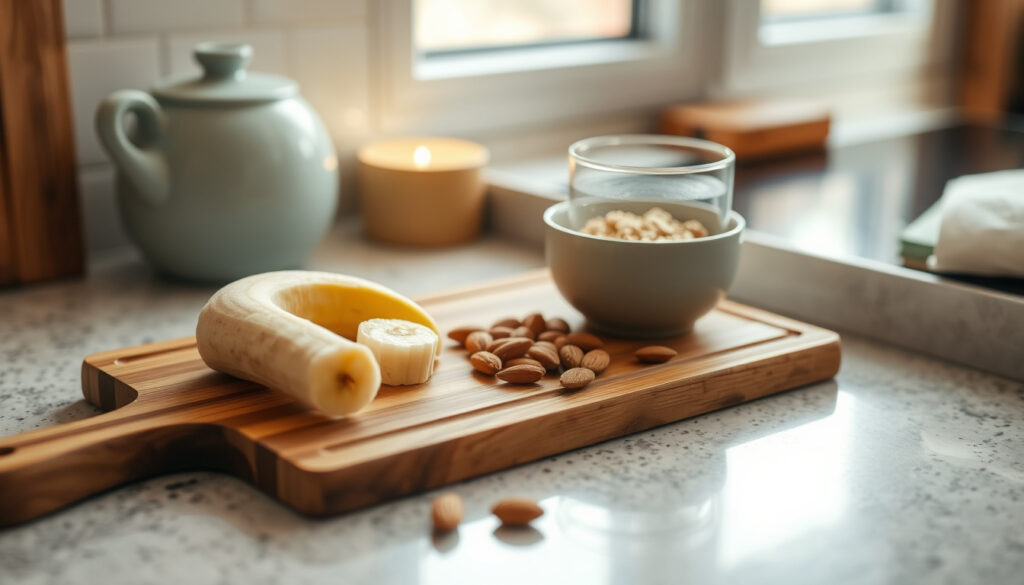
What Is the Best Pre-Workout Food? A Complete Guide
You’ve probably stood in front of the kitchen counter, fork in hand, wondering whether that banana is enough or if you need something heartier. The answer depends on your workout type, your goals, and how much time you have, but the American Heart Association suggests eating a piece of fruit like an apple or banana as little as 5 to 10 minutes before exercise if you’re short on time American Heart Association (cardiology authority).
Carbohydrate intake before workout: 30–60 grams ·
Protein intake before workout: 15–20 grams ·
Optimal pre-workout window: 30–60 minutes before ·
Hydration recommendation: 17–20 oz of water 2–3 hours prior
Quick snapshot
- Higher protein pre-workout (20g+) with moderate carbs (Platinum Fitness Gyms (fitness training resource))
- Example: Greek yogurt with berries and granola (Platinum Fitness Gyms (fitness training resource))
- Timing: 1–2 hours before strength training (Platinum Fitness Gyms (fitness training resource))
- Lower calorie, high-fiber options to promote satiety
- Example: Apple with almond butter or a small smoothie
- Avoid excess sugar; focus on slow-digesting carbs
- Quick-digesting carbs for immediate energy (American Heart Association)
- Example: Banana or sports gel 30 minutes before
- Hydration with electrolytes if sweating heavily
- Light snack to avoid stomach discomfort
- Example: Half a banana or small toast with honey
- Wake up 20–30 minutes early to eat and digest
Five key facts, one pattern: the closer you get to exercise, the lighter and more carbohydrate-focused your fuel should be.
| Factor | Recommendation |
|---|---|
| Ideal Pre-Workout Window | 30–60 minutes before exercise |
| Carbohydrate Needs | 30–60 grams for moderate workouts |
| Protein Needs | 15–20 grams for muscle repair |
| Hydration | 17–20 oz of water 2–3 hours prior |
| Common Mistake | Eating high-fat or high-fiber foods right before |
Which food is best for pre-workout?
What is the best pre-workout meal to have?
- Top pre-workout foods include bananas, oats, whole-grain toast, yogurt, and smoothies. The Academy of Nutrition and Dietetics recommends a combination of protein and carbs one to four hours before exercise EatRight.org (professional dietetics academy).
- Ideal macronutrient balance: focus on carbs for energy and moderate protein for muscle preservation, while keeping fat low. NASM (National Academy of Sports Medicine) advises that most pre-workout calories should come from carbohydrates with minimal fat and fiber NASM Blog (sports medicine certification body).
- Carbohydrates improve exercise performance; adding 15–25 grams of protein may reduce muscle breakdown during training Platinum Fitness Gyms (fitness training resource).
What is the best pre-workout snack?
- For a quick snack, the American Heart Association suggests fresh fruit like an apple or banana if you have only 5–10 minutes.
- SportMedBC recommends liquid meals such as fruit smoothies or meal replacement drinks when eating one hour before or if you have a nervous stomach SportMedBC (sports medicine group).
- Portable snacks like a banana with peanut butter or a small bowl of oatmeal work well 30–60 minutes before training.
The pattern: simpler food closer to training gives you energy without the weight.
What should I eat 30 minutes before a workout?
What to have 1 hour before a workout?
- Mayo Clinic states that small meals or snacks should be eaten 1 to 3 hours before exercise; for a 1-hour window, a snack of 300–400 calories works Mayo Clinic (leading medical center).
- Examples: a banana with a tablespoon of nut butter, a small smoothie with fruit and yogurt, or a slice of whole-grain toast with honey.
- Avoid high-fat and high-fiber foods that slow digestion and may cause discomfort, as recommended by SportMedBC SportMedBC (sports medicine group).
How soon before exercise should you eat?
- The Academy of Nutrition and Dietetics advises eating one to four hours before, depending on tolerance EatRight.org (professional dietetics academy).
- NASM recommends 2 to 4 hours for a full meal; if lead time is short, a smaller meal of less than 400 calories about an hour before suffices NASM Blog (sports medicine certification body).
- For 30 minutes before, stick with easily digestible carbs like a banana or a sports gel — high-intensity workouts may need 30–90 grams of carbs per hour, per the American Heart Association.
The implication: eating too close to a workout, or eating the wrong foods, can leave you feeling sluggish.
What to eat before and after a workout, based on your workout type?
Best pre-workout food for endurance vs strength training
- Endurance athletes benefit from higher carb intake: the American Heart Association suggests 30–90 grams per hour for long, high-intensity efforts.
- Strength training requires a mix of carbs and protein: Healthline notes a complete meal of carbs, protein, and fat within 2–3 hours, or a smaller carb-and-protein meal 1–1.5 hours before Healthline (health information publisher).
- For HIIT, quick-digesting carbs like a banana or a handful of dates 30 minutes before can spike energy without bloat.
What to eat before HIIT workouts
- HIIT demands rapid energy; NASM recommends about 1 gram of carbohydrate per kilogram of body weight one hour before NASM Blog (sports medicine certification body).
- Easily digestible carb sources: banana, white rice cakes, or a sports drink.
- Post-workout, a protein-rich snack (20–25g) supports recovery and muscle repair.
What this means: tailoring your pre-workout fuel to the specific demands of your session is key to maximizing performance.
Is 2 bananas good pre-workout?
How many bananas before workout?
- A medium banana provides about 27g of carbs and 105 calories, plus potassium for muscle function. Two bananas deliver 54g of carbs, which fits the 30–60g range for moderate workouts.
- Mayo Clinic generally suggests one banana as a quick pre-workout snack; two may be fine for longer sessions Mayo Clinic (leading medical center).
- Potential downside: too much fiber or sugar can cause fullness or digestive discomfort for some people close to exercise.
Are bananas better than other fruits?
- Bananas are convenient and rich in potassium, but apples, dates, and berries also offer carbs and antioxidants. The American Heart Association suggests any fresh fruit works when time is tight.
- Dates provide a denser carb source with fewer grams of fiber, ideal for quick energy.
- Berries have less sugar per volume but are lower in total carbs — better as part of a smoothie.
The catch: personal tolerance to fiber and sugar varies, so test your banana intake during training, not race day.
What is the 3-3-3 rule gym?
How does the 3-3-3 rule apply to pre-workout nutrition?
- The 3-3-3 rule is an informal training method (3 exercises, 3 sets, 3 reps) often used by beginners to gauge strength and conditioning. Its connection to nutrition lies in timing: eat a balanced meal 3 hours before, a light snack 30 minutes before, and hydrate 30 minutes out.
- While not evidence-based, the concept aligns with general guidelines: Mayo Clinic advises larger meals 3–4 hours before and smaller snacks 1–3 hours before Mayo Clinic (leading medical center).
- Practical application: eat a carb-rich snack 30 minutes before a 3-3-3 session to ensure energy for the short, intense work.
What are the three components of the rule?
- The rule typically refers to 3 exercises, 3 sets, 3 reps — a simple full-body strength circuit. For pre-workout fuel, focus on the three timing windows: meal (2–3 hours), snack (30–60 min), and hydration.
- SportMedBC recommends carbohydrate-rich foods like bread, grains, and fruit for these windows SportMedBC (sports medicine group).
The pattern: the 3-3-3 rule’s emphasis on a 30-minute window is a useful trigger for ensuring you have readily available energy.
Pre-workout meal comparison: quick snack vs full meal
Two approaches, one key difference: time to digestion. Here’s how they compare for different goals.
| Factor | Quick Snack (30 min before) | Full Meal (2–3 hours before) |
|---|---|---|
| Carbohydrate content | 15–30g (simple carbs) | 30–60g (complex + simple) |
| Protein content | 0–10g | 15–25g |
| Fat content | Low (<5g) | Low to moderate (<10g) |
| Calories | 100–200 | 300–500 |
| Best for | Morning workouts, HIIT, quick sessions | Endurance, long strength sessions |
| Risk of GI discomfort | Low | Moderate if too close to exercise |
The pattern: the closer you eat to exercise, the simpler and lighter your food should be. The catch: a full meal offers more sustained energy, but only if you give it enough time to digest.
Pros and cons of pre-workout eating
Upsides
- Boosts energy and workout performance (confirmed by multiple tier-1 sources)
- Helps preserve muscle mass when protein is included
- Prevents low blood sugar and dizziness during exercise
- Improves focus and mental readiness
Downsides
- Risk of gastrointestinal discomfort if timing is off
- Eating too much can cause sluggishness
- Wrong food choices (high fat/fiber) can impair digestion
- Extra calories may work against weight loss goals if not accounted for
The implication: understanding these trade-offs helps you choose the right strategy for your body and your workout.
Steps to optimize your pre-workout nutrition
- Determine your workout start time. Count backward 2–3 hours for a full meal or 30–60 minutes for a snack.
- Choose your carb source. For quick energy, pick a banana, apple, or toast. For sustained energy, pick oatmeal or whole grains.
- Add protein. 15–20g helps with muscle repair; Greek yogurt, a scoop of protein powder, or a chicken breast work well.
- Hydrate. Drink 17–20 oz of water 2–3 hours before, and another 8 oz 30 minutes prior.
- Test and adjust. Try different foods and timings during low-stakes workouts. Avoid new foods on competition or max lift days.
What this means: following these steps consistently will help you establish a reliable pre-workout routine.
What we know and what’s still uncertain
Confirmed facts
- Carbohydrates improve exercise performance (American Heart Association (cardiology authority))
- High-fat meals delay gastric emptying and can cause discomfort (American Heart Association (cardiology authority))
- Consuming protein pre-workout aids muscle protein synthesis (Platinum Fitness Gyms (fitness training resource))
What’s unclear
- Exact optimal timing varies by individual metabolism
- Ideal banana quantity (one vs two) depends on workout intensity and duration
- The optimal amount of water to drink during exercise varies by sweat rate and workout intensity
The pattern: separating confirmed facts from uncertainties helps you focus on what’s known to work while being aware of individual variations.
Expert perspectives
“Eat a complete meal 2–3 hours before exercise or a smaller snack 1–1.5 hours before.”
— Healthline Registered Dietitian Healthline (health information publisher)
If you’re looking for options, you can find information on ${ear wax removal near me}. ear wax removal near me
“High-fiber carbs like porridge release energy slowly, ideal for longer workouts.”
— BBC Good Food nutritionist BBC Good Food (editorial food resource)
What this means: expert advice consistently points to the same core principles of timing and macronutrient balance.
Summary: What this means for your training
Pre-workout nutrition isn’t one-size-fits-all. The evidence points to a simple formula: carbs for energy, moderate protein for muscle, and minimal fat and fiber when time is short. The 3-3-3 rule, while informal, reinforces the importance of the 30-minute window. For New Zealand gym-goers juggling early morning sessions or post-work training, the choice is clear: keep a banana or a small smoothie on hand, and give yourself at least 30 minutes to digest before you lift, run, or HIIT. This approach ensures stable energy levels and avoids gastrointestinal distress.
tonum.com, issaonline.com, jifsan.umd.edu, foodguides.com, cleaneatzkitchen.com
For those looking to optimize their pre-exercise nutrition, it’s useful to consider best pre-workout foods and timing to ensure you’re fueling your body effectively.
Frequently asked questions
Can I work out on an empty stomach?
It depends. Some people perform fine, especially for low-intensity workouts. However, for moderate to high intensity, a light snack can improve performance and prevent low blood sugar. Mayo Clinic (leading medical center) notes that eating even a small snack can help.
How long after eating should I work out?
General guidelines: wait 2–3 hours after a large meal, 1–1.5 hours after a small meal, and 30 minutes after a light snack. American Heart Association (cardiology authority) recommends 2 hours for a full meal.
What is the best pre-workout drink?
Water is essential. For longer workouts, a sports drink with electrolytes and carbs (30–60g per hour) can help. The American Heart Association advises carb intake for high-intensity sessions.
Is it okay to eat a heavy meal before a workout?
No. High-fat and high-fiber meals can cause bloating and discomfort. SportMedBC (sports medicine group) advises avoiding them before exercise.
What are the best pre-workout foods for energy?
Bananas, oats, whole-grain toast, yogurt, and smoothies are top choices. They provide easily digestible carbs and moderate protein.
Do I need to eat before a light workout?
If the workout is under 30 minutes and low intensity, you may not need to eat. However, if you feel hungry or lightheaded, a small snack can help.
What should I eat if I have only 10 minutes before the gym?
Choose a quick source of simple carbs: a banana, a small apple, or a handful of raisins. The American Heart Association suggests fruit as a go-to.
Related reading
- How to Track Calories — complement your pre-workout fuel with smart tracking.
- Normal Cholesterol Levels NZ — understand how diet impacts heart health alongside exercise.
More related posts
 Houses for Sale Levin – Current Listings Prices Trends
 Ginny & Georgia Season 3: Release, Cast & Recap
 Out of Office Message – Templates and Best Practices
 Mouth Tape Sleeping: Safety Risks and Dentist Warnings
 Blues vs Moana Pasifika – 43-7 Win, Red Card and Tries
 Houses for Sale in Auckland | Under $500k to $800k Listings
 Galaxy A21s to Buy: Prices, Reviews & Ireland Deals
 Best Ad Blocker Chrome Extension: Guide for Desktop & Mobile
