How to Season a Wok for the First Time: Complete Guide
If you’ve just brought home a carbon steel wok, resist the urge to start cooking immediately. That bare metal needs a proper seasoning first — a process that builds a natural non-stick surface and keeps your pan from rusting. It takes about an hour, and once you’ve done it, your wok will improve with every use.
Standard seasoning steps: Scrub, burn/heat, oil · Key process from experts: Wash, dry, heat, oil, smoke · Most viewed tutorial: 200M+ views · Final step count: 3 easy steps
Quick snapshot
- Scrub removes factory coating (CJ Eats Recipes)
- Heat creates oxide base (CJ Eats Recipes)
- Oil polymerizes into patina (Woks of Love)
- Initial seasoning: ~60 minutes prep time (CJ Eats Recipes)
- Blueing process: ~10 minutes of high heat (CJ Eats Recipes)
- Re-season after each use to build patina (CJ Eats Recipes)
- Seasoning improves with cooking frequency (Woks of Love)
The table below outlines each step of the seasoning process, from initial scrubbing through patina buildup, with supporting details for each stage.
| Step | Action | Details |
|---|---|---|
| 1 | Scrub with hot water and steel wool | Removes factory protective coating |
| 2 | Heat until blue oxidation color | 10 minutes on high heat minimum |
| 3 | Apply thin oil layer | 1 tablespoon, wipe excess |
| 4 | Smoke and polymerize | 3-5 minutes until dry |
| 5 | Repeat for patina buildup | Multiple thin layers recommended |
How do you season a wok for the first time?
The first seasoning transforms raw carbon steel into a cooking surface that actually works with you. Seasoning creates a patina by bonding a thin layer of oil to steel through high heat, transforming the surface to prevent sticking and stop iron from rusting (Woks of Love).
Scrub the wok
Start by thoroughly washing the wok with hot water and mild dish detergent to remove factory oil and residue (CJ Eats Recipes). Use a steel wool scrubber for this initial clean — you’re stripping away the protective coating that manufacturers apply to keep the steel from corroding before purchase.
Heat and burn
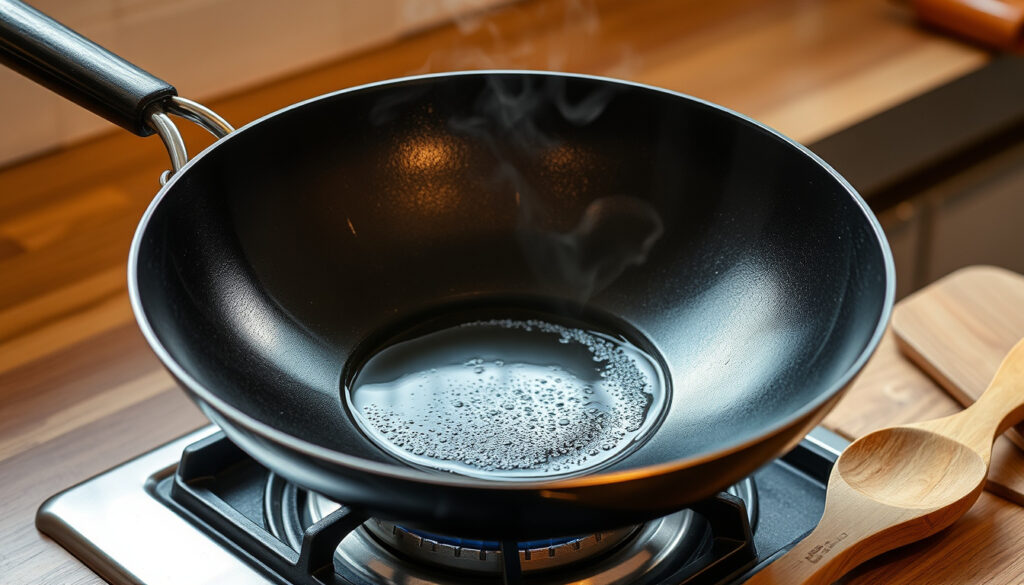
Place the clean, dry wok on your burner and crank the heat to high. Heat the wok on high heat until the carbon steel changes color to dark brown or blueish, a process that should take about 10 minutes (CJ Eats Recipes). The blueing process involves the wok turning straw-colored, then purple, and finally a deep iridescent blue, which changes the molecular structure of the surface to better absorb oil (Woks of Love).
Standard home stoves typically only reach 10,000 to 18,000 BTU, so the blueing process takes longer than it might in a professional wok station — patience here pays off with a more durable seasoning layer.
Apply oil
Once the wok has cooled enough to handle safely, apply a tablespoon of neutral oil and tilt the wok to spread it evenly across the surface area (CJ Eats Recipes). Use tongs to hold the paper towel when applying oil to avoid burning your fingers (Woks of Love). The oil layer should be so thin it looks like you tried to wipe it all off — that’s exactly how it should look (Woks of Love).
Turn heat to medium-high and watch for smoking, which indicates polymerization is occurring. After applying oil, turn heat to medium-high and watch for smoking, which indicates polymerization is occurring (Woks of Love). One seasoning layer is complete once the smoking stops and the metal looks dry again (Woks of Love).
The pattern here is clear: multiple thin layers outperform one thick coat. Each pass builds cumulative protection without the flaking that thick applications risk.
What is the best way to season a wok?
The best method depends on your stove, but the underlying principle stays the same — get the wok hot, apply thin oil, and let the polymerization work.
On gas stove
Gas stoves offer the most direct path to proper seasoning temperatures because they can reach 400°F to 500°F consistently (Woks of Love). Rotate the wok as it heats to ensure even coloration across the bottom and sides. The open flame replicates traditional wok cooking conditions and produces that characteristic blue oxidation.
On electric stove
Electric and induction stoves present a challenge because their maximum temperatures often fall short of what gas flames deliver easily. On an induction stove, you can season the flat bottom easily, but to season the sides you may need to use your oven set to 450°F for an hour with a very thin coat of oil (Woks of Love). Oven seasoning is an alternative method for those without gas stoves or open flames (Mamma Fong).
Electric stove users should expect multiple seasoning cycles rather than expecting success in a single session. The lower heat output means each layer takes longer to cure, but the end result is just as effective with patience.
The implication: if you’re cooking on an induction or ceramic cooktop, factor in extra time and plan for two or three seasoning sessions before your first real cooking run.
What oil should you use to season a wok?
Oil selection directly affects how well your seasoning holds up over time. The critical metric is smoke point — oils that burn before polymerizing won’t form that durable non-stick layer.
High smoke point oils
Avocado oil has the highest smoke point at 519°F among common seasoning oils (Yosukata). Soybean oil has a smoke point of 453°F, making it suitable for seasoning carbon steel woks (Yosukata). Grapeseed oil has a smoke point of 420°F and polymerizes well without brittleness issues, delivering professional-level results (Misen).
Peanut oil has a smoke point of 449°F and is recommended for seasoning woks (Yosukata). Canola oil has a smoke point of 399°F and delivers reliable seasoning results at a fraction of the cost of specialty oils (Misen). Vegetable oil has a smoke point of 399°F and is suitable for seasoning carbon steel woks (Yosukata).
Oils to avoid
Olive oil and butter should be avoided for seasoning as they will burn and flake off (Woks of Love). Extra virgin olive oil has a smoke point of 109-162°C (228-323°F) and is not ideal for seasoning carbon steel (Mamma Fong). Coconut oil has a smoke point of 232°C (449°F) but has a strong flavor that doesn’t match many cuisines and is not recommended for seasoning (Mamma Fong).
Budget cooks gravitate toward Canola or vegetable oil for affordability, while performance-focused cooks pay more for avocado or grapeseed oil’s higher smoke points and faster polymerization times.
The pattern: Canola oil allows completion of five seasoning rounds in the time other oils need for just three layers (Misen). Traditional fats like lard or shortening work well for seasoning and cost very little, though they are best for cooks who primarily prepare meat dishes (Misen).
Why do you have to season your wok?
Carbon steel is essentially bare iron — it will rust on contact with moisture and food will stick without any built-up surface protection. Seasoning addresses both problems simultaneously.
Builds non-stick patina
The oil seeps into microscopic pores of the metal when heated to correct temperature; as the oil smokes, it oxidizes and hardens into a hydrophobic layer (Woks of Love). Seasoning creates a patina by bonding a thin layer of oil to steel through high heat, transforming the surface to prevent sticking and stop iron from rusting (Woks of Love). The patina literally changes how food interacts with the metal — proteins don’t grip the surface the way they do on bare steel.
Prevents rust
Without seasoning, even brief contact with water causes oxidation. With use, carbon steel woks can lose non-stick quality and even rust, making seasoning part of regular care (Mamma Fong). A well-used wok rarely looks perfect; blotches and uneven colors are signs of a working kitchen tool (Woks of Love).
Water is the enemy of polymerization; place the wok on a medium burner for 2-3 minutes to ensure complete dehydration before seasoning (Woks of Love). Skipping this step means the oil layer won’t bond properly.
The implication: a seasoned wok isn’t just convenient — it’s the difference between a pan that lasts decades and one that corrodes within months of regular use.
How to season a wok after use?
Maintenance seasoning is much faster than the initial process and keeps your wok performing its best between deeper cleans.
Quick re-season
Repeat the heating and oiling process after cooking with your wok to develop a greater layer of non-stick patina (CJ Eats Recipes). Heat the wok after washing, apply a thin coat of oil, and let it smoke briefly. If seasoning coating becomes damaged, the carbon steel itself has not been damaged and can be fixed by repeating the heating and oiling process (Wok 101).
Alternatives like salt or water
For stuck-on food, heat the wok, add a handful of salt, and scrub with a wok ladle — the abrasive action lifts food without damaging the seasoning. Water is the enemy of polymerization; place the wok on a medium burner for 2-3 minutes to ensure complete dehydration before seasoning (Woks of Love).
The pattern: regular maintenance keeps the seasoning layer thin and well-bonded. Neglect it, and you’ll find yourself doing a full reset — which works, but takes significantly more time.
Upsides
- Creates naturally non-stick cooking surface
- Prevents rust and extends wok lifespan
- Improves with every cooking session
- Works on any heat source with proper technique
Downsides
- Requires 60+ minutes for initial seasoning
- Electric stove users need more cycles
- Seasoning can flake if applied too thick
- Certain oils will burn rather than cure
The key is patience and thin layers. People want to glob on the oil thinking more is better — but that’s how you get flaking. A light coat that looks almost wiped off is exactly right.
— School of Wok (wok technique specialist)
Scrub, oil, heat — that’s really all there is to it. Three steps, maybe 20 minutes if you’re moving quickly. The wok does the rest.
— Marion Kitchen (cooking instructor)
Blue the wok first, then season. That oxide layer isn’t just visual — it actually helps the oil bond better to the steel. Skip the blueing and you’re leaving performance on the table.
— Reddit Wok Community (home cook forum)
For home cooks, the choice is straightforward: spend an hour seasoning now and you’ll spend less time cleaning food off your pan for years to come. Use a high smoke point oil like avocado or grapeseed, apply it thin, and repeat the process after every few cooking sessions. The alternative — cooking on bare carbon steel — means everything sticks, rust appears within weeks, and you’ll eventually replace a pan that could have lasted a lifetime.
Related reading: Extra Virgin Olive Oil NZ – Top Brands and Buying Guide · How to Dose Fertilizer for Plants: Step-by-Step Guide
New carbon steel woks demand careful initial seasoning to form a slick non-stick patina, much like the techniques in this step-by-step beginner’s guide paired with our stove-specific tips.
Frequently asked questions
Can I season a wok with butter?
No. Butter has a low smoke point and will burn before polymerizing, leaving you with a sticky, patchy coating rather than a durable patina. Stick to high smoke point oils like avocado, grapeseed, or peanut.
How often should I re-season my wok?
Re-season after every 5-10 cooking sessions, or whenever food starts sticking more than usual. Frequent stir-fry cooks may re-season weekly; occasional users can go a month or two between sessions.
What if my wok seasoning flakes off?
Don’t panic — the carbon steel underneath is fine. Scrub away the remaining flaked coating, reheat the wok to blue the surface, and apply fresh oil. The seasoning rebuilds quickly with a couple of sessions.
Is seasoning needed for stainless steel woks?
No. Stainless steel doesn’t rust and has natural non-stick properties when heated properly. Only carbon steel and cast iron require seasoning to develop their protective patina.
How to clean a newly seasoned wok?
Use hot water and a soft sponge immediately after cooking. Avoid soap on well-seasoned woks — it can strip the patina. For stuck food, use salt as an abrasive scrubber rather than steel wool, which removes seasoning layers.
Does seasoning work on cast iron woks?
Yes. Cast iron woks benefit from the same polymerization process as carbon steel. The thicker mass means longer heating and cooling times, but the oil-bonding mechanics are identical.
What temperature should I season my wok at?
Target 400°F to 500°F (204°C–260°C) for optimal polymerization. This range is hot enough for the oil to smoke and bond without burning before the layer cures. Standard home burners typically reach this range on high heat after several minutes.
More related posts
 Saturday Lotto Results NZ Tonight: Time & Live Draw
 Dyson Wash G1 Review – Hard Floor Performance Pros Cons Tests
 Compassionate Fares Air NZ: Eligibility & Booking Guide
 Air New Zealand Flight Schedule: Check Status & Timetables
 Thank You in Mandarin: Pronunciation, Tones & Myths
 Best Face Sunscreen for Men: Dermatologist-Tested Picks
 Boxing Day Sale NZ 2026: Be t Deal , Date & Retailer Guide
 Twilight Movies in Order: Complete Watch Guide (2025)
